Your Health Magazine Contributor
4201 Northview Drive
Suite 102
Bowie, MD 20716
More Beauty Skin Care & Gorgeous Smiles Articles
Red Light Therapy: What It Is and How It Fits Into a Skincare Routine
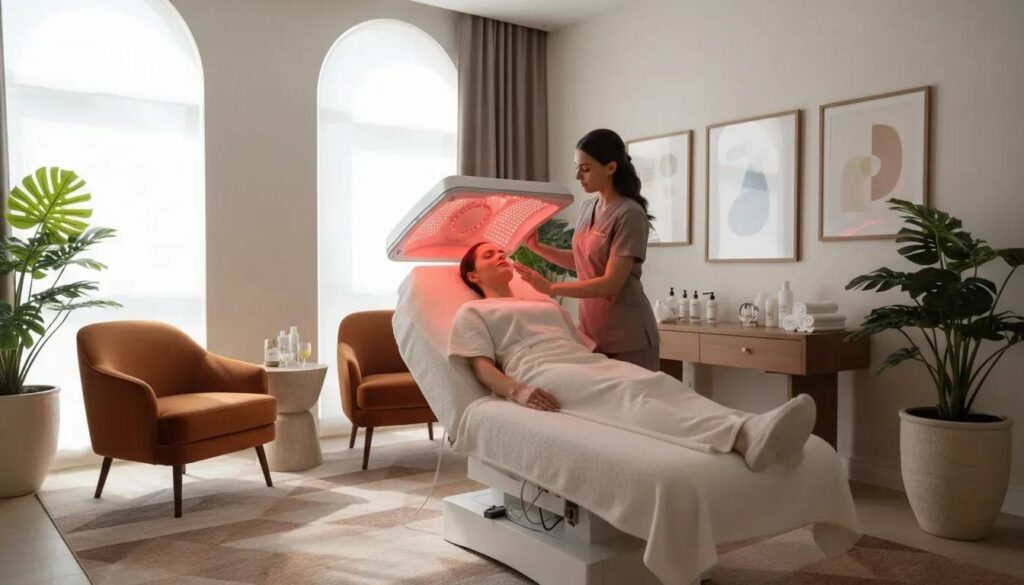
Red light therapy has moved out of dermatology offices and into med spas, gyms and bathroom drawers. The glowing masks are all over social media, and so are big promises. If you are curious about red light therapy in Wellen Park, it helps to separate what the research supports from what is still being studied.
Some clinics, such as The Aesthetics Lounge and Spa In Wellen Park, offer it as one part of a skin plan rather than a cure-all, which is the right way to think about it. Here is a plain look at how it works and where it fits.
What red light therapy is
Red light therapy uses low levels of red and near-infrared light, usually from LED panels or masks. It is not the same as the lasers used for hair removal or resurfacing, and it does not use the ultraviolet light that comes from the sun or tanning beds. You may see it called photobiomodulation, low-level light therapy or LED light therapy.
The idea is that certain cells absorb these wavelengths and use them to make more energy. Harvard Health describes it as stimulating the mitochondria, the parts of the cell that produce energy, which is thought to reduce inflammation and boost collagen, the protein that keeps skin firm.
What the research says so far
Cleveland Clinic calls red light therapy an emerging treatment that shows promise for wrinkles, redness, acne and scarring, while noting that more clinical trials are needed. Dr. Rachel Reynolds of Beth Israel Deaconess Medical Center told Harvard Health she started out skeptical but now sees legitimate medical literature behind it. She also points out that researchers have not yet settled the best length or strength of a session for different skin concerns.
So the honest answer is that it looks useful for some people and some goals, and changes tend to be gradual. It does not replace sunscreen, a good daily routine or medical care for skin conditions.
What a session is like
- Your skin is cleansed so makeup and products are out of the way.
- You put on eye protection.
- You lie or sit under the panel, or a device is placed near your face, for a set time.
- You get up and go about your day, since there is no recovery time.
Most people feel only gentle warmth, and many find it relaxing. There are no needles and no numbing cream.
How it differs from other light treatments
It is easy to mix up the light-based options on a med spa menu. Lasers and intense pulsed light (IPL) use focused, higher-energy light to heat a specific target, such as hair pigment or brown spots, and they can come with redness, swelling or a few days of downtime. Red light therapy works at much lower energy and does not heat or damage tissue. Blue LED light is a separate wavelength that is mainly studied for acne. Knowing which one a clinic is offering helps you ask the right questions and set the right expectations.
Who it may suit, and who should ask first
People often choose red light therapy when they want something gentle with no downtime, something to add between facials or microneedling, or an option for skin that does not tolerate stronger treatments.
Talk to a provider first if you are pregnant, take medications that make your skin sensitive to light, have a light-triggered condition or have eye problems. Harvard Health also suggests people with darker skin check with a dermatologist and start at lower doses, because visible light can lead to dark spots in some skin types.
Fitting it into your routine
- Keep the basics. Cleanse, moisturize and wear broad-spectrum sunscreen every day. In Southwest Florida, sunscreen does more for your skin than any device.
- Treat it like exercise. Regular sessions matter more than any single one. Your provider will suggest how often to come in.
- Ask about pairing. Some people use red light alongside facials, peels or microneedling. Timing matters, so check before you combine treatments.
- Give it time. Changes, where they happen, show up gradually.
In-clinic or at home?
Home masks are convenient, and Cleveland Clinic says the safest choice is a device used exactly as directed, with your eyes protected. In-clinic panels are usually larger and stronger, and someone trained sets up the treatment. If you are weighing the two, ask a provider which wavelengths and strength a home device would need to be worth it.
Questions to ask before you start
- What wavelengths does your device use?
- How often do you recommend sessions for my goals?
- Can I combine it with the other treatments I’m having?
- Is anything in my health history a reason to avoid it?
- How will we judge whether it’s working?
If you live near Wellen Park and want to see whether it suits your skin, a consultation is the place to start.
Other Articles You May Find of Interest...
- What to Know Before Visiting a Medical Spa in Naples, Florida
- Red Light Therapy: What It Is and How It Fits Into a Skincare Routine
- Laser Hair Removal 101: How to Prepare, What to Expect and When to Start
- Why Facial Structure Matters When Planning a Facelift
- How a Personalized Aesthetic Plan Enhances Your Natural Beauty
- When Is a Breast Lift Recommended Alongside Breast Augmentation?
- Tummy Tuck With or Without Muscle Repair: What’s the Difference?