Your Health Magazine Contributor
4201 Northview Drive
Suite 102
Bowie, MD 20716
More Health News & Research Articles
Retatrutide Explained: What Researchers Should Know About the First Triple Hormone Receptor Agonist
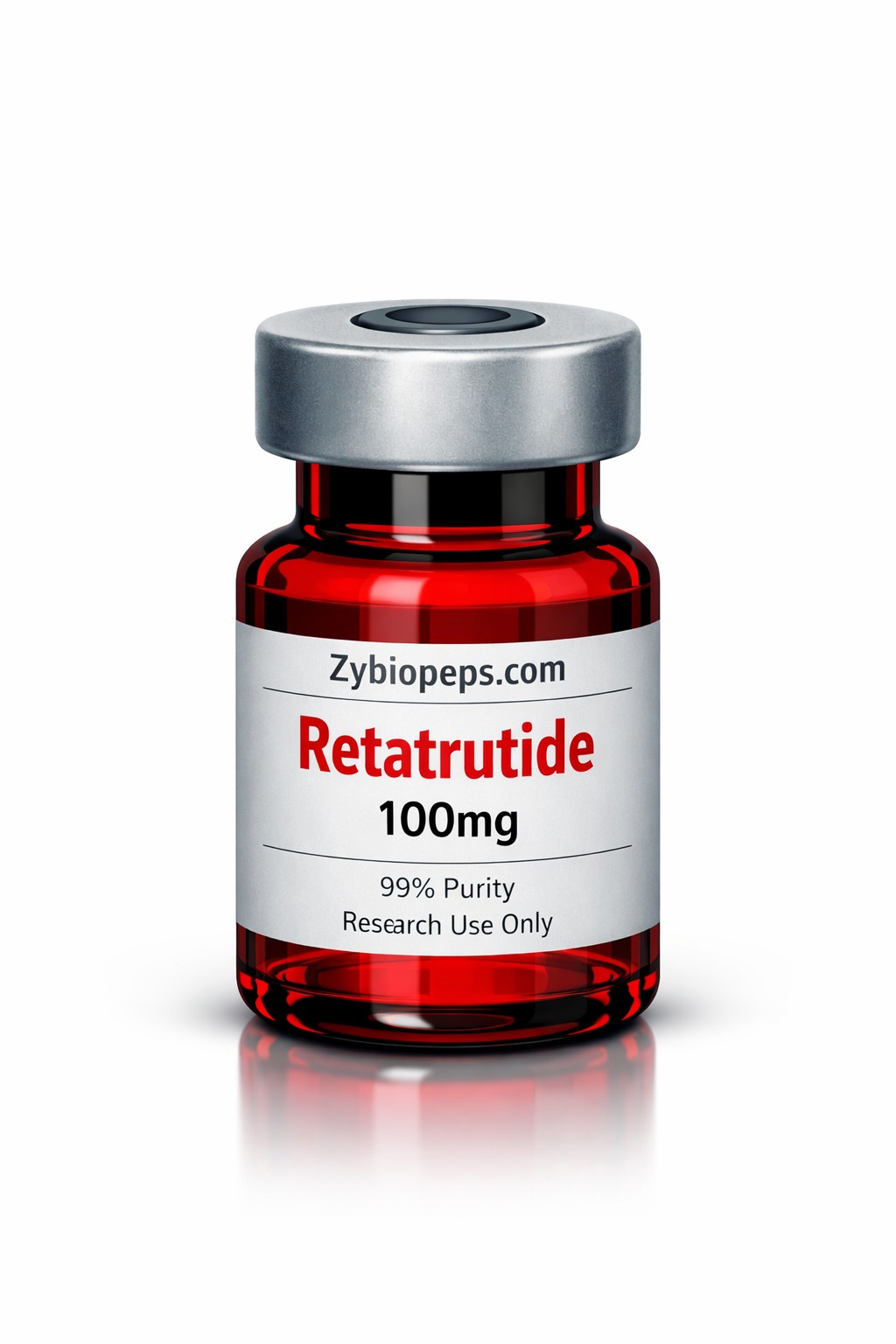
Few compounds have drawn as much attention in metabolic research over the past few years as retatrutide. Developed by Eli Lilly under the research code LY3437943, it belongs to a new generation of incretin-based peptides that act on more than one hormone receptor at the same time. Where earlier compounds targeted one or two receptors, retatrutide targets three. This guide explains what retatrutide is, how its mechanism differs from older peptides, what the published research has examined so far, and what laboratories should consider before working with it.
What Is Retatrutide?
Retatrutide is a synthetic peptide engineered to activate three receptors involved in metabolism: the glucagon-like peptide-1 (GLP-1) receptor, the glucose-dependent insulinotropic polypeptide (GIP) receptor, and the glucagon receptor. Because of this, it is often described as a “triple agonist” or “GGG” agonist.
To understand why that matters, it helps to look at how the field has developed. The first wave of incretin research focused on single GLP-1 receptor agonists such as semaglutide. The next step combined GLP-1 and GIP activity in a single molecule, as seen with tirzepatide. Retatrutide goes one step further by adding glucagon-receptor activity on top of both.
How the Three Receptors Work Together
Each of the three receptors contributes something different in research models:
- GLP-1 receptor: associated with glucose-dependent insulin release, slower gastric emptying and appetite-related signaling in the brain.
- GIP receptor: studied for its effects on insulin secretion and on how fat tissue stores and handles energy.
- Glucagon receptor: involved in energy expenditure and in how the liver processes fat.
Glucagon normally raises blood glucose, so adding glucagon-receptor activity might seem counterintuitive. The research interest lies in the balance. When glucagon signaling is paired with GLP-1 and GIP activity, scientists are investigating whether it can increase energy expenditure and support liver fat reduction without the glucose-raising effect dominating. This three-way balance is the main reason retatrutide is studied as its own category rather than as a stronger version of earlier compounds.
What the Published Research Shows
The most widely cited study on retatrutide is a Phase 2 trial published in the New England Journal of Medicine in 2023 (Jastreboff et al.). This 48-week, randomized, double-blind, placebo-controlled study enrolled 338 adults with obesity or overweight and tested several dose levels against placebo. Its primary endpoint was the percentage change in body weight.
The results drew significant attention: participants in the highest dose group showed a mean reduction in body weight of about 24 percent at 48 weeks, compared with roughly 2 percent in the placebo group. Researchers also reported changes in several metabolic markers. A separate Phase 2 study published in The Lancet in 2023 (Rosenstock et al.) examined retatrutide in participants with type 2 diabetes.
These findings led to the larger Phase 3 TRIUMPH research program. Results reported in 2026 have provided additional evidence of substantial weight reduction and improvements in certain metabolic outcomes. However, retatrutide remains investigational and has not received FDA approval.
Retatrutide Compared With Earlier Incretin Peptides
Researchers often place retatrutide alongside two better-known compounds:
- Semaglutide: a single GLP-1 receptor agonist and the most common reference compound in incretin research.
- Tirzepatide: a dual GLP-1 and GIP receptor agonist with a large completed Phase 3 program.
- Retatrutide: a triple GLP-1, GIP and glucagon receptor agonist, still in Phase 3 study.
It is important not to compare trial results directly. The major studies for each compound differ in phase, length, dose, population and design. A fair head-to-head comparison would require all three compounds to be tested under the same conditions. For now, they are best understood as related research tools with different receptor profiles, which is exactly why many laboratories study them side by side.
Why Laboratories Study Retatrutide
Retatrutide gives researchers a way to explore questions that single and dual agonists cannot fully answer. Common areas of laboratory interest include:
- How glucagon-receptor activity changes energy expenditure when combined with incretin signaling.
- The relationship between triple agonism and liver fat metabolism.
- How adding a third receptor affects appetite pathways compared with dual agonists.
- Comparative models that isolate the contribution of each receptor.
Retatrutide is also useful as a reference point for understanding the wider incretin field. By comparing a triple agonist with single and dual agonists in the same model, researchers can separate the effects that come from GLP-1 alone, from combined GLP-1 and GIP signaling, and from the addition of glucagon activity. This kind of layered comparison is one of the main reasons the compound has become so common in metabolic study design, even at this early stage of its development.
What to Look for When Sourcing Retatrutide for Research
Because retatrutide is a complex peptide, the quality of the material directly affects the reliability of any study. Researchers should consider a few basics before ordering:
- Third-party testing: a Certificate of Analysis (COA) from an independent laboratory confirming identity and purity, ideally 99% or higher.
- Batch consistency: using material from a single batch across an experiment reduces variability between samples.
- Proper form and storage: lyophilized (freeze-dried) powder should be stored cold and protected from light.
- Appropriate vial size: larger vials can suit longer or multi-arm studies that need consistent material throughout.
Laboratories running extended studies often choose larger, single-batch vials. For example, suppliers such as Zybiopeps offer research-grade retatrutide in a 100mg format with an independent COA for each batch.
Storage and Handling Basics
Like most research peptides, retatrutide is supplied as a lyophilized powder for stability. It is generally kept refrigerated or frozen and protected from light until use. Once reconstituted, commonly with bacteriostatic water, the solution is typically stored refrigerated and used within a timeframe defined by the laboratory’s own protocol. Following consistent handling procedures helps keep results comparable from one experiment to the next.
The Bottom Line
Retatrutide represents a meaningful step in incretin research. By acting on GLP-1, GIP and glucagon receptors at once, it lets scientists study metabolism in ways that earlier single and dual agonists could not. Early Phase 2 data have been striking, but the compound is still investigational, and the ongoing Phase 3 TRIUMPH program will shape how it is understood in the years ahead. For laboratories, the priorities remain the same as with any research compound: verified purity, consistent batches and careful handling.
Disclaimer: This article is for educational and informational purposes only. Retatrutide is an investigational compound and is not approved for human use. Nothing in this article is medical advice.
Other Articles You May Find of Interest...
- Retatrutide Explained: What Researchers Should Know About the First Triple Hormone Receptor Agonist
- Sleep Inducement and the Limits of DSIP Research
- Retatrutide Research: Understanding The Compound And Its Clinical Trials
- Tesamorelin for Laboratory Research: What to Know Before Choosing a Supplier
- What a Research Peptide Certificate Can Tell You, and What It Cannot
- The Evolution of Incretin Mimetic Research: How Triple Receptor Agonists Are Redefining Metabolic Science
- How to Choose a Research Peptide Supplier