More Beauty Skin Care & Gorgeous Smiles Articles
Small Itchy Bumps on the Skin: Possible Causes
By Your Health Magazine Health Information Team
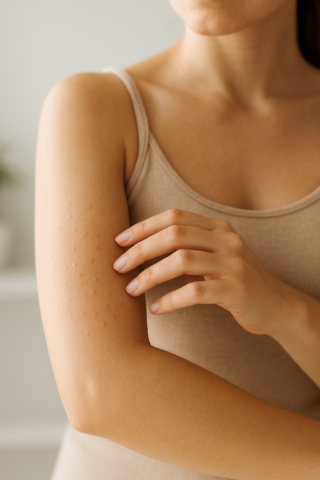
Small itchy bumps on the skin commonly result from eczema, contact dermatitis, hives, insect bites, heat rash, folliculitis, or scabies. The bumps’ location, appearance, timing, and possible exposures can provide clues, but many skin conditions look similar. A healthcare professional may need to examine a persistent, spreading, painful, or unexplained rash to determine its cause.
Common Causes of Small Itchy Bumps
| Possible cause | Typical clues |
|---|---|
| Eczema | Dry, sensitive, intensely itchy patches with small bumps, scaling, cracking, or thickened skin |
| Contact dermatitis | A rash where skin touched an irritant or allergen, such as soap, fragrance, metal, plants, or cleaning products |
| Hives | Raised, itchy welts that may change shape, move to different areas, or disappear and return |
| Insect or mite bites | Individual bumps or clusters that develop after outdoor activity, travel, or exposure to animals or infested surroundings |
| Scabies | Severe itching, often worse at night, with pimple-like bumps in characteristic locations |
| Heat rash | Tiny prickly or itchy bumps after heavy sweating or exposure to hot, humid conditions |
| Folliculitis | Acne-like bumps centered around hair follicles, sometimes after shaving, friction, sweating, or hot-tub use |
Eczema and Contact Dermatitis
Eczema is a group of conditions that can cause dry, inflamed, itchy skin. Small bumps may appear along with rough patches, scaling, swelling, or skin that becomes raw from scratching. Although eczema often affects the hands, feet, face, inner elbows, and backs of the knees, it can occur elsewhere. It is not contagious. More information is available in the MedlinePlus overview of eczema.
Contact dermatitis develops after the skin encounters an irritating substance or something that triggers an allergic reaction. Possible triggers include new soaps, detergents, cosmetics, fragrances, adhesives, nickel jewelry, latex, plants, and workplace chemicals. The rash generally develops where contact occurred, although allergens transferred by the hands may affect the face or other areas.
Allergic contact dermatitis is usually very itchy and may not appear until hours or days after exposure. Irritant contact dermatitis may develop more quickly and can cause burning, tenderness, dryness, or cracking. A clinician may recommend patch testing when an allergic trigger remains unclear. MedlinePlus explains what may be involved in a professional rash evaluation.
Hives, Bites, and Heat Rash
Hives are raised, itchy welts that may be red, pink, or close to the surrounding skin color. Individual welts often enlarge, change shape, disappear, and reappear elsewhere within hours. Hives can be associated with foods, medicines, infections, insect bites, heat, cold, pressure, exercise, or other triggers, but the cause is not always identifiable. The pattern is usually more helpful than the color when recognizing hives and their warning signs.
Insect bites often cause small bumps and itching in exposed areas. Fleas may produce clustered bumps around the ankles or lower legs, while bedbug bites can occur in groups or lines after sleeping. Mosquitoes, chiggers, and other outdoor pests may produce scattered itchy red bumps. If symptoms appeared after time in wooded or grassy areas, information about itchy skin reactions associated with so-called turkey mites may also be useful.
Heat rash occurs when sweat becomes trapped beneath the skin. It commonly produces tiny itchy, prickly, or clear bumps in covered areas and skin folds. Moving to a cooler environment, wearing loose clothing, and keeping the skin dry may help.
Could the Itchy Bumps Be Scabies?
Scabies is caused by microscopic human itch mites and spreads primarily through prolonged skin-to-skin contact. It typically causes intense itching that becomes worse at night, along with small pimple-like bumps. Thin, crooked, slightly raised burrows may occasionally be visible.
Common locations include the spaces between the fingers, wrists, elbows, armpits, waist, buttocks, shoulder blades, nipples, and genital area. Infants and young children can also have symptoms on the head, neck, palms, and soles. More than one household member developing nighttime itching is another important clue. The CDC’s scabies symptom guide describes the usual rash pattern and affected areas.
Suspected scabies should be evaluated by a healthcare professional because treatment generally requires a prescription. Treating only the visible bumps or using ordinary insect sprays will not reliably eliminate the infestation. Close contacts may also need guidance to prevent continued spread.
What About a Hard Itchy Bump?
A single hard itchy bump may be an insect bite, an irritated hair follicle, an ingrown hair, or a localized inflammatory reaction. Folliculitis tends to produce bumps centered around hairs and may involve tenderness, pus, or a red ring. Shaving, tight clothing, friction, heavy sweating, and contaminated hot water can contribute.
A bump that persists, grows, repeatedly bleeds, changes color, develops an open sore, or feels fixed beneath the skin should be examined rather than repeatedly scratched or squeezed. Appearance alone cannot reliably distinguish a harmless inflamed bump from another skin condition.
Steps That May Help Relieve Itching
- Stop possible triggers. Temporarily avoid new soaps, lotions, cosmetics, detergents, jewelry, or clothing that may have touched the affected area.
- Cool the skin. Apply a clean, cool compress and avoid hot showers, overheating, and tight clothing.
- Use gentle skin care. Wash with lukewarm water and a mild, fragrance-free cleanser. Pat the skin dry instead of rubbing it.
- Moisturize dry areas. Apply a fragrance-free cream or ointment, particularly after bathing.
- Avoid scratching and squeezing. Keep fingernails short. Scratching can damage the skin and introduce bacteria.
- Ask about nonprescription treatment. A pharmacist or healthcare professional can help determine whether an anti-itch product or antihistamine is appropriate, especially for children, pregnancy, older adults, or people taking other medicines.
Take note of when the bumps began, where they appeared first, whether anyone else is affected, and any recent travel, outdoor activity, illness, medication, or product changes. Photographs taken over several days can help a clinician see how the rash is evolving.
When to Seek Care
Call 911 for itchy bumps or hives accompanied by trouble breathing, wheezing, faintness, throat tightness, or swelling of the face, lips, or tongue. These may be signs of a severe allergic reaction.
Contact a primary care clinician or dermatologist when the rash:
- Spreads rapidly or covers a large area
- Is severely painful, blistered, or involves the eyes, mouth, or genitals
- Occurs with fever or significant illness
- Develops warmth, increasing redness, pus, red streaks, or worsening swelling
- Causes relentless nighttime itching or affects several household members
- Began after starting a medicine
- Does not improve with basic skin care or keeps returning
Because itchy bumps can have many causes, an accurate diagnosis depends on the complete pattern—not simply whether the bumps look red or feel hard. Prompt evaluation is particularly important when the symptoms suggest infection, scabies, a medication reaction, or a serious allergy.
Other Articles You May Find of Interest...
- Small Itchy Bumps on the Skin: Possible Causes
- Palmar Erythema: Causes of Red Palms
- Breast Lift Scars: Incision Types, Healing Timeline and What Affects the Final Result
- Why Does the Jawline Look Square? Understanding the Masseter Muscle and Non-Surgical Options
- How Rhinoplasty Can Improve Both Aesthetics and Breathing
- Beyond Wrinkles: The Medical Benefits of Facial Botox
- What USDA Certified Organic Means on a Skincare Label, and How to Check a Brand’s Claim