Your Health Magazine Contributor
4201 Northview Drive
Suite 102
Bowie, MD 20716
More Practice Management Articles
Pre-Employment Testing Tools for Healthcare Hiring: What to Consider
A resume tells you where a candidate has worked. It can’t tell you whether they’ll catch a mismatched birth date on an intake form, calm a frustrated caller, or follow privacy rules when someone phones asking about a patient’s visit. In healthcare, those gaps don’t stay at the front desk. They reach patients.
That’s why more clinics, hospitals, and care providers add pre-employment testing to their hiring process. The right platform lets you check job knowledge, everyday software skills, and judgment before the interview, so the conversation starts with evidence instead of guesswork.
Healthcare employers have a range of testing platforms available, with different approaches to knowledge testing, simulations, computer skills, and role-specific assessments. The examples below illustrate some of the features employers may encounter when comparing options.
Key takeaways
- Match the test to the job. A medical biller, a CNA, and a receptionist need different assessments.
- Look for healthcare-specific content such as HIPAA, medical terminology, and billing and coding, not just general office skills.
- Knowledge tests show what a candidate knows; simulations show how they work. Many healthcare roles need both.
- A test score supports a hiring decision. It doesn’t replace interviews, credential checks, or required workforce training.
What makes a testing platform a good fit for healthcare
Healthcare hiring covers a wide range of support roles. The Bureau of Labor Statistics notes that medical secretaries and administrative assistants need familiarity with medical terminology and codes, medical records, and hospital or laboratory procedures. A useful platform should test that kind of knowledge, not just typing speed.
It should also let you tailor content to the role, report results in enough detail to discuss in an interview, and offer a clear route for candidates who need testing accommodations.
7 pre-employment testing platforms for healthcare hiring
1. eSkill
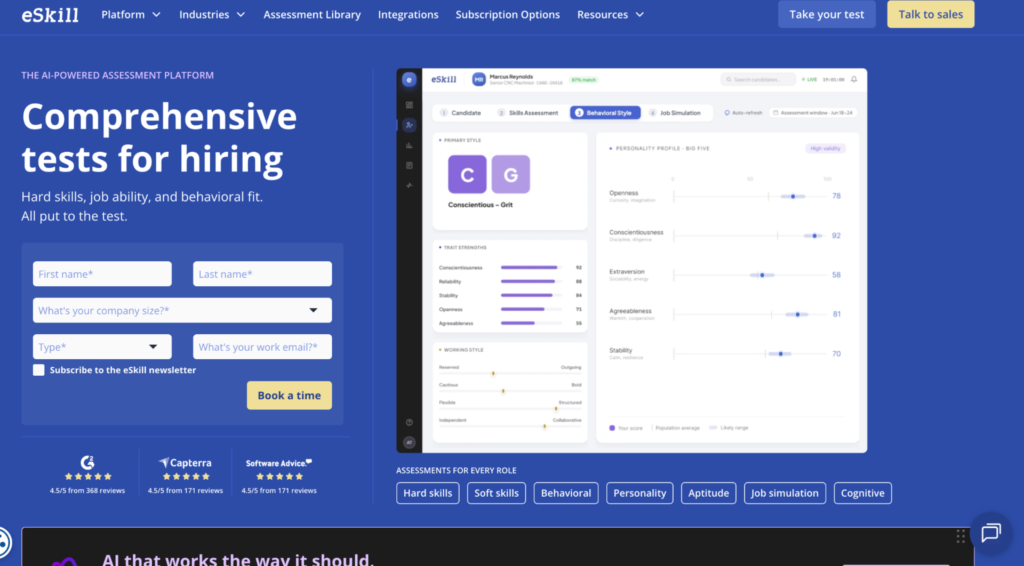
eSkill builds its healthcare testing around support staff such as CNAs, lab technicians, medical assistants, medical coders, and administrative assistants. Its competency areas cover medical and HIPAA terminology, computer skills for telehealth work, and billing and coding, and employers can write custom questions on topics like infectious disease safety precautions.
May be useful for: Employers who want to tailor healthcare knowledge tests to their own roles and protocols.
Keep in mind: Custom tests take setup time, so define what each role requires before building the assessment.
2. TestGorilla
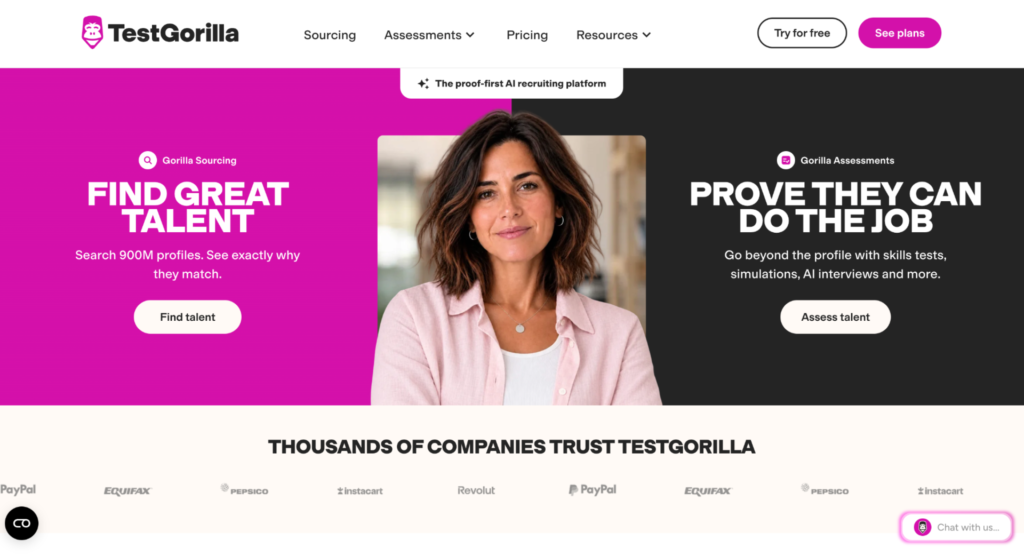
TestGorilla lets employers combine several short tests into one assessment. Its healthcare options include a HIPAA test on understanding and applying HIPAA requirements, a Medical Billing test covering coding, claims, reimbursement, and documentation, and a Healthcare Assistant test on patient care techniques, help with daily living activities, and basic life support.
May be useful for: Screening billing, records, and care assistant applicants on core knowledge.
Keep in mind: Multiple-choice knowledge checks won’t show how someone handles a busy shift, so pair them with a short work sample.
3. iMocha
iMocha’s test library includes a Medical Assistant test built to check job readiness and applied skills rather than theory alone. Depending on the test, questions can include multiple choice, fill-in-the-blank, descriptive answers, and audio or video responses, which gives hiring managers more than a single score to review.
May be useful for: Clinics hiring medical assistants who split time between patients and paperwork.
Keep in mind: Review the question set against your own workflows, since a ready-made test reflects general practice, not your clinic’s procedures.
4. Criteria
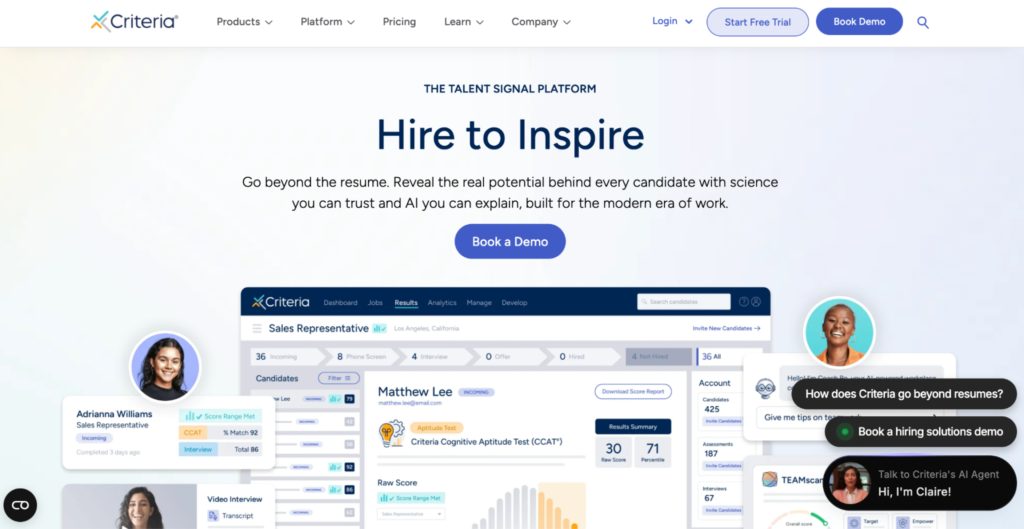
Criteria’s Computer Literacy and Internet Knowledge Test (CLIK) is a 13-minute basic computer skills test with three short task-based simulations and ten multiple-choice questions. Criteria recommends it for roles including medical billers, receptionists, and data entry clerks, and its score reports show whether each item was answered correctly.
May be useful for: Front-office and billing roles where daily software use is a core duty.
Keep in mind: Computer skills are only one part of the job. Patient-facing judgment and privacy knowledge need separate assessment.
5. HR Avatar
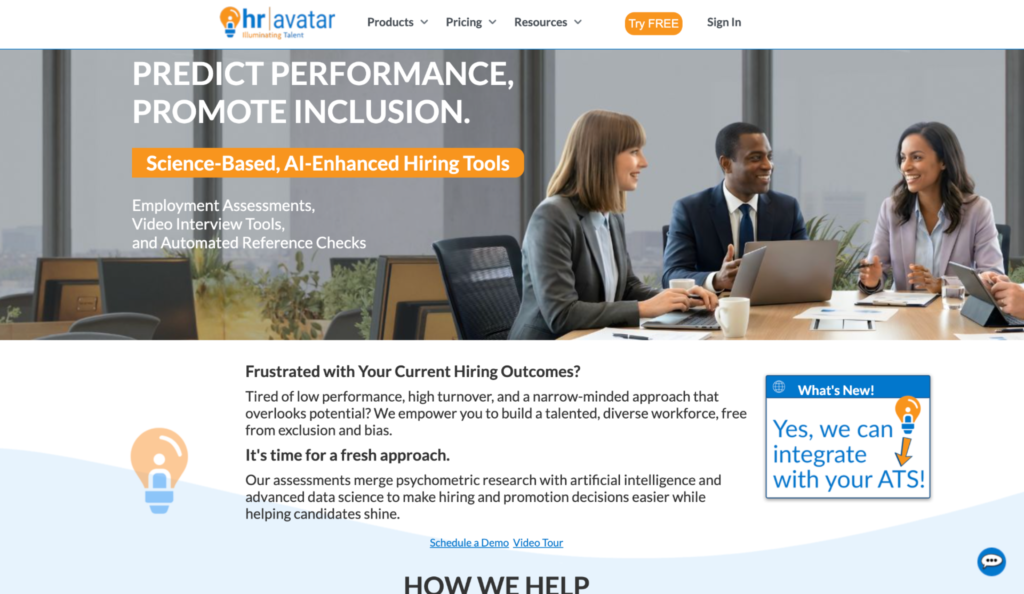
HR Avatar’s Medical Assistant Pre-Employment Assessment takes a whole-person approach, measuring cognitive ability, personality, knowledge, skills, and relevant behavioral history. It includes an animated work simulation in which candidates meet customers, colleagues, and supervisors, plus an automatically scored essay. A short version is also available.
May be useful for: Employers who want one assessment that blends knowledge, behavior, and a job simulation.
Keep in mind: A broad assessment takes longer to complete, so weigh the full and short versions against your applicant volume.
6. ThriveMap
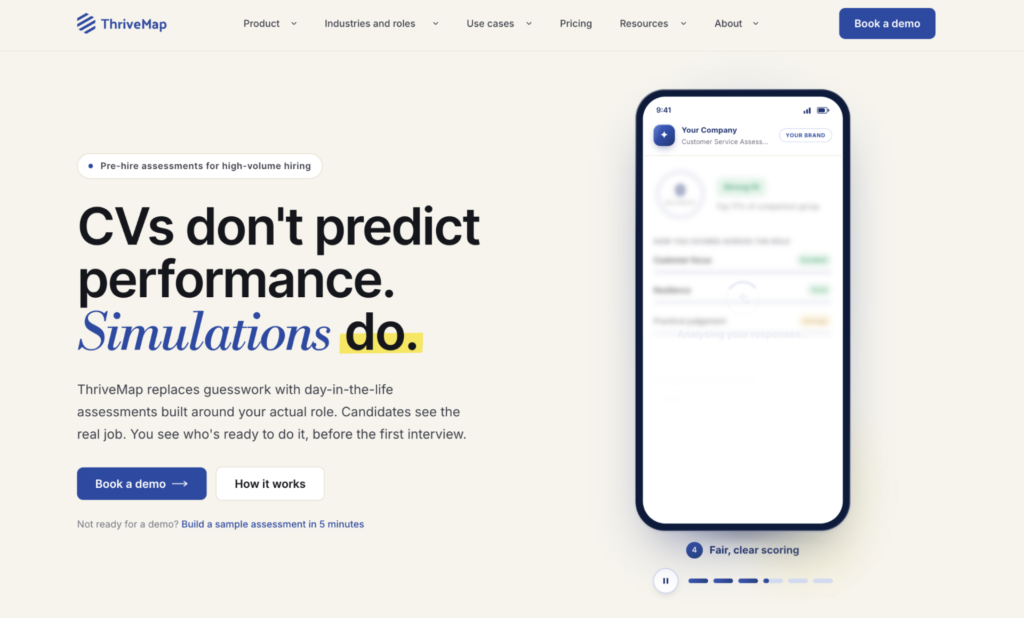
ThriveMap builds realistic job assessments: digital “day in the life” simulations that show candidates what the role involves and ask them to respond to real tasks and situations. Assessments are built for each role, score automatically, and integrate with major applicant tracking systems. The company lists care among the sectors it serves.
May be useful for: Care providers hiring frontline staff at volume who want to reduce early turnover.
Keep in mind: Because each assessment is built around one role, it suits employers that hire for the same job repeatedly.
7. Adaface
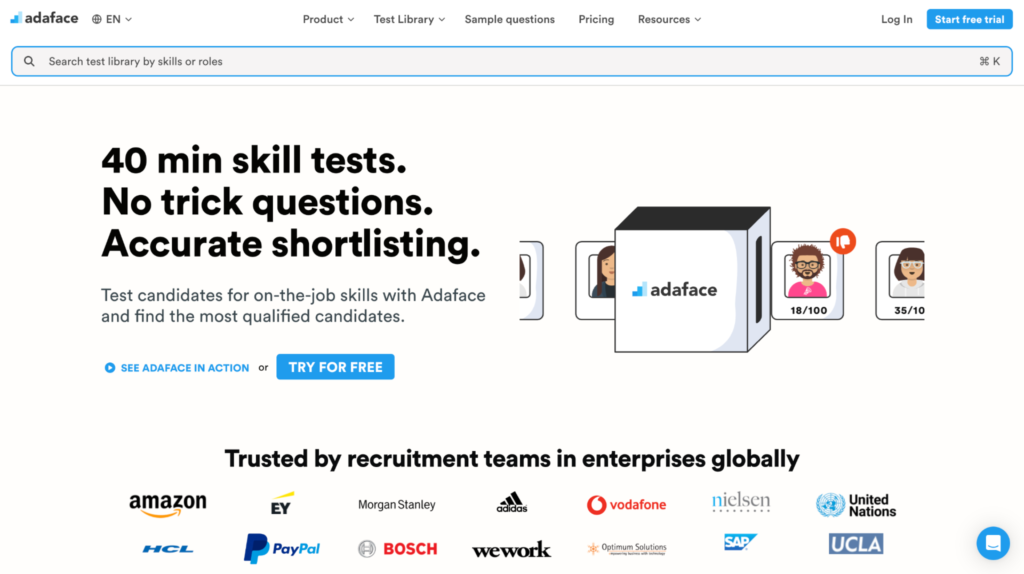
Adaface offers a Front Desk Receptionist test covering English proficiency, verbal reasoning, situational judgment, attention to detail, and customer service. Those are the skills that shape a patient’s first impression of a practice, from answering the phone to managing a crowded waiting room.
May be useful for: Screening patient-facing receptionists on communication and accuracy.
Keep in mind: This is a general receptionist test, so add medical terminology and privacy questions for a healthcare front desk.
How to choose the right platform for your team
Start with the duties. O*NET’s profile for medical secretaries and administrative assistants lists tasks such as scheduling appointments, billing patients, maintaining medical charts, and answering and routing calls. Your opening may include only some of them, so test only what the job requires. A receptionist who never touches claims shouldn’t face a coding test.
Separate must-haves from trainable skills. BLS notes that medical and legal secretaries and administrative assistants may train for several months as they learn industry-specific terminology and practices. If you plan to teach your scheduling software, don’t screen candidates out for never having used it. Formal medical assistant training usually covers terminology and billing basics, so focus your tests on the workflows only your practice can teach.
Pair knowledge tests with a work sample. The U.S. Office of Personnel Management describes work sample tests as exercises that mirror tasks employees perform on the job. For a medical office, that could be a fictional intake form or a mock appointment calendar. Use invented patient data only.
Keep testing fair and consistent. The Equal Employment Opportunity Commission’s 2007 guidance on employment tests says a selection procedure must be job-related and its results appropriate for the employer’s purpose. Give every applicant for the same role the same assessment, and explain how to request an accommodation.
Ask vendors the right questions. Can you see a sample report with item-level results? Can you add your own questions? Where is applicant data stored, and for how long? Does pricing work if you only hire a few times a year?
Conclusion
Healthcare teams can’t afford to learn about a skills gap on a new hire’s first busy morning. The platforms above give you different ways to find it sooner, from ready-made HIPAA and billing tests to custom knowledge checks and realistic job simulations.
The right choice depends on the roles you hire for most and how much you want to tailor. Whichever tool you pick, test only what the job requires, add a short work sample, and use the results to guide the interview rather than replace it.
Frequently asked questions
What pre-employment tests do healthcare employers use?
Common options include HIPAA and privacy knowledge tests, medical terminology tests, medical billing and coding tests, basic computer skills tests, and role simulations for medical assistants, care assistants, and receptionists. The right mix depends on the duties of each opening.
Does passing a HIPAA knowledge test mean a candidate is HIPAA compliant?
No. A knowledge test only measures answers to its questions. HHS states that it does not endorse or recognize private organizations’ Security Rule “certifications,” and those certifications don’t remove a covered entity’s legal obligations. New hires still need training on your own privacy policies.
Can pre-employment tests replace interviews?
No. Tests give you evidence about specific skills. A structured interview adds context, such as how a candidate handled similar situations before, and gives you a chance to follow up on any test results that need explaining.
Other Articles You May Find of Interest...
- Pre-Employment Testing Tools for Healthcare Hiring: What to Consider
- How Custom EHR Systems Are Reducing Physician Burnout
- A Beginner’s Guide to Revenue Cycle Management for Oral Surgery Practices
- Adding Branded Body Care to Your Practice: Aerosol Foam or Pump Foamer?
- How Concierge Billing Management Simplifies Practice Operations
- Branded Merchandise for Healthcare Practices: Corporate Mugs and How to Find a Promotional Products Distributor
- Adding Reformer Pilates to a Physical Therapy or Chiropractic Practice