Your Health Magazine Contributor
4201 Northview Drive
Suite 102
Bowie, MD 20716
More Dental Health Articles
Full-Arch Restoration: A Comprehensive Guide to All-on-4 and All-on-6 Dental Implants
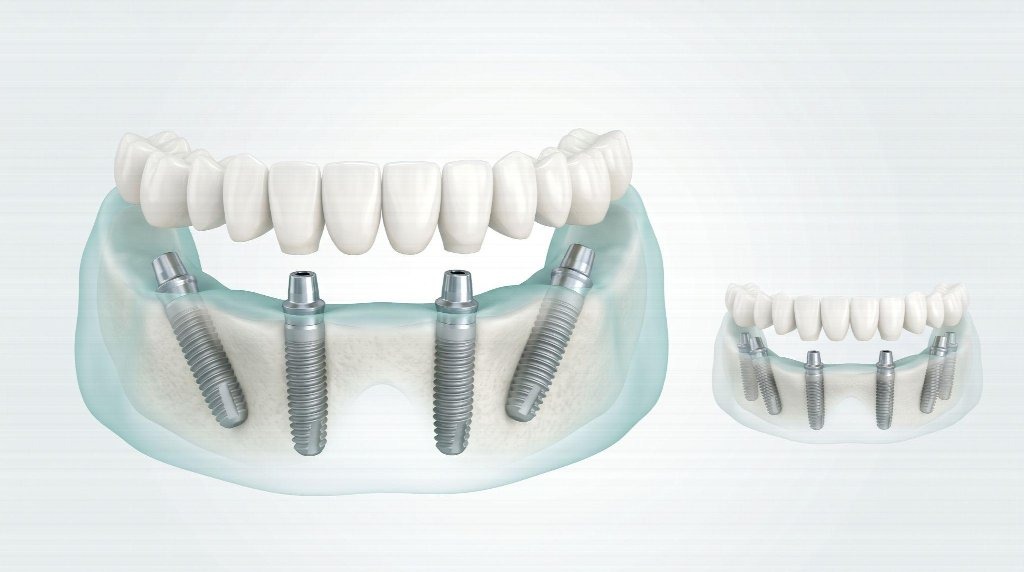
Losing all of your teeth is devastating, both physically and emotionally. For decades, traditional removable dentures have been one of the most common ways to replace a full set of missing teeth. Although they can restore function and appearance, some patients experience movement, dietary limitations and continued jawbone resorption after tooth loss. Today, fixed implant-supported restorations provide another option that can closely mimic the function and appearance of natural teeth.
In this modern landscape, two main protocols dominate the discussion: the All-on-4 and All-on-6 dental implant systems. Choosing between them is not merely a matter of preference. It requires an objective understanding of biomechanics, bone density and long-term oral health goals.
The Mechanics of Full-Arch Implants
Both the All-on-4 and All-on-6 methods are designed to replace an entire upper or lower arch using a strategic number of titanium posts. These posts act as artificial tooth roots. After being surgically placed in the upper jaw (maxilla) or lower jaw (mandible), the titanium undergoes a biological process called osseointegration, in which the bone fuses firmly to the implant surface. This provides an incredibly solid foundation for a permanent, custom-made prosthetic bridge.
The key difference between the two systems lies in load distribution, anatomical requirements and the need for additional bone grafting procedures.
Understanding the All-on-4 Concept
Developed in the late 1990s, the All-on-4 protocol was a revolutionary breakthrough in implantology. As the name suggests, All-on-4 implants in Turkey use only four implants, strategically placed to support a full dental arch.
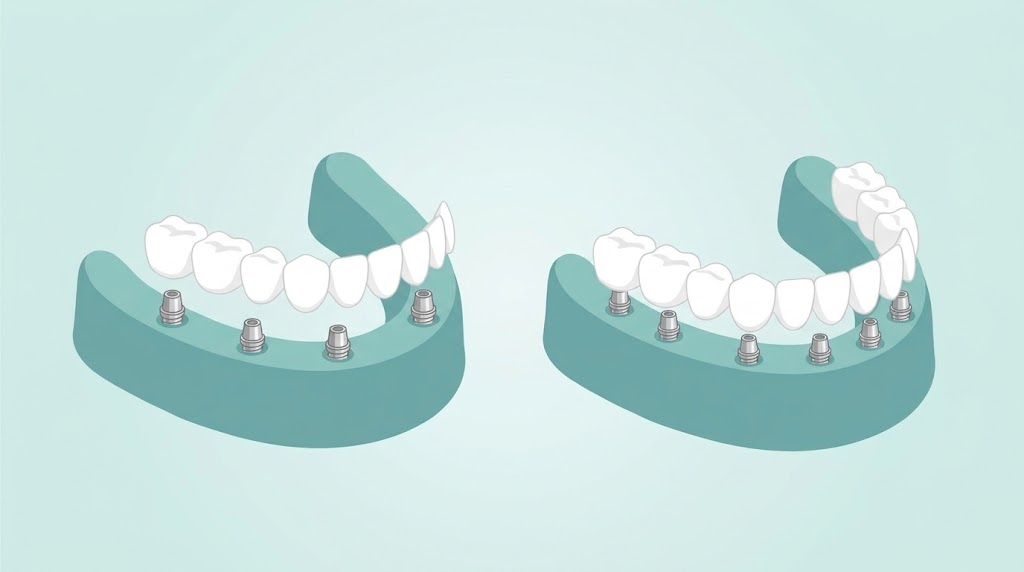
The genius of this system lies in the angle of the posterior (rear) implants. Oral surgeons place two implants vertically in the anterior (front) region, where bone density is naturally highest. The two posterior implants are then placed at an angle of up to 45 degrees. This angulation allows the implants to bypass the sinus cavities in the upper jaw and the nerve canal in the lower jaw, and to maximise contact with the available cortical bone. As a result, the All-on-4 approach can sometimes reduce or avoid the need for bone grafting or sinus lift procedures by making greater use of available bone, although grafting may still be necessary depending on the patient’s anatomy and degree of bone loss.
Understanding the All-on-6 Approach
All-on-6 implants in Turkey follow the same basic principles but use six vertical implants to support the prosthetic bridge. The addition of two more implants significantly changes the biomechanics of the restoration.
By distributing biting force across six support points instead of four, this system may provide a broader distribution of forces across the jawbone. However, implant-supported restorations do not eliminate the possibility of future bone loss, and long-term outcomes depend on factors such as implant positioning, oral hygiene, bone quality and maintenance. However, because the posterior implants are usually placed vertically rather than at an angle, the All-on-6 procedure requires a larger volume of healthy bone at higher density. If significant bone loss has occurred, patients may need to undergo bone grafting beforehand so that this protocol can be carried out safely.
A Clinical Comparison: Choosing a Protocol
Although your oral surgeon will recommend the safest method based on a 3D CBCT scan of your jaw, understanding the structural differences helps clarify the decision.
- Number of implants: All-on-4 uses 4 per jaw; All-on-6 uses 6 per jaw.
- Bone density requirement: All-on-4 requires moderate density (angled placement maximises available bone); All-on-6 requires high density (solid bone volume in posterior jaw).
- Need for bone grafting: All-on-4 rarely requires grafting; All-on-6 frequently requires grafting where bone loss is present.
- Bite force distribution: All-on-4 is concentrated on four main pillars; All-on-6 is spread widely across six pillars.
- Cleaning and maintenance: All-on-4 is generally easier to floss beneath; All-on-6 requires more meticulous cleaning around extra posts.
Material Considerations and Long-Term Prosthetic Success
Beyond the biomechanical placement of the titanium posts, the choice of final prosthetic material plays a pivotal role in full-arch restoration. Typically, fixed full-arch bridges are crafted from high-grade monolithic zirconia or porcelain fused to a titanium framework. Zirconia offers superior translucency, biological compatibility and stain resistance, making it an ideal choice for patients seeking a natural appearance alongside extreme durability.
Furthermore, maintaining long-term oral hygiene around full-arch restorations requires dedicated care. While implant bridges cannot develop cavities, the surrounding gum tissue remains vulnerable to peri-implantitis if plaque accumulates. Utilizing interdental brushes, water flossers and maintaining regular professional hygienist appointments ensures that the foundation of either system remains healthy for decades, preserving both functional bite force and facial structure.
The Role of Jawbone Loss (Atrophy)
The most critical factor in your consultation will be the current condition of your jawbone. When natural teeth are lost, the alveolar bone — the part of the jaw that holds the teeth in place — no longer receives the stimulation it needs from chewing. The body responds by resorbing the bone tissue, which leads to rapid shrinkage.
If you have worn conventional dentures for several years, you have probably experienced significant bone loss. In such cases, the All-on-4 method is usually the safest and most efficient route to a fixed smile, bypassing compromised bone areas altogether. Conversely, if your extractions are recent and your bone density is solid, the All-on-6 method can provide a stronger and more durable foundation for powerful biters.
Why Do Patients Seek Treatment Abroad?
Full-arch restorations are complex, transformative and inherently expensive. In the United States and the United Kingdom, the cost of an All-on-4 procedure can easily exceed the price of a new car, putting it entirely out of reach for the average patient. This economic reality has fuelled a major surge in health tourism, with patients actively seeking elite dental care abroad.
When patients research the development of dental aesthetics in Turkey, they often discover that leading oral surgeons use the same titanium implants (such as Nobel Biocare or Straumann) and digital surgical guides that are standard in Western practice. These significant price reductions, often 60% to 70% lower than local prices, can reflect lower operating costs, favourable exchange rates and government incentives designed to support the health tourism sector. Patients should still evaluate each clinic’s qualifications, standards and follow-up care individually.
Top-tier clinics operating internationally have adapted to this heavy demand by offering comprehensive care models. They use their in-house CAD/CAM laboratories to produce permanent prostheses in days rather than weeks and combine the entire surgical process with seamless logistical support, turning a daunting medical procedure into a manageable, highly coordinated experience.
Whether you are a suitable candidate for the angled efficiency of All-on-4 or the sturdy stability of All-on-6, giving up removable dentures is a major improvement in quality of life. The key to a successful outcome is finding an experienced implantologist who uses 3D diagnostic imaging to map your unique anatomy. By understanding the biomechanical requirements of your jaw, you can confidently pursue the treatment plan that provides long-term stability, comfort and oral health.
Other Articles You May Find of Interest...
- Affordable Pediatric Dentistry in East Bakersfield, CA: Costs, Insurance and Dental Services
- Teeth Shifting After Braces? What The Research Says About Orthodontic Relapse And Retainers
- Full-Arch Restoration: A Comprehensive Guide to All-on-4 and All-on-6 Dental Implants
- Dentists to Compare in Burke and Northern Virginia
- Dental-Care Options for Adults Over 40 in Northern Virginia
- How a Full Smile Can Restore Your Confidence
- What Happens During a Same Day Dental Crown Appointment?