More Acupuncture Articles
Dry Needling vs. Acupuncture: Similar Needles, Different Goals
By Your Health Magazine Health Information Team
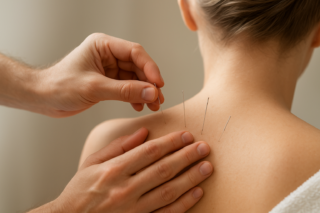
Dry needling differs from acupuncture mainly in its treatment goals, clinical framework, and how practitioners select needle locations. Dry needling usually targets muscles and related tissues to address musculoskeletal pain, tightness, and movement problems. Acupuncture may be used for pain and other symptoms, with treatment guided by traditional Chinese medicine, a modern biomedical approach, or a combination of both. Although the procedures may use similar thin needles, they are not simply two names for the same treatment.
Dry Needling vs. Acupuncture at a Glance
| Feature | Dry Needling | Acupuncture |
|---|---|---|
| Primary goal | Address musculoskeletal pain, muscle tightness, movement limitations, and neuromuscular dysfunction | Manage pain or other symptoms within a traditional, biomedical, or combined treatment framework |
| How locations are chosen | Physical examination, movement testing, anatomy, tender tissue, and sometimes myofascial trigger points | Acupuncture points, symptom patterns, local tender areas, and sometimes anatomical or neurological targets |
| Common technique | Needles may be inserted into or near a targeted muscle and moved to stimulate the tissue or produce a brief twitch | Needles are commonly placed at several selected points and may be retained, manually stimulated, or connected to gentle electrical stimulation |
| Treatment setting | Often included in a rehabilitation plan with exercise, stretching, manual therapy, and movement training | May be provided independently or as part of integrative care |
| Practitioners | Physical therapists and certain other healthcare professionals where permitted by state law and professional scope | Licensed acupuncturists and other appropriately trained and authorized healthcare professionals |
What Happens During Dry Needling?
During dry needling, a trained practitioner inserts a thin, solid needle through the skin into or near a specific muscle or other soft tissue. “Dry” means that the needle contains no medication and nothing is injected. This makes dry needling different from a trigger-point injection, which delivers an anesthetic or another substance through a hollow needle.
The practitioner selects the treatment area after assessing symptoms, mobility, strength, muscle sensitivity, and movement. Some techniques focus on tender knots commonly called trigger points. Others target broader neuromuscular or connective-tissue problems rather than one identifiable knot.
The needle may remain still or be moved briefly within the tissue. A targeted muscle sometimes contracts in a quick local twitch. The person may feel pressure, an ache, a cramp-like sensation, or temporary soreness. Dry needling is typically one component of a larger rehabilitation program rather than a replacement for exercise or other treatments. A more detailed overview of dry needling for muscle pain explains how it may fit into pain management and rehabilitation.
What Happens During Acupuncture?
Acupuncture also involves inserting fine, solid needles into the skin. Point selection may be based on traditional Chinese medicine concepts, modern knowledge of anatomy and the nervous system, or both. Depending on the practitioner and the condition being addressed, needles may be placed near the symptoms or in more distant areas of the body.
The needles may remain in place during part of the appointment. Practitioners can manipulate them by hand or apply a small electrical current, a technique known as electroacupuncture. The National Center for Complementary and Integrative Health provides an evidence-based overview of acupuncture’s uses, effectiveness, and safety.
Acupuncture is commonly sought for pain, including back, neck, joint, and headache-related conditions. It has also been studied for several non-pain symptoms. Evidence varies considerably by condition, so the fact that acupuncture has been studied for a problem does not necessarily mean it has been proven effective for that problem.
Where the Two Treatments Overlap
The difference between dry needling and acupuncture is not always visible to someone watching the procedure. Both may use sterile, single-use filiform needles, and both can affect local tissue and nervous-system signaling. The locations chosen may also overlap. For example, an acupuncturist may treat a tender local point, while a dry needling practitioner may select an anatomically similar area based on a physical examination.
That overlap does not make the approaches interchangeable. The practitioner’s evaluation, treatment objective, technique, professional training, and overall care plan determine which procedure is being performed. It is also too simplistic to say that acupuncture always follows meridians while dry needling always treats trigger points. Multiple styles exist within both practices.
Is One More Effective Than the Other?
There is no universal winner. The better option depends on the health concern, the treatment goal, the practitioner’s qualifications, and the other care being provided.
- Dry needling may be considered when a clinician identifies a musculoskeletal or movement problem that could reasonably respond to targeted tissue treatment. Research suggests possible short-term benefits for some pain and mobility concerns, but results vary among conditions and study methods.
- Acupuncture may be considered for certain pain conditions or other symptoms for which it has been studied. Its benefits are clearer for some problems than for others, and nonspecific effects related to the treatment setting may contribute to reported improvement.
Neither treatment should be presented as a guaranteed cure. If needling is used, progress should be evaluated using meaningful measures such as pain, function, sleep, activity tolerance, or range of motion. The Cleveland Clinic’s dry needling overview also emphasizes that the procedure is generally used as part of a broader pain-management plan.
Safety and Choosing a Qualified Practitioner
Temporary soreness, minor bleeding, bruising, discomfort, fatigue, or lightheadedness can occur after either treatment. Serious complications are uncommon but possible. Improper needle placement or infection-control practices can cause infection, nerve or blood-vessel injury, or puncture of an internal organ. Needling near the chest, upper back, or shoulder carries a rare risk of pneumothorax, or a collapsed lung.
Before treatment, tell the practitioner if you are pregnant or may be pregnant, take blood-thinning medication, have a bleeding disorder, have an implanted electrical device, are immunocompromised, have a skin infection, or have previously fainted during medical procedures. These factors do not always rule out treatment, but they may require additional precautions or a different approach.
Licensing and scope-of-practice rules vary by location. Most states regulate acupuncturists, while the rules governing dry needling by physical therapists differ substantially. The American Physical Therapy Association maintains information about state dry needling laws and regulations. Ask a prospective practitioner about professional licensure, needling-specific education, use of sterile single-use needles, and experience treating your type of problem.
When to Seek Care
Persistent or unexplained pain should be evaluated before assuming that muscle tightness is the cause. A primary care clinician, physical therapist, sports medicine physician, physiatrist, or another appropriate healthcare professional can help identify whether needling is reasonable or whether testing or different treatment is needed. MedlinePlus offers a directory of reliable health topics and patient education resources that can help you learn more about symptoms and diagnosed conditions.
Seek prompt medical care after needling if you develop shortness of breath, sudden chest pain, a persistent cough, severe or increasing weakness or numbness, uncontrolled bleeding, fever, spreading redness, drainage, or rapidly worsening pain. These are not expected post-treatment reactions and may indicate a complication requiring evaluation.
Dry needling and acupuncture share similar-looking tools, but their goals and clinical reasoning differ. Understanding what the practitioner intends to treat—and confirming that the procedure is legal, appropriate, and performed by a properly trained professional—is more important than the appearance of the needles themselves.
Other Articles You May Find of Interest...
- Dry Needling vs. Acupuncture: Similar Needles, Different Goals
- Ear Seed Points and What Each One Targets
- How to Cup at Home Without Hurting Yourself
- The Nutritional Value of Raw Oysters: How Many Calories Are in Them?
- Understanding Skeletal System Diseases and Common Bone Conditions
- Empowering Your Heart Health: Exploring the Benefits of DCCV
- Exploring the Benefits of Int Capsules for Your Health