More Vision & Eye Care Articles
ER vs. Optometrist: Where to Go for an Eye Emergency in Houston
Summary
- Not all eye issues are emergencies, but sudden vision loss, eye trauma, or persistent flashes require immediate care.
- ERs handle life-threatening trauma, but an emergency eye doctor in Houston provides more specialized, accurate care for vision-threatening conditions.
Table of Contents
- What Counts as an Eye Emergency?
- Emergency Room (ER) or Eye Doctor for Eye Emergencies: Where Should You Go?
- Optometrist vs. ER for Eye Injury: Which is Right for Your Situation?
- What Can You Expect When You See an Eye Doctor for Emergency Care?
- When Should You Consider an Emergency Eye Doctor in Houston?
- Frequently Asked Questions
What Counts as an Eye Emergency?
An eye emergency is any situation where delayed care could lead to permanent vision loss or serious injury. Not every eye issue is a true emergency, but you should never ignore certain symptoms.
Common eye emergencies include:
- Sudden loss of vision in one or both eyes
- Flashes of light or a dramatic increase in floaters
- A dark shadow or curtain across your vision
- Chemical or foreign object in the eye
- Eye trauma from an accident or impact
- Severe eye pain or sudden redness without an obvious cause
- Double vision that comes on without warning
Symptoms like mild eye irritation, minor redness from allergies, or a small amount of discharge may not require emergency care. However, when in doubt, it is always better to consult a Houston eye doctor than to wait and risk your sight.
Emergency Room (ER) or Eye Doctor for Eye Emergencies: Where Should You Go?

The ER is best for life-threatening trauma, while an emergency eye doctor in Houston is better equipped to treat most vision-threatening conditions. Understanding what each provider can and cannot do will help you make a faster, smarter decision.
What Can an ER Do for Eye Emergencies?
Emergency rooms can handle life-threatening conditions and severe physical trauma. For major eye injuries like penetrating wounds, severe blunt force trauma, or chemical burns, the ER is the right first stop. They can stabilize the patient, manage pain, and address any immediate life-threatening issues.
However, most emergency rooms do not have ophthalmologists or optometrists on staff and may not provide specialized eye care or accurately diagnose vision-threatening conditions.
What Can an Emergency Eye Doctor in Houston Do?
An emergency eye doctor in Houston can diagnose and treat a wide range of eye conditions, from retinal detachments and corneal abrasions to chemical exposure and acute glaucoma.
Eye doctors have access to specialized diagnostic equipment, such as slit-lamp microscopes, optical coherence tomography (OCT), and dilated eye exams, which are typically not available in a standard ER setting.
For many eye emergencies that do not involve life-threatening trauma, an eye doctor can often provide specialized evaluation, diagnostic testing, and treatment focused on eye conditions.
Optometrist vs. ER for Eye Injury: Which is Right for Your Situation?
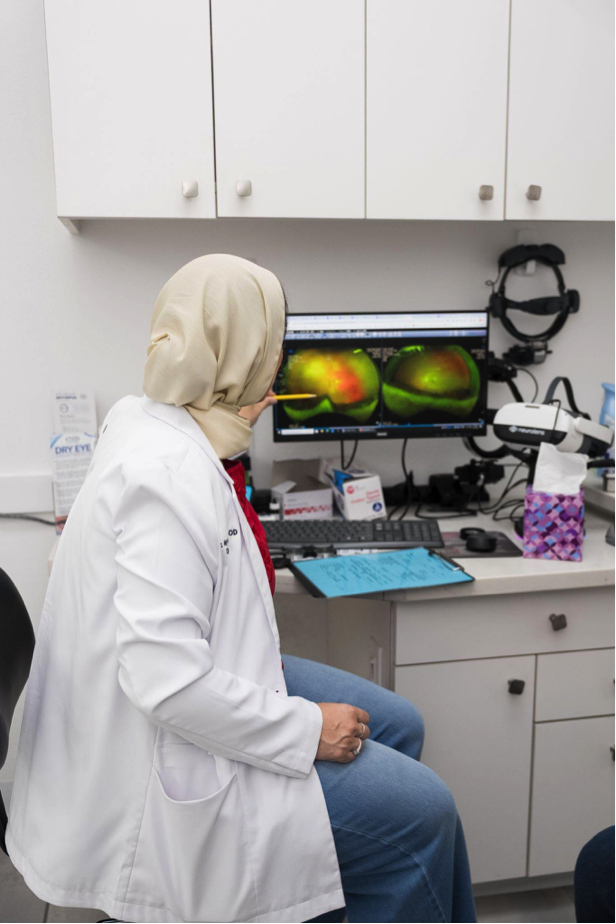
Choosing between an optometrist and an ER depends on the nature and severity of your eye injury. Here are some scenarios to guide you:
Emergency Room (ER):
- Eye injury with head injury or loss of consciousness
- Penetrating wound or object embedded in the eye
- Severe chemical exposure or burns
- Significant bleeding in or around the eye
- Injury as part of a larger trauma or accident
Urgent Care Eye Doctor in Houston:
- Persistent flashes, floaters, or shadows across vision
- Corneal scratch or foreign body without penetration
- Sudden severe eye pain or unexplained redness
- Suspected retinal detachment or acute glaucoma
When You May Need Both
In some cases, a trip to the ER may be necessary first to rule out life-threatening concerns or stabilize the patient. After that initial visit, following up with an emergency eye doctor in Houston is strongly recommended to ensure that any underlying vision threats are properly identified and treated.
What Can You Expect When You See an Eye Doctor for Emergency Care?
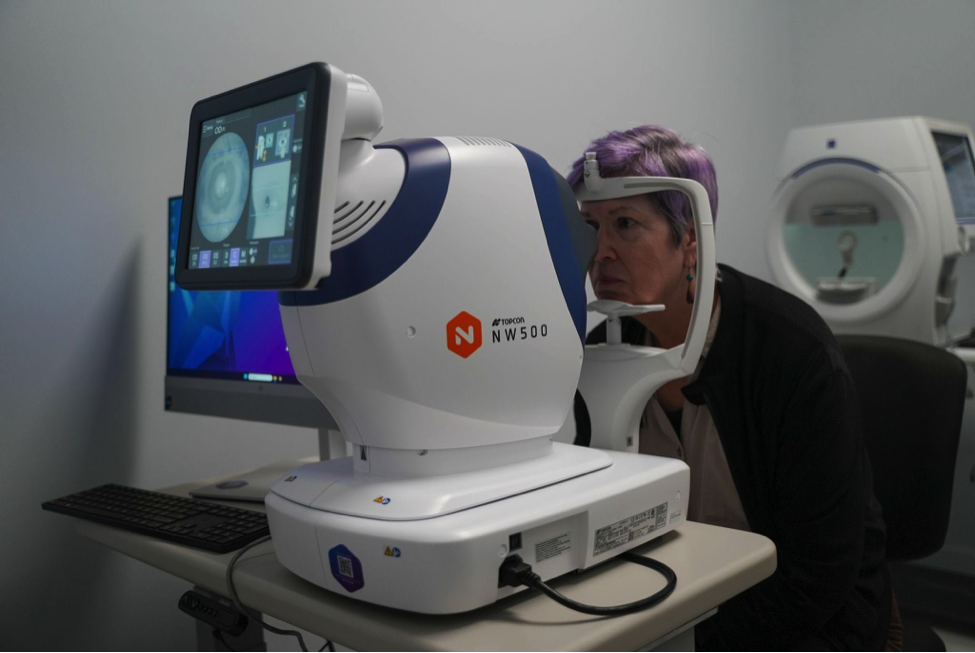
When you visit an eye doctor in Houston for an emergency, they can provide quick relief and treatment. They can quickly and accurately evaluate your condition to begin the right treatment without delay.
During your visit, you can typically expect:
- A detailed review of your symptoms and how the injury or issue occurred
- Visual acuity testing to assess how your vision has been affected
- A slit-lamp examination to inspect the front structures of your eye
- A dilated eye exam to evaluate the retina, optic nerve, and vitreous
- Additional imaging, such as OCT or ultrasound, if a deeper structural issue is suspected
After the evaluation, your eye doctor will explain the findings and recommend a treatment plan. It may include prescription eye drops, removal of a foreign object, laser treatment, or referral to an ophthalmologist for surgery.
When Should You Consider an Emergency Eye Doctor in Houston?

For patients in need of an emergency eye care in Houston, Texas State Optical At Briargrove offers comprehensive evaluations and treatment for a wide range of urgent eye conditions. Their team uses advanced diagnostic equipment to assess vision-threatening problems and recommend appropriate treatment or referral when needed. Do not wait until a small symptom becomes a serious problem.
FAQs
What is the Difference Between Going to the ER vs. An Eye Doctor for Eye Emergencies?
The ER is best for life-threatening trauma such as penetrating wounds, severe burns, or injuries involving head trauma. An emergency eye doctor in Houston is better equipped for most vision-threatening conditions, offering specialized diagnostics and targeted treatment.
When Should I Go to the ER Instead of an Urgent Care Eye Doctor in Houston?
Go to the ER when the eye injury involves a head injury, loss of consciousness, a penetrating wound, severe chemical burns, significant bleeding, or is part of a larger trauma or accident.
Can an ER Treat Eye Emergencies Effectively?
ERs can stabilize patients and manage severe trauma, but most do not regularly have ophthalmologists or optometrists on staff. They may lack the equipment and expertise needed to diagnose or treat vision-threatening conditions accurately.
What Happens During an Emergency Eye Doctor Visit in Houston?
You can expect a review of symptoms, visual acuity testing, a slit-lamp examination, a dilated eye exam, and possibly additional imaging such as OCT or ultrasound. Treatment may include eye drops, removal of a foreign object, laser treatment, or a surgical referral.
Other Articles You May Find of Interest...
- Eyelashes Growing Every Which Way: Causes and Fixes
- Andrew Ting Explains How AI-Powered Retina Scans Can Support Earlier Detection
- Battling With Eye Strain? 5 Signs You Should Get an Eye Exam Quickly
- Can Cataracts Get Worse If You Wait Too Long for Surgery?
- Is Zinc Good for Your Eyes? The AREDS Evidence
- Is Contact Solution the Same as Saline?
- Castor Oil for Eyes: What You Should Know Before Trying It