More Dental Health Articles
How Do You Know If You’re a Candidate for Dental Implants?

Losing a tooth, or several, changes more than your smile. It shifts how you chew, how your remaining teeth align, and over time, how your jawbone holds its shape. Dental implants have become the most durable way to replace missing teeth because they restore the root, not just the visible crown. But before you spend thousands of dollars and months in treatment, there is one question worth answering honestly: are you actually a candidate?
The hard part is that most people only hear the answer after they have already sat in a consultation chair, often at a single practice with a single financial interest in saying yes. Implant dentistry is a large, fast-growing market, and the marketing around it can make it difficult to tell a well-qualified provider from one that is simply good at selling. That makes it worth understanding the basics before you walk in, so you can ask better questions and recognize a thorough evaluation when you get one.
This guide breaks down who qualifies for implants, what can disqualify you, what the procedure costs and why those costs vary so widely, and how to preview your results before committing to anything.
Who is actually a good candidate for dental implants?
A good candidate for dental implants is generally an adult in reasonable overall health, with enough jawbone to anchor the implant and healthy gums to support it. Implants are titanium or zirconia posts placed into the jaw, where the bone gradually fuses to them through a process called osseointegration. That fusion is what gives implants their strength and longevity, and it is also why bone quality matters so much.
You do not need perfect teeth to qualify. Most people missing one tooth, several teeth, or even a full arch can be treated. What matters more is the foundation. Three factors carry the most weight:
Bone volume and density. The implant needs enough bone to hold it securely. If you lost a tooth years ago, the bone in that spot may have shrunk, a process that begins within months of an extraction. This does not automatically rule you out, but it may mean a bone graft is needed first.
Gum health. Active gum disease has to be controlled before implants go in, because the same infection that threatens natural teeth can threaten an implant.
Overall health and habits. Conditions that slow healing, such as uncontrolled diabetes, and habits like smoking, can lower implant success rates. They rarely disqualify you outright, but they change the conversation.
If you want a quick read on where you stand before booking a consultation, you can take this dental implant candidacy quiz and bring the results with you to discuss.
What can disqualify you from getting dental implants?
Very few people are permanently disqualified, but several situations require treatment or planning first. Understanding them helps you avoid surprises and spot a provider who is rushing past important steps.
Insufficient jawbone
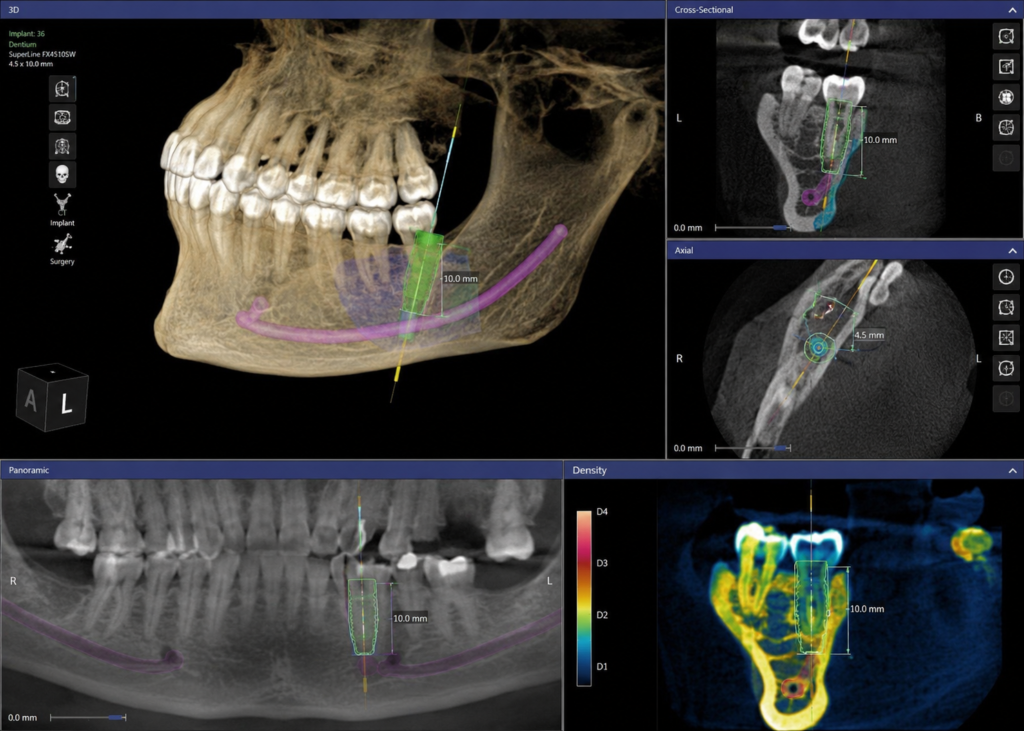
This is the most common obstacle, and it is usually solvable. Bone grafting or a sinus lift can rebuild the foundation, though it adds time and cost. A provider who skips imaging and promises implants without ever assessing your bone is a red flag worth noticing.
Uncontrolled medical conditions
Uncontrolled diabetes, certain autoimmune conditions, and a history of head or neck radiation can interfere with healing. In most cases the issue is control and timing, not a flat no. Your dentist should coordinate with your physician when needed.
Smoking and certain medications
Smoking restricts blood flow to the gums and bone, which raises the risk of implant failure. Some medications, including certain bone-density drugs, also warrant a careful discussion. Honesty here protects your investment.
Active gum disease
Periodontal disease must be treated and stabilized first. Placing an implant into infected tissue invites the same bone loss that causes natural teeth to fail.
The reassuring takeaway is that most of these are starting points for a plan, not endpoints. A thorough provider will tell you exactly what has to happen before implants make sense for you.
How much do dental implants cost in 2026?
A single dental implant in the United States typically costs between $3,000 and $5,000 once you include the implant post, the abutment, and the crown. Replacing a full arch with a fixed solution such as All-on-4 generally runs from $20,000 to $35,000 per arch, with premium materials pushing higher. Full-mouth restoration, both arches, often lands between $40,000 and $60,000 or more.
Those are broad ranges on purpose, because the real number depends on your specific situation. The factors that move the price most are:
- How many teeth you are replacing and whether it is a single tooth or a full arch
- Whether you need preliminary work like extractions, bone grafts, or a sinus lift
- The materials used for the implant and the final teeth
- The provider’s training, location, and the technology in their office
- Sedation type and any imaging or guided-surgery fees
Because the variables stack up quickly, a quoted price from one practice can look very different from another for what sounds like the same procedure. Before you assume a number, it helps to review typical full mouth dental implants cost ranges, and to compare dental implant costs by state, since prices swing widely by region.
Why does the price vary so much from one quote to the next?
Price varies because no two mouths, and no two treatment plans, are identical, and because the dental implant market has very little price transparency. Two patients can both be told they need an implant and receive quotes thousands of dollars apart for legitimate reasons, or for reasons that have nothing to do with their clinical needs.
Legitimate differences come from the complexity of your case. A patient with healthy bone and a straightforward single-tooth gap is a simpler, cheaper case than someone who needs a graft, an extraction, and sedation. Materials matter too. A zirconia full-arch bridge costs more than an acrylic one, and lasts differently.
Less legitimate differences come from how a practice is run. Some offices price aggressively to win the sale and add costs later. Others bundle everything into one transparent figure. This is exactly why comparing providers, not just prices, is the smarter approach. A low quote that skips imaging or glosses over preliminary work is rarely the bargain it appears to be.
Can you see what your smile will look like before treatment?
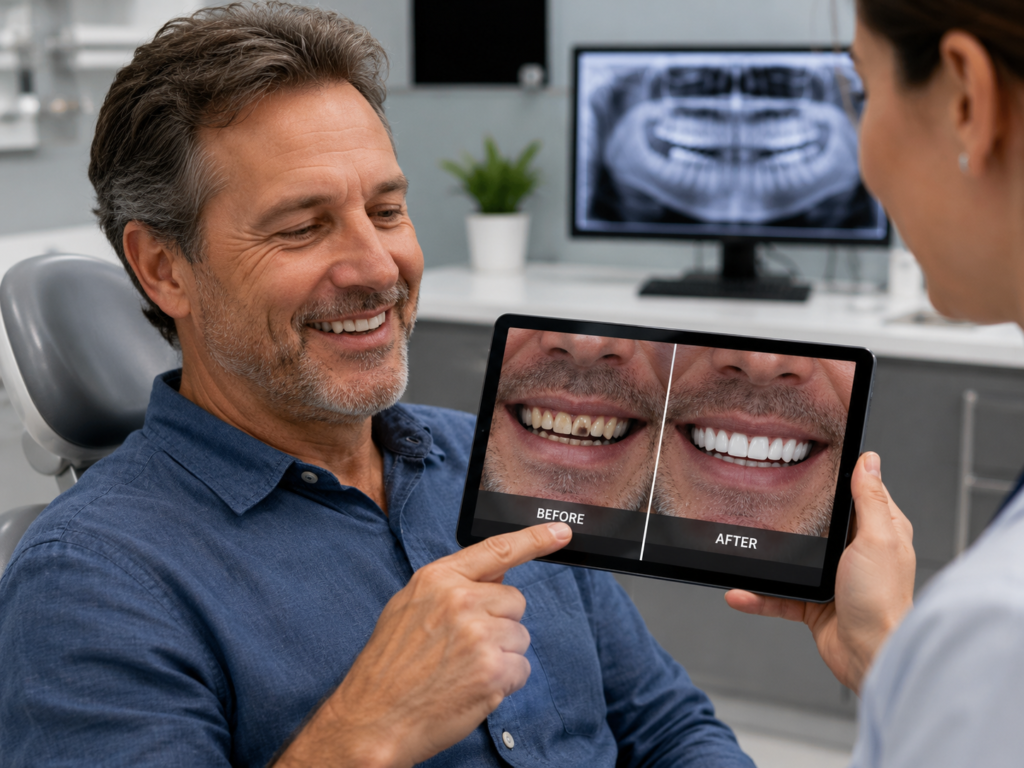
Yes. Modern tools let you preview a corrected smile before any surgery happens, which removes a lot of the uncertainty from a major decision. Seeing a realistic version of your result helps you set expectations, communicate clearly with your provider, and feel confident that the outcome matches what you have in mind.
If you want to visualize the change before committing, you can try a free AI smile simulator to preview how restored teeth could look on your own face. IIt is not a substitute for a professional dental evaluation or diagnosis, but it can provide a general visual preview. It is not a substitute for a professional dental evaluation or diagnosis, but it can provide a general visual preview.
How do you find a qualified implant provider you can trust?
Finding the right provider comes down to verifying training and getting more than one opinion, rather than choosing the first office with the friendliest ad. Dental implants can be placed by general dentists, periodontists, and oral surgeons, and the right choice depends on the complexity of your case. For straightforward single implants, an experienced general dentist may be ideal. For full-arch work, bone grafting, or complicated cases, a specialist’s surgical training carries real weight.
A few things to verify before you commit:
- The provider’s specific implant training and how many cases like yours they handle
- Whether they use 3D imaging to plan placement rather than guessing
- A clear, itemized treatment plan and total cost, including any preliminary work
- What the warranty or follow-up care looks like if something goes wrong
- A second opinion if a quote or plan feels rushed or unusually high
Because comparing providers on training and price is genuinely hard to do on your own, independent resources exist to help. The Dental Implant Directory is an online resource where patients can search and compare implant providers by specialty, location, and credentials before scheduling a consultation.
The Bottom Line
Most people who are missing teeth are candidates for dental implants, even if they first need a graft, gum treatment, or a change in habits to get there. The bigger risks are not usually clinical, they are financial and informational: paying too much, choosing an underqualified provider, or committing before you understand your own case. Take a few minutes to assess your candidacy, ground your cost expectations, preview your results, and compare providers, and you turn a high-pressure decision into an informed one.
About the Author:
This article was contributed by the team at the Dental Implant Directory, an independent resource that helps patients understand their options and compare qualified dental implant providers by specialty, location, and credentials. Learn more at dentalimplantdirectory.com.
Other Articles You May Find of Interest...
- Why Your Teeth May Look Healthy but Still Need Dental Attention
- What Goes Into Developing an Alcohol-Free Mouthwash Beyond the Ingredient List
- 6 Best Dentist Options in Reston, Virginia for Family, Cosmetic, and Emergency Care
- Why Comprehensive Dental Care Matters at Every Stage of Life
- Why Preventive Dental Care Matters at Every Stage of Life
- Colored Braces: A Practical Guide for Teens and Parents in the UAE
- Brushing Teeth for Kids: Secrets to Making Healthy Habits Actually Stick