






More Weight Control, Nutrition & Exercise Articles
Why Most People Fail to Stay Active — and How Mini E-Bikes May Help Solve the Consistency Problem
For decades, public health messaging around physical activity has been remarkably consistent: exercise is essential for cardiovascular health, metabolic balance, mental well-being, and long-term disease prevention. Despite widespread awareness of these benefits, a persistent issue remains—most people do not maintain regular physical activity over time.
This gap between knowledge and behavior is one of the most important challenges in modern health. People generally understand that exercise is beneficial, but struggle to turn that understanding into a sustainable routine.
In recent years, researchers in behavioral science and public health have increasingly focused on a more nuanced question: not “why don’t people exercise?” but rather “why do people fail to stay consistent?”
Within this context, a new category of everyday mobility tools—particularly mini electric bicycles—is emerging as an unexpected but relevant contributor to solving the consistency problem.
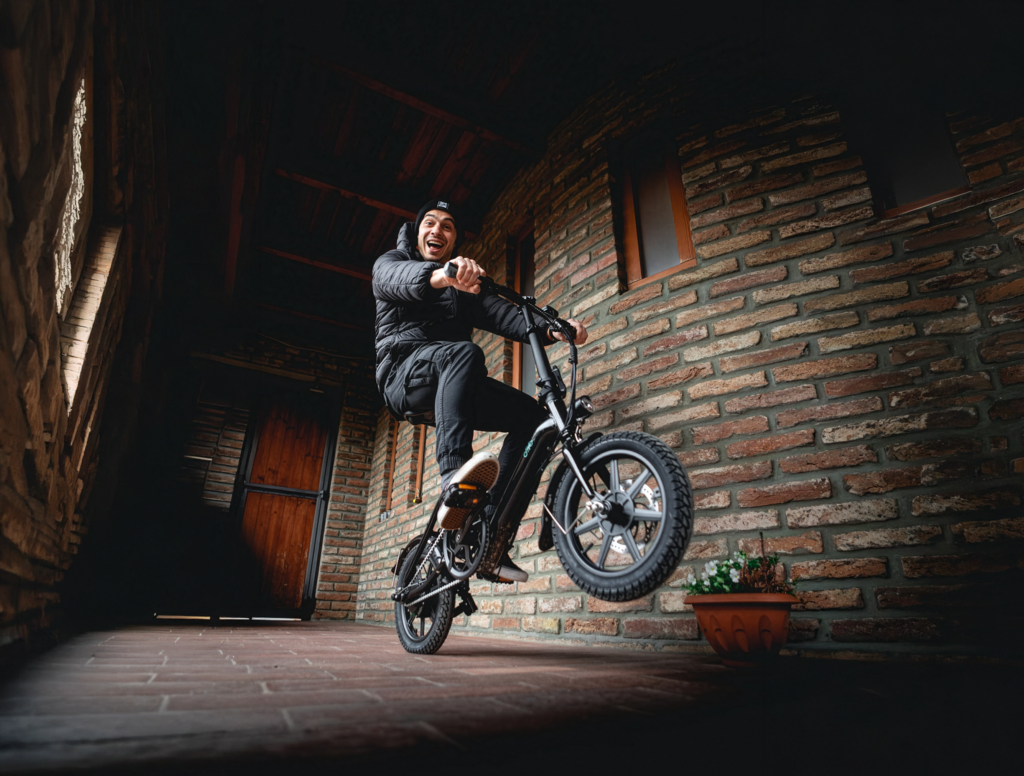
The real problem is not exercise knowledge — it is consistency
Most individuals are not unaware of the benefits of exercise. Instead, the primary barrier lies in maintaining long-term behavioral consistency.
Initial motivation often leads to short-term engagement: a gym membership, a new fitness routine, or increased walking activity. However, adherence tends to decline over time due to competing priorities, fatigue, environmental factors, and psychological resistance.
Studies in health behavior consistently show that dropout rates from structured exercise programs are high, particularly when activity requires significant planning, effort, or time commitment.
The core issue is not understanding what to do—it is sustaining the behavior when daily life becomes demanding.
This is where the concept of “behavioral friction” becomes important.
Why traditional exercise routines are hard to maintain
Traditional forms of exercise, while effective, often require a high activation threshold. This includes:
- Planning dedicated time for workouts
- Traveling to a gym or exercise location
- Maintaining motivation despite fatigue or stress
- Overcoming weather, scheduling, or environmental barriers
These requirements introduce friction into the decision-making process. Even small barriers can significantly reduce the likelihood of consistent engagement.
From a behavioral psychology perspective, when an activity requires repeated conscious effort to initiate, it becomes less sustainable over time.
As a result, many individuals cycle through periods of motivation followed by inactivity, rather than maintaining stable, long-term routines.
How low-effort movement changes behavior patterns
One of the most effective ways to improve long-term physical activity is not necessarily to increase intensity, but to reduce friction.
This concept is central to modern behavioral design: the easier a behavior is to initiate, the more likely it is to become habitual.
In this context, everyday mobility plays a significant role. When movement is embedded into daily routines rather than treated as a separate task, physical activity becomes more consistent and less dependent on motivation.
Electric bicycles represent one of the most practical examples of this principle. By reducing physical strain while still requiring active participation, they lower the barrier to movement without eliminating the activity itself.
Unlike passive transportation, e-bikes still involve pedaling and engagement, meaning they preserve the physical component of exercise while making it more accessible.
Why mini e-bikes solve the “start problem”
Even when people are willing to be active, the most difficult part of any behavior is often initiation.
This is sometimes referred to as the “start problem”—the gap between intention and action.
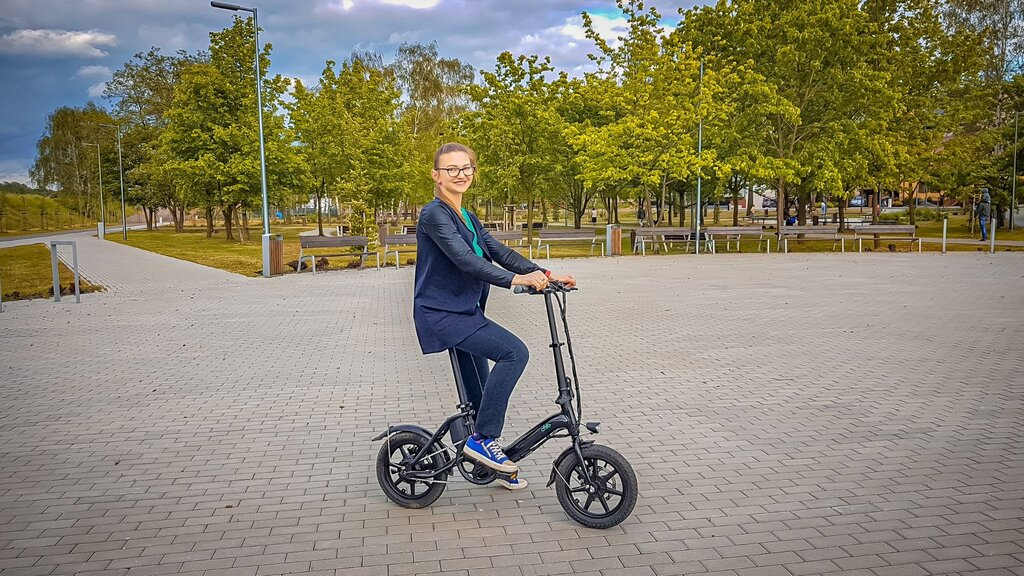
Mini electric bicycles address this issue by significantly reducing the effort required to begin movement. Their compact size, simplified handling, and ease of use reduce both physical and psychological barriers.
Fiido Mini Electric Bikes Collection
From a behavioral perspective, mini e-bikes help in several key ways:
- They reduce preparation time before activity
- They simplify storage and accessibility
- They make short trips feel effortless to initiate
- They lower the mental resistance associated with “going out for exercise”
Importantly, this shift does not rely on increased motivation. Instead, it modifies the environment so that movement becomes the default option rather than a deliberate choice.
This distinction is critical: sustainable behavior change is often driven more by environmental design than by willpower.
Real-world examples of mini e-bikes that reduce usage friction
Different users require different levels of support when integrating physical activity into daily life. Mini e-bikes can serve as practical tools that accommodate varying behavioral patterns and mobility needs.
The Fiido D3 Pro is an example of a compact mini e-bike designed for short-distance transportation and recreational riding.
The Fiido M1 Pro is a larger-format mini e-bike designed for a variety of riding conditions.
Why “ease of use” matters more than fitness motivation
A common misconception in health behavior is that motivation is the primary driver of action. While motivation is important, it is often unstable and influenced by external factors such as stress, workload, and mood.
In contrast, ease of use and convenience tend to be far more reliable predictors of long-term behavior.
When an activity is easy to perform, it requires less decision-making energy. Over time, this reduces reliance on motivation altogether.
This is particularly relevant for physical activity, where consistency matters more than intensity. A moderate level of movement performed regularly is generally more beneficial than sporadic periods of high effort followed by inactivity.
Mini e-bikes align closely with this principle by making movement a low-effort, repeatable action.
Mini e-bikes and the psychology of daily movement
From a psychological perspective, habit formation is driven by repetition, reward, and environmental cues.
Mini e-bikes support all three components:
- Repetition: Easy access encourages frequent use
- Reward: Physical movement combined with convenience creates positive reinforcement
- Environmental cues: Visibility and accessibility increase spontaneous use
Over time, these patterns contribute to identity-based behavior shifts. Instead of viewing exercise as an occasional activity, individuals begin to see themselves as “active movers” in their daily life.
How mini e-bikes increase weekly physical activity without perceived effort
One of the most interesting effects of mini e-bikes is that they often increase total weekly physical activity without users consciously framing it as exercise.
Because rides are shorter, more frequent, and integrated into daily tasks, individuals accumulate movement in small increments throughout the week.
Examples include:
- Short trips to local shops
- Commuting to nearby transit stations
- Casual neighborhood travel
- Unplanned outdoor movement
While each individual session may feel low intensity, the cumulative effect can be significant over time.
This form of “incidental activity” is increasingly recognized in public health discussions as an important contributor to overall movement levels.
Are mini e-bikes actually improving public health behavior?
From a behavioral health perspective, the effectiveness of any intervention is not only measured by intensity, but by adherence and long-term engagement.
Mini e-bikes show particular promise in this area because they address one of the most persistent challenges in physical activity: dropout rates.
By lowering barriers to entry and reducing friction in daily use, they increase the likelihood that individuals will continue engaging in regular movement over time.
While they do not replace structured exercise for fitness training purposes, they can play an important complementary role in supporting baseline activity levels in populations that would otherwise remain largely sedentary.
Conclusion
The challenge of modern physical activity is not a lack of knowledge, but a lack of consistency. While most people understand the importance of exercise, sustaining regular movement remains difficult in the context of busy, sedentary lifestyles.
Mini electric bicycles offer a practical response to this challenge by reducing behavioral friction and making daily movement more accessible.
Rather than relying on motivation alone, they reshape the environment in a way that supports automatic, low-effort physical activity.
In this sense, mini e-bikes are not simply transportation tools. They represent a behavioral bridge between inactivity and sustained movement, helping individuals integrate physical activity into everyday life in a more realistic and sustainable way.
Models such as the Fiido D3 Pro and Fiido M1 Pro illustrate how design can support different stages of behavioral change—from initiating movement to maintaining long-term activity patterns.
Ultimately, the value of mini e-bikes lies not in replacing traditional exercise, but in making consistent movement achievable for a broader range of people. In a world where consistency is the real challenge, this may be their most important contribution to public health.
Other Articles You May Find of Interest...
- What a Weight Loss Clinic in Melbourne Can Do Before and After Your Surgery
- Cold Plunge or Sauna? What the Recovery Research Actually Shows
- How Personalized Weight Loss Programs Help Achieve Sustainable, Long-Term Results
- High-Fructose Foods to Limit and Lower-Sugar Alternatives
- Best High-Fiber Foods Chart for Better Digestive Health
- How Many Carbs Are in Turkey Bacon?
- 9 Healthiest Mushrooms to Eat





