More Mental Health Articles
The Psychology of Building Virtual Worlds: Why Creative Gaming Appeals to the Brain
There’s a moment every builder knows. You’ve spent maybe two hours placing blocks, adjusting rooflines, tweaking the angle of a staircase nobody asked for, and suddenly you step back and just… look at it. Something you made from nothing. It sounds ridiculous. And yet the feeling is completely real, and the brain science behind it is genuinely fascinating.
It Starts With the Urge to Make Things
Humans are builders by default. Evolutionary psychologists argue that the drive to construct, arrange, and shape environments is hardwired – it’s tied to survival, territory, identity. What’s interesting is that the brain doesn’t seem to care much whether the construction is physical or digital. The same reward circuits fire.
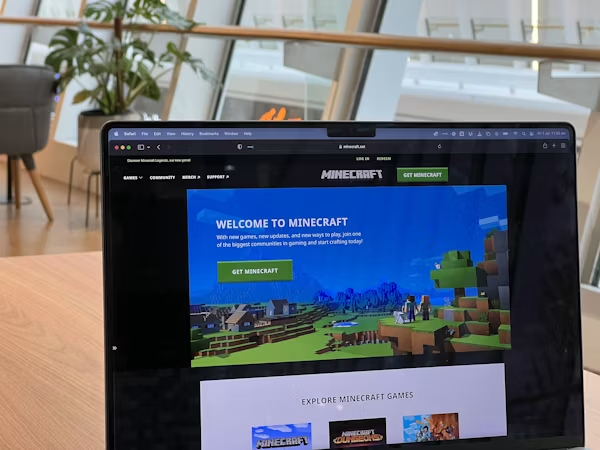
Games like Minecraft, which has somewhere north of 140 million active monthly players as of recent counts, work partly because they hand the player genuine creative agency – open-ended, low-stakes, and highly customizable. Community-created modifications extend that experience even further, and platforms such as CurseForge or Modrinth have helped make modding more accessible by giving players a place to discover, share, and manage user-created content.
Why Multiplayer Changes Everything
When you add other people to building something, the psychological dynamic shifts completely. Suddenly there’s an audience, collaborators, sometimes friendly conflict over design choices. The project becomes social, and the brain responds to that differently – more dopamine, more sustained engagement, a stronger sense of meaning attached to the outcome.
When those creative projects become collaborative, the experience changes again. Players are no longer building only for themselves; they are contributing to a shared environment shaped by a community. Maintaining those spaces over time often depends on reliable hosting built for Minecraft multiplayer servers, which allows players to return to the same world, continue long-term projects, and participate in ongoing social interactions. The technical details may not be the focus for most players, but stable access helps support the continuity that allows online communities to develop and persist.
The Flow State Is the Point
The concept of flow – that absorbed, frictionless state where challenge and skill are perfectly balanced – gets cited a lot in gaming research, and for good reason. Creative building games are unusually good at sustaining it. The tasks are modular enough that you can always find something at the right difficulty level: a complex redstone circuit if you want a challenge, decorating a garden if you don’t. The game scales with your mood, which most activities in life frankly don’t.
The Identity Thing
Here’s a less obvious piece of this. Virtual worlds let people externalize parts of their identity in ways that are hard to do elsewhere. The city you build, the aesthetic choices you make, the server culture you contribute to – these become a kind of self-expression. Psychologists call this possible selves theory: people need spaces to explore who they might be, not just who they currently are.
For teenagers especially, this matters enormously. A kid who feels invisible at school might be a respected architect on a server with two hundred players. That’s not escapism in the pathological sense – it’s practicing agency, creativity, and social navigation in a lower-stakes environment. Skills transfer. Research on adolescent gamers increasingly supports this.
Why the Brain Keeps Coming Back
- The feedback loop is immediate and legible – you place a block, it’s there, the world responds;
- Creative progress is visible and permanent in a way most daily effort isn’t.
Both of these are psychologically unusual. Most of what adults do in a day produces diffuse, delayed, or invisible results. Creative gaming inverts that entirely. The satisfaction is right there, concrete, and yours.
There’s a reason architects, engineers, and designers consistently show up in surveys of “adult gamers who still play Minecraft”. The appeal isn’t nostalgia. It’s that the game speaks the same language their brains already use – spatial reasoning, iterative design, problem-solving through making.
Virtual worlds aren’t an escape from the real one. For a lot of people, they’re just another place to be genuinely, creatively themselves.
Other Articles You May Find of Interest...
- Why Your Mental Wellness Routine Should Integrate Exercise
- How to Protect Your Mental Health After Losing a Pet
- The Hidden Link Between Blood Sugar and Anxiety: What Continuous Glucose Monitors Reveal
- Why a Gradual, Clinician-Guided Approach to Methylfolate May Matter
- Breaking the Stigma Around Mental Health and Seeking Professional Support
- Complex PTSD vs. PTSD: The Differences That Can Change Your Treatment
- When Talk Therapy Isn’t Enough: Understanding More Intensive Treatment for OCD