






More Beauty Skin Care & Gorgeous Smiles Articles
Narrowband UVB Therapy: Benefits, Risks, and Best Practices for Patients
This information is for educational purposes only and does not replace medical advice from a licensed dermatologist.
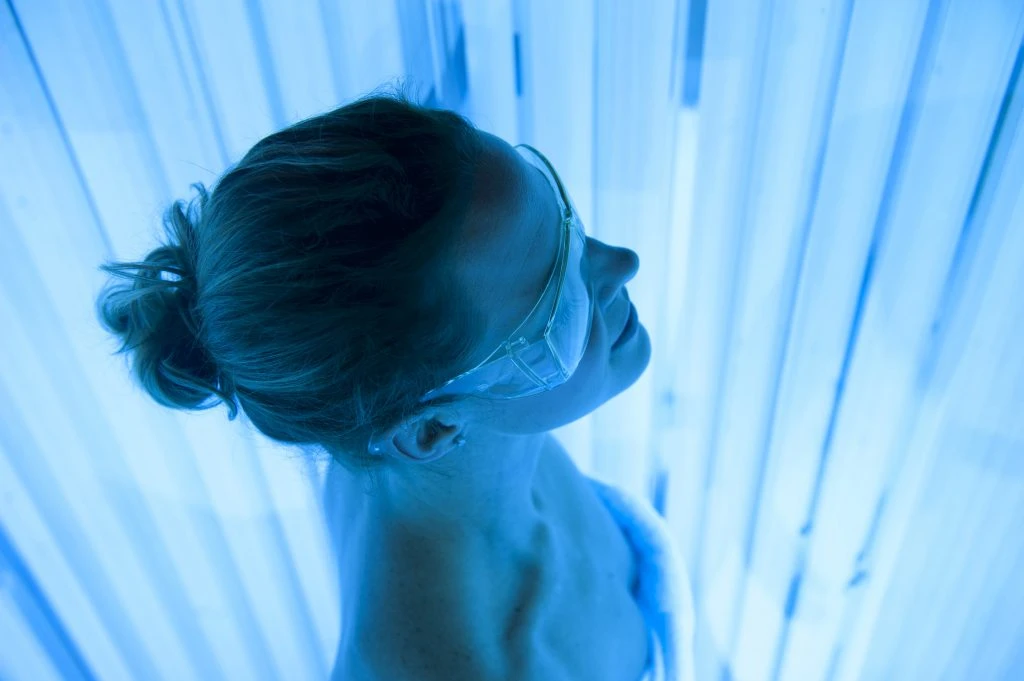
What Is Narrowband UVB?
Narrowband UVB uses ultraviolet wavelengths between 311 and 313 nanometers [1]. Think of it like tuning a radio to one specific frequency. Research over the past three decades shows this wavelength range treats dermatologic conditions effectively while minimizing erythema and photodamage compared to broader UV spectrums [2].
At the cellular level, three things happen. Narrowband UVB reduces cutaneous inflammation, inhibits overactive immune cells and slows excessive keratinocyte proliferation[3]. In psoriasis patients, characteristic scaly plaques gradually reduce. The treatment acts locally within the skin — systemic exposure stays minimal. This targeted approach has led to narrowband UVB replacing broadband UVB in most clinical settings[4].
Narrowband vs. Broadband UVB
Earlier phototherapy used broadband UVB lamps emitting wavelengths from 280 to 320 nanometers[2]. The problem was straightforward: therapeutic wavelengths came packaged with ones causing inflammation.
Patients developed significant erythema. This restricted both treatment intensity and frequency.
Narrowband UVB solved this by concentrating emission at 311-313 nm. So what is the result? Maximum therapeutic benefit with substantially reduced burning. Comparative studies consistently show superior outcomes: improved clearance rates, faster response, extended remissions, fewer complaints of excessive exposure[5].
The safety profile matters most here. Large-scale studies tracking patients over many years have not identified increased skin cancer risk with narrowband UVB phototherapy[4]. PUVA therapy (psoralen plus UVA treatment) carries established carcinogenic risk with cumulative use[1]. This difference has positioned narrowband UVB as first-line phototherapy.
Conditions Treated With Narrowband UVB
The FDA has cleared narrowband UVB devices for psoriasis, vitiligo, eczema, and various other dermatologic conditions responsive to UV therapy[7].
Psoriasis
Most common indication. The erythematous, scaly plaques respond well to narrowband UVB treatment. Standard protocols involve 2-3 weekly sessions. Most patients achieve significant improvement after 20-30 treatments over approximately two to three months[1].
Available data indicates roughly 60-70% reach clear or nearly clear skin[1]. A comprehensive systematic review found that narrowband UVB produces faster clearance and more sustained remissions compared to broadband approaches[5].
For patients with widespread plaques covering more than 10% body surface area, phototherapy often becomes the logical choice. Managing extensive disease with topical agents alone rarely works well.
Vitiligo
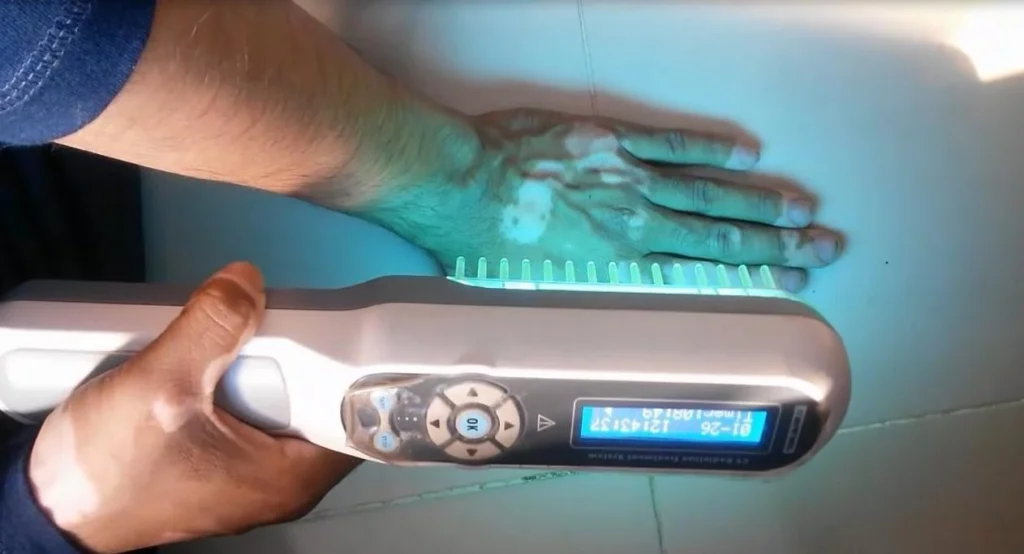
Depigmented patches from melanocyte loss respond well to narrowband UVB. Dermatologists consider it the gold standard phototherapy for vitiligo[4].
How does it work? The treatment activates melanocyte reservoirs in hair follicles while modulating immune-mediated mechanisms contributing to melanocyte destruction. Long-term follow-up data shows 80% of vitiligo patients maintain good repigmentation one year after completing treatment[4].
Outcomes compare well to PUVA or excimer laser therapy. The advantage: no oral photosensitizing medications required[4]. Treatment typically spans 6-12 months, though some patients notice initial repigmentation within 8-12 weeks.
Atopic Dermatitis (Eczema)
For atopic dermatitis resistant to topical therapies, narrowband UVB offers meaningful benefit. The therapy modulates cutaneous immune responses. It helps restore the compromised epidermal barrier characteristic of eczema[4].
The American Academy of Dermatology recognizes it as effective when topical approaches are insufficient[8]. Patients usually see substantial pruritus reduction within several weeks. This significantly improves quality of life.
In clinical practice, dermatologists typically consider phototherapy after patients have failed mid-to-high potency topical corticosteroids and calcineurin inhibitors. Sometimes even earlier if the disease is widespread.
Benefits of Narrowband UVB
The targeted wavelength delivers strong therapeutic results with minimal erythematogenic response[2]. This allows clinicians to administer higher doses and achieve faster responses while maintaining patient comfort.
Improved tolerability affects treatment adherence. When therapy causes minimal discomfort or visible erythema, patients maintain recommended schedules more consistently.
Unlike many systemic medications, narrowband UVB can be administered intermittently over years without hepatotoxicity or immunosuppression concerns[10]. This suits chronic relapsing conditions like psoriasis well. Patients undergo treatment during flares, discontinue during remission.
Many patients value the non-pharmaceutical approach. No oral medications. No injections. No drug interactions to worry about. Narrowband UVB combines well with topical therapies or certain systemic treatments to enhance outcomes[11]. This flexibility allows individualized protocols tailored to specific patient needs.
Special populations benefit particularly. Narrowband UVB is appropriate for pediatric patients, pregnant women, and immunocompromised individuals who may not tolerate systemic therapies[10]. Dermatologists frequently prescribe it for these groups because UV exposure stays localized without systemic absorption.
Risks and Side Effects
Narrowband UVB maintains a favorable safety profile, but potential risks warrant consideration.
Most common adverse effect: mild erythema similar to mild sunburn. Appropriate erythema actually indicates effective dosing[2]. Excessive dosing produces significant erythema with tenderness, pruritus, or burning sensations[2]. Severe overdosing may rarely result in vesiculation[2].
Treatment protocols emphasize conservative initial dosing with gradual increases[2]. When adverse effects occur, they typically resolve without intervention. Some patients with darker skin phototypes experience temporary hyperpigmentation in treated areas[2]. This generally fades over time.
Any UV exposure contributes to photoaging over time. Lentigines, fine rhytides, textural changes[2]. While narrowband UVB delivers substantially less cumulative UV exposure than natural sunlight, years of treatment may produce some photoaging changes. Clinicians should discuss this with patients, especially those starting phototherapy in their 20s or 30s who may accumulate significant exposure over decades.
Carcinogenesis and Long-Term Safety
Multiple large prospective studies following patients for extended periods have not identified increased rates of melanoma or non-melanoma skin cancer in individuals treated with narrowband UVB[4]. This contrasts markedly with PUVA, which carries established carcinogenic risk[1].
The American Academy of Dermatology still recommends cautious use in patients with previous skin cancer history or extensive prior UV exposure[11]. Patients with a history of melanoma need careful consideration. Same for multiple non-melanoma skin cancers or genetic conditions predisposing to skin cancer (such as xeroderma pigmentosum). These cases need individualized risk-benefit assessment.
Contraindications
Certain patients have absolute contraindications.
Individuals with lupus erythematosus or porphyria should not receive treatment[6]. UV exposure triggers severe reactions in these conditions.
Patients taking photosensitizing medications need careful evaluation[6]. This includes certain antibiotics (tetracyclines, fluoroquinolones), diuretics, and NSAIDs.
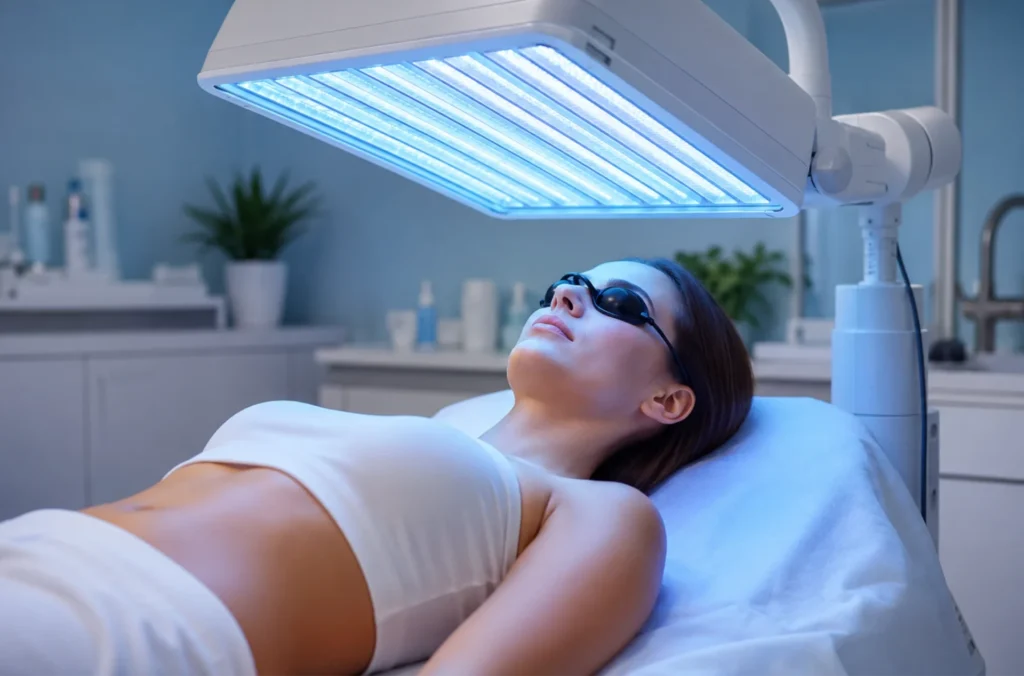
Eye protection with UV-blocking goggles is mandatory for every session to prevent cataract formation and other ocular damage[6]. Some clinics provide disposable goggles. Others require patients to purchase their own to ensure proper fit and consistent use.
Narrowband UVB at Home: What to Know
Home-based narrowband UVB represents a significant advancement in treatment accessibility. Medical-grade devices delivering the same therapeutic wavelength are available for home use. This eliminates frequent clinic visits[12].
Who benefits most? Patients with chronic conditions requiring ongoing treatment. Individuals living far from phototherapy centers. Those with scheduling constraints precluding regular clinic attendance. Patients requiring long-term maintenance therapy may benefit substantially.
Consistent adherence is essential. Phototherapy efficacy depends on regular sessions, typically 2-3 weekly treatments with minimum 24-hour intervals[1].
These are prescription medical devices requiring FDA clearance for treating dermatologic conditions[7]. The UV Treat 311nm UVB Lamp represents one example with FDA clearance and portable design. Other manufacturers produce similar devices. All legitimate home phototherapy units are medical-grade equipment with integrated safety features.
Tanning beds are inappropriate substitutes. They primarily emit UVA wavelengths, not therapeutic narrowband UVB required for treatment. Tanning beds also carry increased skin cancer risk.
Medical phototherapy requires properly calibrated devices from reputable manufacturers specializing in narrowband UVB equipment. All home phototherapy devices in the United States require prescription authorization[14]. They cannot be legally obtained without physician oversight.
Safety Features and Monitoring
Home devices incorporate automatic timers terminating exposure at prescribed doses. Lockout mechanisms prevent overdosing. Some models offer connectivity allowing remote dermatologist monitoring[13].
These safeguards minimize user error but do not eliminate the need for careful protocol adherence. Clinical research confirms that when patients follow protocols appropriately, home treatment outcomes equal clinic-based therapy[15]. Success requires commitment to consistent schedules.
Patients who miss sessions sporadically or fail to gradually increase doses according to protocol see significantly diminished results. Consistency matters more than most people realize.
Safe Use Best Practices
Treatment frequency should follow established guidelines: three sessions weekly with minimum 24-hour intervals[1]. A typical schedule follows Monday-Wednesday-Friday timing.
More frequent treatment does not improve outcomes. It increases adverse effect risk[1].
A full treatment course typically requires 20-30 sessions before significant improvement becomes apparent. This represents approximately 2-3 months of consistent therapy[1]. Regular appointments during this initial course matter. Research shows consistent, regular treatment produces optimal outcomes. Sporadic sessions are significantly less effective[1].
Eye Protection and Shielding
UV-blocking goggles must be worn during every treatment session[6]. No exceptions here.
When treating areas near the eyes, patients should keep eyes closed throughout exposure. Male patients should shield genital areas—this skin shows particular vulnerability to UV effects[6].
Body areas not requiring treatment should be covered or protected with sunscreen[6].
Skin Preparation
Skin should be clean prior to each session. Patients should avoid lotions, sunscreen, oils, or other topical products that might block UV penetration before treatment[6].
If using salicylic acid preparations for psoriasis, omit these on treatment days. They create a barrier reducing treatment efficacy. Some clinics allow plain moisturizer if skin is very dry, as adequately hydrated skin may absorb UV more uniformly. Patients should follow their specific clinic’s guidelines.
Dosing Protocols
Initial dosing is determined based on skin phototype. Lighter skin (Fitzpatrick types I-II) requires lower starting doses around 200-280 mJ/cm². Darker skin (types IV-VI) typically tolerates higher initial doses of 400-600 mJ/cm²[2].
Some facilities perform minimal erythema dose (MED) testing to determine individual sensitivity[2]. This involves exposing small areas of skin to increasing UV doses to identify the minimum dose causing slight erythema 24 hours later.
Doses are gradually increased with each session provided excessive erythema does not occur. Typical increases range from 10-40% per session depending on skin response. This escalation continues until clearance is achieved or maximum tolerated dose is reached—often 2000-4000 mJ/cm² for maintenance.
If treatment is interrupted for more than 1-2 weeks, dose reduction becomes necessary upon resumption. A common protocol: reduce dose by 25-50% after a 2-week gap, by 50-75% after a month. This avoids burning skin that may have increased sensitivity during the treatment gap.
Post-Treatment Care
Post-treatment skin care includes generous moisturizer application. UV exposure causes skin dryness. Keeping skin hydrated helps.
Patients should minimize additional sun exposure on treatment days to avoid cumulative UV burden. When sun exposure is unavoidable, sunscreen should be applied to non-treated areas. Never apply sunscreen to treatment areas immediately before phototherapy sessions. It blocks therapeutic UV.
Follow-Up Monitoring
Regular dermatologic monitoring forms an integral part of treatment. During active therapy, physicians typically recommend evaluations every 3 months to assess progress, monitor for concerning skin changes, and adjust protocols[1].
After achieving clearance, follow-up intervals may extend to every 6 months. These visits allow addressing concerns, optimizing protocols, and ensuring phototherapy stays appropriate and safe.
Dermatologists perform full-body skin examinations to detect any new or changing lesions. This is especially important with cumulative UV exposure.
Conclusion
Narrowband UVB therapy has established itself as one of dermatology’s most effective tools for treating chronic inflammatory skin conditions. The precise 311-313 nm wavelength delivers substantial therapeutic benefit with minimal adverse effects[10].
For psoriasis, vitiligo, and eczema, diseases significantly impacting quality of life, narrowband UVB phototherapy achieves outcomes comparable to systemic medications. Without the associated systemic toxicity. Both the American Academy of Dermatology and National Psoriasis Foundation support it as evidence-based treatment with an excellent safety profile[11].
It works well even for special populations. Pediatric patients and pregnant women who may not tolerate systemic therapies can often use narrowband UVB safely[10].
Potential risks exist. Primarily erythema if dosing is not carefully managed. Theoretical long-term photoaging. The carcinogenic concerns associated with most UV modalities do not appear significant with narrowband UVB based on current evidence[4].
When patients wear appropriate eye protection, follow dosing protocols, and maintain regular dermatologic monitoring, treatment can proceed safely[6].
Home phototherapy has significantly expanded treatment accessibility. Not all patients can accommodate three weekly clinic visits over months. Home-based treatment—with appropriate medical oversight and FDA-approved equipment from manufacturers specializing in narrowband UVB phototherapy devices—makes this therapy available to substantially more patients[15].
Studies indicate patients maintaining consistent home treatment schedules achieve superior outcomes compared to those with poor clinic appointment adherence[1]. The convenience factor translates to better real-world effectiveness.
For patients whose topical treatments are insufficient and who face decisions regarding systemic medication initiation, phototherapy warrants serious consideration[1]. With proper protocols and close dermatologic collaboration to screen for contraindications and monitor cutaneous health, patients can achieve narrowband UVB benefits while minimizing risks[4].
References
[1] The Patient’s Guide to Psoriasis Treatment. Part 1: UVB Phototherapy. PMC.
[2] Psoriasis treatment: Phototherapy. American Academy of Dermatology.
[3] Narrowband UVB reduces TNF by B-cells via TLR7. PMC.
[4] An Update on Narrowband Ultraviolet B Therapy for the Treatment of Skin Diseases. PMC.
[5] Light Therapy for Psoriasis. National Psoriasis Foundation.
[6] Phototherapy – NB-UVB. BAD Patient Hub.
[7] UVB Phototherapy Lamps in the US. UVTREAT.
[8] Guidelines of Care for the Management of Atopic Dermatitis: Part 3. PMC.
[9] Phototherapy – StatPearls – NCBI Bookshelf. NIH.
[10] Latest Clinical Practice Guidelines for Psoriasis Phototherapy Treatment. LiVDerm.
[11] Psoriasis clinical guideline. AAD.
[12] Narrowband UVB Light Therapy for Psoriasis, Vitiligo & Eczema. Array Skin.
[13] NB UVB Light Therapy for Atopic Dermatitis at Home. Zerigo Health.
[14] Home Phototherapy Products – SolRx.
[15] Study Details NCT03123016. ClinicalTrials.gov.
Other Articles You May Find of Interest...
- Botox vs Dysport vs Xeomin: Which Neuromodulator Is Right for You?
- Understanding PDRN Therapy: The Science Behind Skin Barrier Repair and Tissue Regeneration
- Who Is a Suitable Candidate for Breast Augmentation?
- Peptides vs Retinoids for Sensitive Skin: Why Matrixyl 3000 and CoQ10 Are Changing the Conversation
- Whitehead or Pustule? How to Tell These Acne Bumps Apart
- What Patients Should Know About Skin Removal Surgery
- Breast Augmentation vs. Breast Lift: Understanding the Difference





