






More Weight Control, Nutrition & Exercise Articles
Does Creatine Help in Muscle Recovery? Here’s the Truth
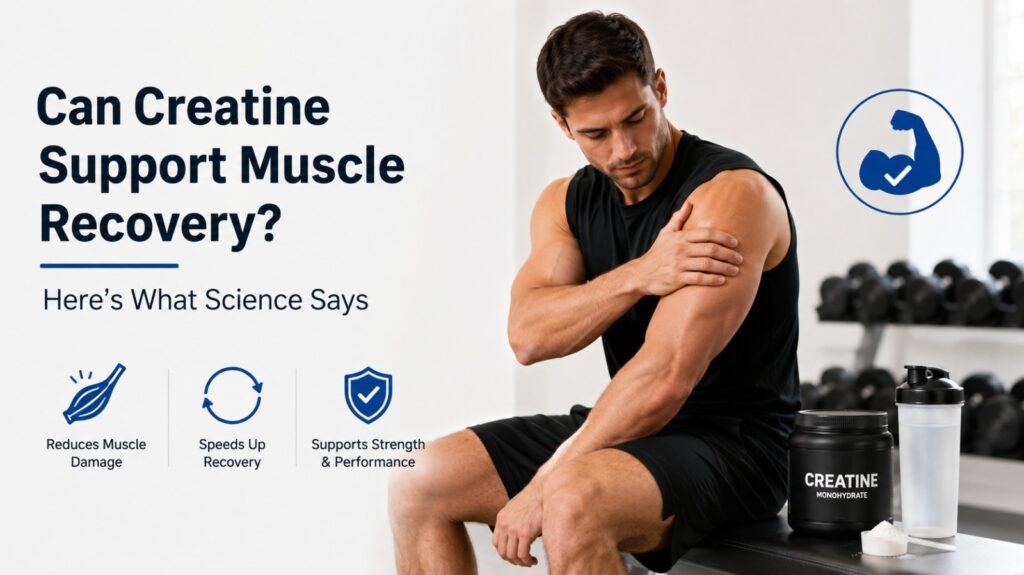
Muscle recovery is where real progress happens. Training breaks muscle fibers down, but recovery rebuilds them stronger. If recovery is slow, performance drops, soreness increases, and consistency suffers.
This is why creatine has become one of the most widely studied supplements in sports nutrition. While it is commonly associated with strength and muscle growth, its role in recovery is gaining serious scientific attention.
So, does creatine help in muscle recovery?
Evidence suggests it does. Creatine may support faster energy restoration, reduce exercise-induced muscle damage, and improve the overall muscle recovery process after intense training.
What Is Creatine?
Creatine is a naturally occurring compound stored primarily in skeletal muscles. It is also found in small amounts in foods like red meat and fish, and is produced by the body in the liver, kidneys, and pancreas.
Its main role is to help regenerate ATP (adenosine triphosphate), the body’s immediate energy source during high-intensity exercise.
Because of this function, creatine supplements are widely used to support performance in activities such as weightlifting, sprinting, and explosive sports movements.
Over decades of research, creatine has consistently shown benefits in strength, power output, and training performance, making it one of the most trusted supplements in sports science.
How Creatine Supports Muscle Recovery
Muscle recovery is a complex process involving energy restoration, muscle repair, and adaptation. Creatine may support this process in several important ways.
Faster Energy Restoration in Muscles
During intense exercise, muscles rapidly deplete ATP stores. Once ATP levels drop, fatigue increases and performance declines.
Creatine helps regenerate ATP more efficiently, allowing muscles to restore energy faster after training. This can be especially beneficial during repeated training sessions or high-intensity programs.
Over time, this improved energy recovery can support better workout consistency and reduced fatigue accumulation.
Reduced Exercise-Induced Muscle Damage
Intense resistance training naturally causes microscopic muscle damage. This damage is necessary for muscle growth, but excessive breakdown can slow recovery and increase soreness.
Research suggests creatine supplementation may help reduce certain markers of muscle damage following high-intensity exercise.
This means athletes may experience:
- Faster return to training readiness
- Reduced post-workout fatigue
- Improved training consistency
This effect becomes more noticeable during heavy training phases or back-to-back workout schedules.
Supports the Muscle Recovery Process
Beyond energy and damage control, creatine may also support the overall muscle recovery by improving how muscles handle training stress.
One important mechanism is cell hydration. Creatine draws water into muscle cells, which helps maintain optimal cellular function. Well-hydrated muscle cells may support better nutrient delivery and recovery efficiency.
This hydration effect also contributes to a fuller muscle appearance and improved training performance.
Does Creatine Reduce Muscle Soreness?
Muscle soreness (DOMS) is common after new or intense workouts. It is caused by micro-tears and inflammation in muscle tissue.
Creatine is not a painkiller, but some studies and athlete reports suggest it may help reduce the severity of soreness over time. This is likely due to its role in reducing muscle damage and supporting faster recovery.
However, results vary based on training intensity, recovery habits, sleep, and nutrition.
Why Athletes Use Creatine for Recovery
Creatine is widely used not only for performance but also for recovery support. Athletes value it because recovery speed directly impacts training quality.
It is commonly used by:
Strength Athletes
To support recovery between heavy lifting sessions and maintain training intensity.
Endurance and Hybrid Athletes
To sustain repeated efforts and reduce fatigue during demanding training cycles.
Beginners in Fitness Training
To adapt more comfortably to resistance training and reduce excessive post-workout fatigue.
For many athletes, creatine’s value lies in long-term consistency rather than short-term effects.
How Long Does Creatine Take to Work?
Creatine is not an instant supplement. It works by gradually increasing muscle creatine stores over time.
Most users begin noticing benefits within 2–4 weeks of consistent use. Some may experience faster results with a loading phase, but this is optional.
The key factor is consistency, not timing.
Best Way to Use Creatine for Recovery
The most researched form is creatine monohydrate.
A standard daily dose is 3–5 grams.
It can be taken:
- After workouts
- Before workouts
- With meals
- On rest days
What matters most is daily consistency and proper hydration.
Creatine works best when combined with a balanced diet, adequate sleep, and structured training.
Is Creatine Safe?
Creatine is one of the most extensively researched sports supplements in the world. Long-term studies consistently support its safety in healthy individuals when used at recommended doses.
Despite common misconceptions, scientific evidence does not show harmful effects on kidney function in healthy users.
As with any supplement, quality sourcing and proper dosing are important for safe use.
Creatine and Muscle Growth Connection
Recovery and muscle growth are deeply connected. Better recovery allows higher training quality, which leads to better adaptation and muscle development.
This is why creatine is often used during muscle-building phases. It supports both performance output and recovery capacity, making training more effective over time.
Frequently Asked Questions
Does creatine help with muscle recovery?
Yes. Research suggests creatine may support faster recovery by improving energy restoration and reducing exercise-induced muscle stress.
Can creatine reduce muscle soreness?
It may help reduce soreness in some individuals by supporting recovery and limiting muscle damage.
Should beginners take creatine?
Yes. Beginners can benefit from improved training performance and better recovery adaptation.
Can I take creatine every day?
Yes. Daily use helps maintain muscle creatine stores for consistent benefits.
Is creatine only for bodybuilders?
No. It is used by athletes, fitness enthusiasts, and people focused on performance and recovery.
Final Thoughts
Creatine is far more than a strength supplement. It plays a meaningful role in energy production, training performance, and recovery support.
So, does creatine help in muscle recovery?
Based on scientific evidence, it can. It supports faster energy restoration, helps manage training stress, and contributes to a more efficient recovery process.
When combined with proper training, sleep, nutrition, and hydration, creatine can help you recover better and train more consistently over time.
Other Articles You May Find of Interest...
- Does Creatine Help in Muscle Recovery? Here’s the Truth
- Cymbalta and Its Impact on Appetite: What You Need to Know
- Can Januvia Aid in Your Weight Loss Journey?
- How Vitamin D3 K2 Supports Long-Term Health and Preventive Wellness Habits
- How to Use a 24 Hour Gym Safely When It’s Empty at Night
- The Surprising Health Benefits of Eating Fish
- Can Food Cause Heart Palpitations? Discover the Foods to Avoid




