More Dental Health Articles
Revolutionary Advancements in Full-Arch Dental Implantology
Key Takeaways
- Digital planning and AI integration improve the safety and precision of full-arch dental implants.
- Advanced implant designs and materials deliver superior function and longevity.
- Immediate loading protocols benefit patients by significantly reducing treatment time.
Full-arch dental implantology has seen significant progress in recent years, introducing patients to faster, more reliable, and more esthetically pleasing solutions for complete dental restoration. This transformative field leverages cutting-edge technologies to provide comprehensive care, ensuring greater precision and satisfaction. For clinicians seeking to master these evolving techniques, comprehensive Dental Implant Training can unlock the latest methods and approaches, paving the way for better patient outcomes and clinical confidence.
The modern landscape of full-arch implantology benefits from the integration of artificial intelligence, digital workflows, novel implant designs, immediate loading protocols, and advanced materials. Each of these innovations has moved the specialty closer to the goal of delivering lasting, functional, and natural-looking smiles. These advancements are reshaping standard practices and expanding what is possible for patients with complex dental needs.
Digital Planning and AI Integration
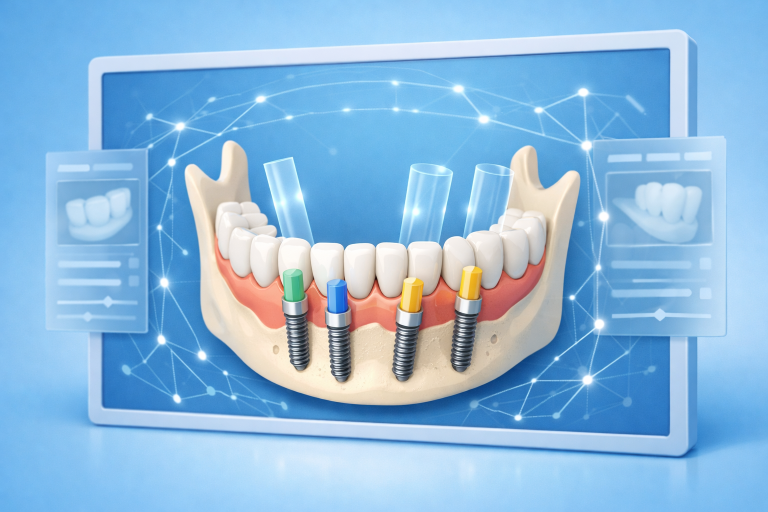
The introduction of digital planning tools and artificial intelligence (AI) has revolutionized full-arch implantology. By employing sophisticated technology, clinicians can create a detailed 3D representation of each patient’s oral anatomy. This enables exact implant placement, optimizing function and esthetic results while minimizing complications. Tools like the SmileInOne System (SiOS) use 3D axis alignment and robust pre-surgical simulation to reduce manual guesswork, enabling highly predictable results for even the most challenging cases. The implementation of digital planning not only streamlines the surgical workflow but also supports more consistent and efficient outcomes.
Furthermore, advanced AI-driven algorithms can analyze volumetric bone density and simulate multiple potential surgical scenarios, offering recommendations tailored to individual anatomical nuances. This empowers clinicians to anticipate risks, select the best restorative strategy, and communicate treatment plans more effectively to patients. The combined effect of precision diagnostics and virtual case presentations fosters greater trust and understanding, making patients more comfortable with their care journey. For dental practices, embracing digital- and AI-driven planning protocols can also facilitate interdisciplinary collaboration when specialists, restorative dentists, and lab technicians must coordinate on complex, multi-step rehabilitation cases.
Innovative Implant Designs
Changes in implant design have dramatically improved the prospects for patients undergoing full-arch rehabilitation. Companies such as Straumann have introduced implants engineered for enhanced stability and osseointegration, even in cases of severe bone resorption. Tapered, tissue-level implant designs ensure secure initial stability, which is critical for both immediate and long-term success. Numerous clinical studies show that modern implant systems achieve higher success rates and fewer complications, ultimately leading to better patient satisfaction and greater confidence in restorative dental care.
In addition to structural modifications, surface modifications, such as micro-roughening or bioactive coatings, are now common in high-quality implant systems. These advancements accelerate biological integration, minimizing healing times and improving the predictability of treatment outcomes. Some novel designs also incorporate self-tapping threads or platform-switching features, further reducing crestal bone loss and preserving soft tissue architecture. These design improvements optimize force distribution and enable treatment of more challenging cases, such as patients with limited bone availability, without resorting to extensive grafting procedures.
Immediate Loading Protocols
Immediate loading refers to the placement of a provisional prosthesis at the time of implant surgery, eliminating the waiting period traditionally associated with dental implants. This approach allows patients to walk out of surgery with a functional and esthetic solution in a single day. Immediate loading protocols depend on proper planning with digital tools and implants designed to achieve high primary stability. According to a clinical review by the National Institutes of Health, immediate loading can be as successful as conventional loading when case selection criteria are strictly followed. This innovation significantly enhances the patient experience by minimizing surgical interventions and reducing overall treatment time.
Another benefit of immediate loading is the psychological boost it provides to patients, restoring oral function and aesthetics almost immediately. For many individuals who struggle with edentulism, this rapid transformation builds confidence and supports overall well-being. For clinicians, using these protocols often allows for a single surgical intervention, which can minimize the risk of complications, lower overall costs, and compress chair time. It is essential, however, that these protocols are applied only when optimal bone conditions, insertion torque, and primary stability thresholds are reliably met.
Material Innovations
The selection of materials for both implants and prostheses is critical to the success and durability of full-arch restorations. Zirconia is now widely used due to its strength, biocompatibility, and lifelike appearance, which make it ideal for long-term restorations. It offers resistance to fracture and wear, while its natural translucency provides excellent esthetic results. The shift toward innovative materials such as zirconia has led to better clinical longevity and improved patient satisfaction by creating restorations that are both functional and visually appealing. For more on material innovation, see this helpful overview from the Dental Economics platform.
Additionally, hybrid prosthetic designs have gained traction, often combining strong substructures (such as titanium) with esthetic overlays of acrylic or ceramic, yielding an optimal balance of durability and visual appeal. Polymers and nanomaterials are entering the space as well, offering lower weights and potentially improved comfort for patients with particular sensitivity or unique anatomical needs. The experimentation with multi-layered materials and digital fabrication technologies, such as 3D printing and milling, is producing custom solutions that are more individualized than ever before. As research continues, we can expect materials science to drive further progress in strength, longevity, and natural appearance.
Guided Surgery Techniques
Guided surgery has become an essential part of modern full-arch dental implantology. Using digital workflows, clinicians can pre-plan each step of the procedure, reducing the risk of error during surgery. Guided surgery systems use custom templates crafted from digital scans to direct precise placement angles, depths, and locations. This process not only conserves bone and vital anatomical structures but also facilitates predictable outcomes, especially in cases with significant anatomical challenges. Moreover, guided workflows are invaluable in supporting same-day full-arch rehabilitation, reducing surgical chair time, and boosting patient confidence with faster recoveries.
As clinicians increasingly transition to guided approaches, training and user experience have become more streamlined. Templates and surgical guides are now more customizable, supporting fully digital workflows from scan to final restoration. This enhances efficiency and supports data integration between teams, labs, and surgical partners. As adoption grows, guided surgery is likely to become the standard of care for most full-arch cases. It continues to push the envelope of what can be achieved in dental implantology. As these tools evolve, continuous education will ensure that practitioners remain skilled in their use and can maximize patient benefits.
Conclusion
The field of full-arch dental implantology continues to evolve rapidly, driven by advancements in digital technology, AI, guided surgery, implant design, immediate-loading protocols, and groundbreaking material innovations. Each development works to create a more efficient, comfortable, and predictable process for both patients and clinicians. As these technologies become increasingly accessible and widespread, clinicians who invest in ongoing training and professional development are best positioned to deliver the highest standard of care and embrace the future of restorative dentistry.
The outlook for patients seeking full-arch dental solutions is brighter than ever. By combining the latest in diagnostics, planning, and material science, modern dental teams can deliver smiles that look, feel, and function like natural teeth. The convergence of these innovations not only sets higher industry standards but also promises continued improvements in patient health, self-esteem, and quality of life. The journey toward next-generation full-arch solutions is ongoing, making it critical for clinicians to remain engaged in active learning and to adopt a forward-thinking approach that puts the patient’s needs and comfort at the forefront of every treatment plan.
Other Articles You May Find of Interest...
- How Long Until a Tooth Infection Kills You?
- Why Oral Health Is a Foundational Pillar of Preventive Healthcare
- The Benefits and Risks of Dental Implants
- Understanding Cosmetic Dentistry Options
- Invisalign vs. Traditional Braces: What You Need to Know
- Preventive Dental Care: Building a Foundation for a Healthier Smile
- Can Amoxicillin Help Relieve Tooth Pain and Infections?