






More Beauty Skin Care & Gorgeous Smiles Articles
Summer Hair Removal Solutions: How to Choose?
Summer is approaching, the sun is getting hotter, and people are gradually shedding their long sleeves and jackets, with tank tops, skirts, shorts, and swimsuits soon to make their appearance. But an awkward problem arises – how to deal with unwanted body hair? Most people prefer smooth skin, making hair removal an urgent matter.
Faced with a dazzling array of hair removal methods on the market, from traditional razors and depilatory creams to high-tech laser hair removal, how do you choose the most suitable solution for yourself? Carefully read this article to understand the characteristics of various hair removal methods, consider all factors, and choose the one that suits you best, then welcome the scorching summer.
Summer full-body hair removal: Traditional hair removal methods
Traditional hair removal methods, while simple to perform, each have their own significant limitations.
Shaving
Shaving is the most common choice, extremely inexpensive and convenient. It uses a blade to cut the hair above the skin’s surface, similar to a man’s daily shaving, easily done with a quick wipe in the shower.
However, as many know, its effects are very short-lived, only removing the hair shaft from the skin’s surface, leaving the hair root intact. Stubble usually grows back after 1 to 3 days. Even more frustrating is that the newly grown stubble is often coarse and dark, making it more visually noticeable. Improper use can also easily lead to cuts or folliculitis.
Hair removal creams
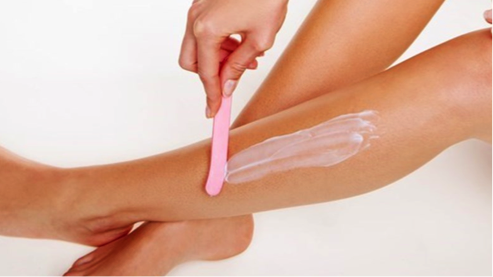
Hair removal creams work by using chemical ingredients to dissolve the hair, making it brittle and jelly-like within minutes, then easily removed with a spatula. The entire process takes about ten minutes, saving time and effort, and is painless, making it suitable for those sensitive to pain.
The effects of hair removal creams generally last about a week, slightly longer than shaving. However, their distinctive sulfurous odor often deters users. For those with sensitive skin, improper use may trigger allergic reactions, causing itching or even redness and swelling.
Additionally, when applying hair removal cream, ensure the application is of a consistent and even thickness and allows sufficient time for it to set; otherwise, some hair may not be completely dissolved, requiring a second application.
Waxing
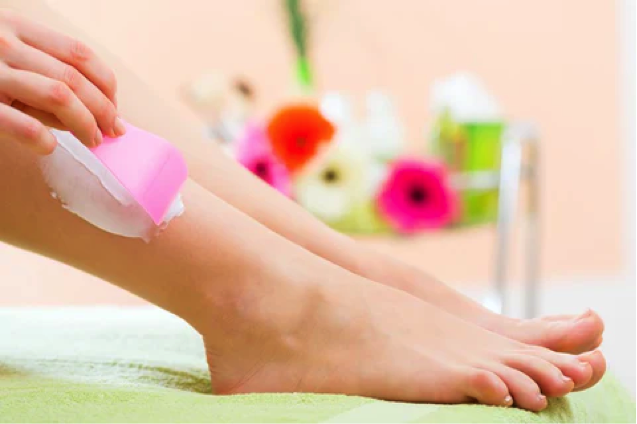
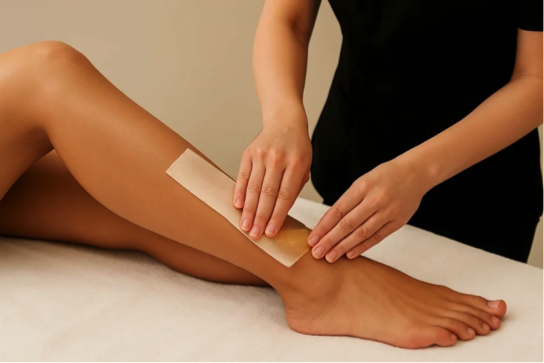
Waxing involves applying heated, melted beeswax or synthetic wax evenly to the skin, then covering it with a special cloth or paper strip. After the wax cools and solidifies, it is quickly pulled against the direction of hair growth, removing the hair from the root. This method is relatively “violent,” and the effect generally lasts for two to four weeks, making it the longest-lasting traditional hair removal method.
With long-term use, some hair follicles may gradually weaken due to repeated pulling, resulting in softer and finer new hair. You can use a special gentle wax to remove hair from the limbs, underarms, and bikini line.
This method is particularly suitable for people with abundant hair, but the pain during the pulling process should not be underestimated, especially in sensitive areas (such as the bikini area and upper lip). Furthermore, improper operation can damage the skin barrier, and inadequate subsequent care can even lead to redness, swelling, folliculitis, and pigmentation.
Overall, traditional hair removal methods are all temporary solutions that only address the symptoms, not the root cause. For those seeking long-lasting smoothness, these methods clearly cannot meet their long-term needs.
Safe and comfortable: Advanced laser hair removal
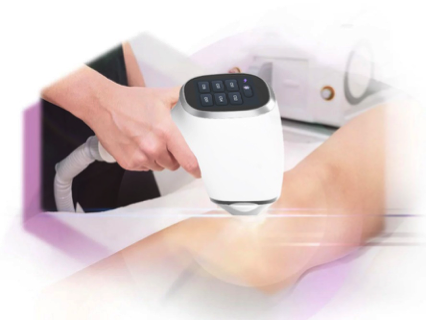
If you find temporary hair removal methods unsatisfactory, laser hair removal might be a good option. Modern medical aesthetic laser hair removal technology is based on the principle of selective photothermolysis. It utilizes specific wavelengths of light energy absorbed by the melanin in the hair follicle, converting it into heat energy to destroy the hair follicle tissue, achieving a permanent hair removal effect with minimal impact on surrounding skin. Currently, the mainstream medical laser hair removal devices on the market mainly include the following three wavelengths:
- 808nm Semiconductor Laser
The 808nm semiconductor laser is hailed as an “all-rounder” in medical aesthetic hair removal. This wavelength of laser can effectively penetrate the epidermis to reach deep hair follicles. Through a specially set pulse duration, it causes sufficient thermal damage to the hair follicle tissue while the surrounding tissue is almost unaffected. The 808nm laser is suitable for various parts of the body, including the underarms, arms, legs, facial hair, and bikini line. A cooling system is provided throughout the skin contact process, resulting in a high level of comfort.
- 755nm Alexander Laser
The 755nm Alexander Laser is an ideal choice for people with light skin tones. This wavelength has extremely high melanin absorption and moderate penetration depth, effectively targeting hair follicles while minimizing impact on surrounding skin. Compared to other wavelengths, 755nm laser hair removal is faster and less painful, making it particularly suitable for larger areas such as legs, arms, underarms, and the bikini line. Multiple treatments are required to achieve full results, typically 4 to 6 sessions, each spaced approximately one month apart.
- 1064nm Nd:YAG Laser
1064nm Nd:YAG laser hair removal is more suitable for people with darker skin tones. This wavelength is currently the longest available for hair removal, effectively bypassing epidermal melanin and reaching the hair follicle directly, significantly reducing the risk of burns and pigmentation. Studies have confirmed that for individuals with Fitzpatrick type IV-VI dark skin, 1064nm Nd:YAG laser can effectively reduce hair density while ensuring safety. It should be noted that this wavelength has relatively low melanin absorption, resulting in slightly weaker hair removal ability compared to the previous two wavelengths, usually requiring more treatments to complete the process.
Intense Pulsed Light (IPL) Hair Removal
IPL hair removal is often referred to as phototherapy hair removal, and many people mistakenly believe it’s a type of laser hair removal. However, this is not the case; their principles differ. IPL utilizes a broad wavelength of 500-1200nm to penetrate the epidermis. After being absorbed by melanin, it is converted into heat energy, which destroys the hair papilla, thus achieving highly effective hair removal.
Laser hair removal or IPL hair removal
In comparison, lasers have a single wavelength, concentrated energy, and can precisely target hair; the energy of intense pulsed light is dispersed across a broad spectrum, resulting in generally weaker effectiveness and comfort compared to lasers. Many home hair removal devices on the market currently use IPL technology. While convenient for home use, their power is lower than professional medical equipment, requiring consistent weekly use over a longer period to see results.
If you are interested in experiencing advanced and effective laser or IPL hair removal as summer approaches, you can visit the Newangie website for more hair removal solutions and laser hair removal guidance.
Which hair removal method is right for you?
After learning about so many hair removal methods, are you struggling to choose? Want to know which method is right for you? Then I suggest you consider your skin type, hair condition, budget, and time commitment when making your selection.
- Light skin, dark and coarse hair:
The first choice is either the 755nm Alexander Grail laser or the 808nm semiconductor laser. Both have high melanin absorption efficiency, fast results, and lower pain.
- Dark skin or those prone to tanning:
For these individuals, safety should be the top priority. The 1064nm Nd:YAG laser effectively avoids the risk of pigmentation abnormalities, making it the safest option for this group.
In recent years, laser hair removal devices that combine multiple wavelengths (808nm, 755nm, 940nm, 1064nm) have emerged, enabling personalized and precise treatment suitable for all skin types and gradually becoming a new clinical trend.
If you prioritize cost-effectiveness and convenience, you can use razors, waxing, and depilatory creams for emergencies, or consistently use a home-use IPL hair removal device.
If you prioritize high-efficiency and long-lasting results, it is recommended to visit a reputable and professional medical aesthetic institution and choose the appropriate laser type under the evaluation of a professional physician.
If you are sensitive to pain or prefer painless hair removal, traditional methods like waxing and razors are not suitable. You can choose laser hair removal or IPL hair removal, as current laser devices on the market all have built-in efficient cooling systems, providing a comfortable and safe treatment experience.
It is important to note that photothermal hair removal methods primarily target hair in the growth phase. A single treatment can only affect a portion of hair in the growth phase. Therefore, to cover all hair, you will need to follow a complete treatment plan prescribed by your doctor for multiple sessions.
Temperatures are already rising, and the demand for hair removal is also increasing. If you want to confidently show off your smooth skin this summer and wear sundresses, swimsuits, or sports bras, now is the time to start thinking about hair removal.
Other Articles You May Find of Interest...
- How Lifestyle and Personal Goals Can Shape Your Breast Augmentation Choices
- The Most Popular Cosmetic Treatments by Age Group
- What Makes a HydraFacial Treatment Professional?
- Botox vs Dysport vs Xeomin: Which Neuromodulator Is Right for You?
- Understanding PDRN Therapy: The Science Behind Skin Barrier Repair and Tissue Regeneration
- Who Is a Suitable Candidate for Breast Augmentation?
- Peptides vs Retinoids for Sensitive Skin: Why Matrixyl 3000 and CoQ10 Are Changing the Conversation





