






More Reviews Articles
Delta 9 Gummies in 2026: Ingredients, Legality, Lab Testing, and What Consumers Should Know
Disclosure: This article may contain sponsored content or affiliate links provided by third parties. Publication does not constitute an endorsement by Your Health Magazine.
For most of the time hemp-derived Delta 9 gummies have been on the market, the federal rule that made them possible fit into a single line of a 2018 farm law: cannabis counts as legal “hemp” if it carries no more than 0.3% Delta-9 THC by dry weight. That line is now being rewritten. A measure signed in late 2025 redefines hemp around total THC rather than Delta-9 alone and, on its enforcement date of November 12, 2026, would exclude finished products holding more than 0.4 milligrams of total THC per container, a threshold that most gummies on shelves today exceed many times over.
A legal definition that can change this much is a useful reminder of what kind of category this is: fast-moving, unevenly regulated, and one where the claims on a package are not always matched by what is inside or by settled law. Understanding how these products are made, how they are tested, how they affect the body, and where they stand legally tends to be more useful to a reader than any single brand’s marketing.
| Brand | Delta-9 THC per piece | Other cannabinoids | Verified notes |
| BudPop | 15 mg | 2 mg each CBC, CBG, CBN | Vegan (pectin); minors infused for entourage |
| Exhale Wellness | 15 mg | CBN 10 mg | Nighttime formula; 30 ct / 450 mg D9 jar |
| Hometown Hero | 25 mg | Strain-specific terpenes | Solventless live rosin; 20 ct / 500 mg jar |
| Cycling Frog | 5 mg | CBD 25 mg (1:5 THC:CBD) | Hemp-derived, all-natural ingredients |
| Summit THC | 15 mg | Delta 9 only | Vegan, organic; 20 ct / 300 mg jar; Colorado hemp |
Examples of Delta 9 Gummy Products Available Online
The products below are provided solely as examples of products currently marketed online. They are not endorsements, recommendations, or rankings.
BudPop Delta 9 THC Gummies
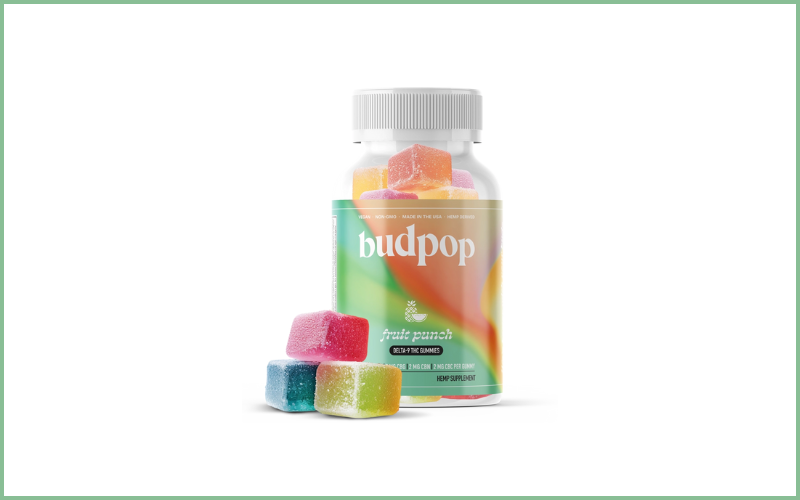
BudPop markets its Delta 9 gummies as hemp-derived and federally compliant (no more than 0.3% Delta-9 THC by dry weight), pairing Delta-9 with minor cannabinoids and selling them in fruit flavors such as Fruit Punch. The brand states products are backed by batch-specific Certificates of Analysis from third-party labs.
Key Product Details
- Cannabinoids: 15 mg Delta-9 THC plus 2 mg each of CBC, CBG, and CBN per gummy
- Format: Vegan, pectin-based gummies with cannabinoids infused into the base
- Lab Testing: Brand states batch-specific COAs are available from third-party labs
- Legal Status: Marketed as hemp-derived and legal under the 2018 Farm Bill; subject to the federal definition change effective November 12, 2026, and to state restrictions
- Safety Notes: Intoxicating; may impair and can produce a positive drug test — review the label and dosing before use
Potential advantages:
- Brand states batch-specific lab reports are available
- Vegan, pectin-based format
- Includes minor cannabinoids alongside Delta-9
- Per-gummy dosing stated clearly on the label
Potential limitations:
- Intoxicating; not suitable before driving or operating machinery
- Can result in a positive drug test
- Availability varies by state and is subject to changing federal rules
- Not intended to diagnose, treat, cure, or prevent any medical condition
May appeal to: Adults seeking a vegan, hemp-derived Delta-9 gummy with added minor cannabinoids who are willing to review the COA, dosing, and state restrictions before purchasing.
Exhale Wellness Delta 9 + CBN Sleep Gummies
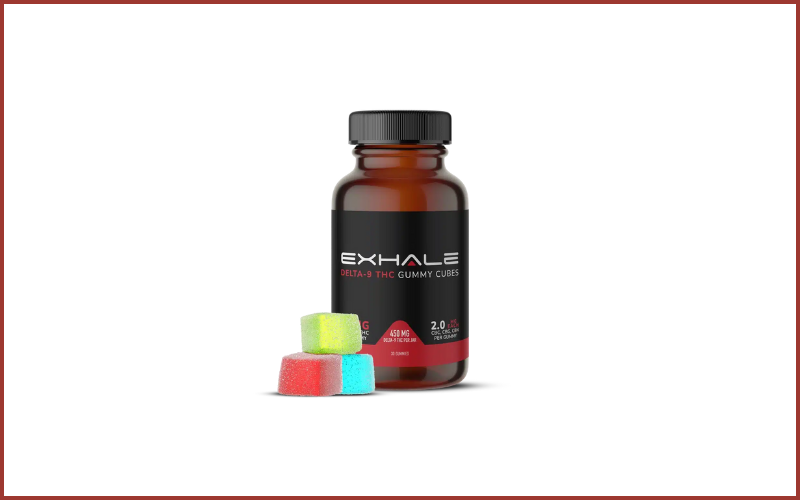
Exhale Wellness markets a nighttime Delta 9 gummy that combines Delta-9 THC with CBN and melatonin. The brand states products are third-party tested by ISO-accredited labs, with COAs posted on its website.
Key Product Details
- Cannabinoids and actives: 15 mg Delta-9 THC, 10 mg CBN, and 5 mg melatonin per gummy
- Container: 30-count jar (450 mg Delta-9 THC, 300 mg CBN, 150 mg melatonin total)
- Lab Testing: Brand states ISO-accredited third-party testing, with COAs published on its site
- Legal Status: Marketed as hemp-derived and Farm Bill compliant; subject to the 2026 federal change and state restrictions
- Use Considerations: Designed for nighttime use; avoid combining with other sedatives or medications without medical guidance
Potential advantages:
- Combines Delta-9, CBN, and melatonin in one nighttime formula
- Brand states COAs are publicly posted
- Vegan gummy format
- Per-gummy and per-container amounts disclosed
Potential limitations:
- Intoxicating; can cause next-day grogginess at higher doses
- Can result in a positive drug test
- Contains melatonin, which may not suit everyone and should not be mixed with other sedatives
- Not intended to diagnose, treat, cure, or prevent insomnia or any condition
May appeal to: Adults comparing nighttime Delta-9 formulas who want a posted COA and are willing to review dosing, sedative interactions, and state restrictions.
Hometown Hero Delta 9 Live Rosin Gummies
Hometown Hero markets strain-specific Delta 9 gummies made with a solventless live rosin extraction, offered in Sativa, Indica, and Hybrid versions. It is a higher-dose option, and the brand states batch COAs are available.
Key Product Details
- Cannabinoids: 25 mg Delta-9 THC per gummy (20-count jar, 500 mg total)
- Extraction: Solventless live rosin (heat and pressure, no chemical solvents); strain-specific terpenes
- Format: Vegan gummies
- Lab Testing: Brand states batch-specific COAs are available
- Legal Status: Marketed as hemp-derived; subject to the 2026 federal change and state restrictions
- Safety Notes: Higher 25 mg dose; starting with a partial gummy is commonly advised for lower tolerance
Potential advantages:
- Solventless live rosin extraction
- Strain-specific terpene profiles
- Brand states batch COAs are available; vegan
- Per-gummy dose clearly labeled
Potential limitations:
- 25 mg is a high single dose, not suited to new or low-tolerance users
- Intoxicating; can produce a positive drug test
- Smaller piece count per jar than some 30-count options
- Not intended to diagnose, treat, cure, or prevent any condition
May appeal to: Experienced adults seeking a strain-specific, solventless Delta-9 gummy who will mind the higher dose and review state restrictions.
Cycling Frog Delta 9 + CBD Gummies
Cycling Frog markets a low-dose Delta 9 gummy paired with a larger amount of CBD (a 1:5 THC-to-CBD ratio), describing the products as hemp-derived with all-natural ingredients. The brand states COAs are available.
Key Product Details
- Cannabinoids: 5 mg Delta-9 THC and 25 mg CBD per gummy (1:5 ratio)
- Format: Vegan gummies made with organic fruit juices and natural flavors
- Lab Testing: Brand states batch COAs are available
- Legal Status: Marketed as hemp-derived (under 0.3% Delta-9 by dry weight); subject to the 2026 federal change and state restrictions
- Safety Notes: Lower THC dose, but still intoxicating; a partial gummy lowers the dose further
Potential advantages:
- Low 5 mg THC dose with a high CBD ratio
- All-natural, vegan ingredients
- Brand states COAs are available
- A lower-intensity option
Potential limitations:
- Higher cost per milligram of THC due to the large CBD load
- Still intoxicating and can produce a positive drug test
- May feel too mild for higher-tolerance users
- Not intended to diagnose, treat, cure, or prevent any condition
May appeal to: Adults seeking a lower-dose, high-CBD Delta-9 gummy who will review the ratio, dosing, and state restrictions before purchasing.
Summit THC Delta 9 Gummies
Summit markets a vegan, organic Delta 9 gummy made with Colorado-grown hemp. It is a single-cannabinoid Delta-9 product, and the brand states every batch is third-party lab tested.
Key Product Details
- Cannabinoids: 15 mg Delta-9 THC per gummy (20-count jar, 300 mg total); no other cannabinoids listed
- Format: Vegan, pectin-based gummies with organic ingredients
- Lab Testing: Brand states batch testing for potency, heavy metals, residual solvents, microbials, mycotoxins, and pesticides
- Legal Status: Marketed as hemp-derived; brand states it ships to all 50 states, though state rules vary and the 2026 federal change applies
- Safety Notes: Intoxicating; review dosing before use
Potential advantages:
- Simple, single-cannabinoid 15 mg Delta-9 formula
- Vegan, organic ingredients; Colorado-grown hemp
- Brand states a full contaminant panel is tested
- Per-gummy and per-container amounts disclosed
Potential limitations:
- No minor cannabinoids or added sleep or relaxation ingredients
- Intoxicating; can produce a positive drug test
- “Ships to all 50 states” does not override differing state laws or the 2026 federal change
- Not intended to diagnose, treat, cure, or prevent any condition
May appeal to: Adults wanting a straightforward, organic, single-cannabinoid Delta-9 gummy who will verify their state’s rules before purchasing.
These examples show how widely cannabinoid amounts, extraction methods, and supporting ingredients vary between products marketed for the same general purpose, which is why label and lab result review is important.
Heavy Hitters Lights Out Sugar Free CBN Gummies
Heavy Hitters’ Lights Out Sugar Free CBN Gummies are positioned as a nighttime option, combining THC and CBN in a sugar-free gummy format. The brand describes them as its best-selling nightcap and lists 20 mg THC plus 20 mg CBN per serving.
Key Product Details
• Formula: 20 mg THC plus 20 mg CBN per serving
• Format: Sugar-free gummies
• Use context: Nighttime product marketed for an overnight experience
Potential advantages:
• Combines THC and CBN in one serving
• Sugar-free format
• Clearly stated cannabinoid amounts
Potential limitations:
• THC is intoxicating and may not suit daytime use or every tolerance level
• Review serving size, lab information, and state restrictions before use
What Are Delta 9 Gummies?
Delta 9 gummies are chewable edibles infused with Delta-9 tetrahydrocannabinol (THC), the primary intoxicating compound in cannabis. The products commonly sold online are usually hemp-derived, meaning the Delta-9 THC comes from cannabis that qualifies as hemp under federal law. Many also contain other cannabinoids, such as CBD, CBN, CBG, or CBC, and some add ingredients like melatonin.
It is worth knowing that the amount of THC in a single gummy can vary widely between products, and that “hemp-derived” does not mean non-intoxicating. A typical Delta 9 gummy is psychoactive, and the dose per piece is the single most important number on the label.
How Delta 9 Edibles Work
When THC is eaten rather than inhaled, it is absorbed through the digestive system and processed by the liver, where enzymes convert a portion of it into 11-hydroxy-THC. This metabolite crosses into the brain efficiently and is associated with the comparatively strong, long-lasting effects that edibles are known for (NIH).
This metabolic step also explains the timing. Edibles generally take longer to take effect than inhaled cannabis, often somewhere in the range of 30 minutes to two hours, and the effects can last several hours. Because onset is delayed, taking a second dose too soon, before the first has been felt, is a common reason people end up consuming more than they intended.
Delta 9 vs. Delta 8 vs. THCA
These three terms appear constantly on hemp product labels and are easy to confuse. They differ in both chemistry and legal treatment.
- Delta-9 THC occurs naturally in cannabis and is the compound most people mean by “THC.”
- Delta-8 THC is a different isomer that is typically produced by chemically converting CBD, rather than being present in meaningful amounts naturally.
- THCA is a non-intoxicating acid found in raw cannabis that converts to THC when heated.
The distinction matters more than ever because of the changing federal definition described below. The redefinition of hemp shifts the standard from Delta-9 alone to total THC, a measure that accounts for THCA (which is multiplied by a standard conversion factor to reflect how much THC it can become) and for other intoxicating cannabinoids such as Delta-8.
Are Delta 9 Gummies Legal?
The legal status of Delta 9 products is complex, depends on location, and is in the middle of a significant change. The information here is general and is not legal advice.
Federal Status Under the 2018 Farm Bill
Under the 2018 Farm Bill, hemp is defined as cannabis containing no more than 0.3% Delta-9 THC by dry weight, and hemp-derived products meeting that threshold have generally been treated as federally legal. Because a gummy contains sugar and other ingredients, a product with several milligrams of THC can still fall under 0.3% of its total weight, which is the basis on which many of these products have been sold.
Separately, the U.S. Food and Drug Administration has stated that it is currently unlawful to market CBD and certain cannabis-derived compounds as dietary supplements or to add them to foods in interstate commerce, and that such products may not be sold with claims to treat health conditions.
The 2026 Federal Change
A federal measure (P.L. 119-37) signed in late 2025 rewrites the definition of hemp, with an enforcement date of November 12, 2026. According to the Congressional Research Service, the new definition uses a total-THC standard rather than a Delta-9-only standard, and it excludes finished hemp products that contain more than 0.4 milligrams of total THC (and similar cannabinoids) per container. Products that fall outside the revised definition would be treated as marijuana under the Controlled Substances Act. In practice, this would place many products currently sold as hemp-derived Delta 9 gummies outside the federal hemp category once the change takes effect.
State Restrictions
State law adds another layer and does not always match federal rules. Some states prohibit intoxicating hemp products outright, and others impose additional conditions on their sale. As an illustration, states such as Idaho and Hawaii have been among the most restrictive, while a number of other states have placed varying limits on these products. Because these rules change frequently, the most reliable step is to confirm the current law in your own state before considering a purchase.
Why Lab Testing Matters
Because hemp-derived products are not standardized the way approved medications are, independent laboratory testing is one of the clearest ways to evaluate a product. Independent analyses have repeatedly found that cannabinoid products are not always labeled accurately; one study of CBD products sold online found that only about a third matched their stated cannabinoid content (JAMA, 2017). Testing is what allows a buyer to check whether the contents of a product actually match its label and whether it has been screened for contaminants.
A product that publishes current, batch-specific lab results allows a consumer to verify what they are buying. A product with no testing information, or with vague or unverifiable claims, offers no such confirmation.
How to Read a Certificate of Analysis
A Certificate of Analysis (COA) is a report from a testing laboratory describing a product’s cannabinoid content and contaminant screening. Not all COAs carry the same weight. When reviewing one, consumers commonly check:
- Per-unit potency that matches the label. A large gap between the stated milligrams per gummy and the tested amount is a caution sign.
- An accredited laboratory. Accreditation (such as ISO 17025) indicates the lab has been independently audited, and the lab should be identifiable rather than anonymous.
- A batch or lot number that matches the specific product, rather than a generic, brand-wide report.
- Full safety panels, including pesticides, heavy metals, and residual solvents, not only a cannabinoid potency panel.
- A recent test date that aligns with the product’s production date.
Signs that a COA may be misleading include results that cover an entire product line rather than a batch, missing lab accreditation details, suspiciously round potency numbers, links that lead only to the brand’s own marketing rather than to verifiable results, and the absence of contaminant testing. A product whose lab results are hard to find or verify is one that many consumers choose to avoid.
What to Look For When Considering Delta 9 Gummies
Rather than focusing on brands, the following factors are commonly used to evaluate this kind of product.
Clean Ingredient Disclosure
A transparent product lists its full ingredients, including the exact cannabinoid amounts per piece and any additions such as CBN or melatonin. Clear labeling, including whether the product uses gelatin or a plant-based base, helps consumers understand what they are taking.
Third-Party Testing
Independent, batch-specific lab results from an identifiable, accredited laboratory are widely considered a baseline expectation. Consumers can look for results that are current and that correspond to the batch or lot number on the product.
State Shipping Restrictions
Some states restrict the sale or shipment of hemp-derived THC products. Reputable sellers typically disclose where they can and cannot ship, and consumers should confirm that a product is permitted in their state before purchasing.
Realistic Marketing Language
Educational, measured language is generally a better sign than promises of guaranteed results or claims that a product treats or cures a condition. As the FDA notes, these products are not approved treatments, and claims suggesting otherwise should be treated with caution.
Manufacturer Transparency
Information about where the hemp is grown, how the product is made, and how to contact the company contributes to accountability. A lack of basic company information is something many consumers treat as a caution sign.
Full-Spectrum vs. Broad-Spectrum vs. Isolate
These terms describe how much of the hemp plant’s compound profile a product retains:
- Full-spectrum products contain a range of cannabinoids and terpenes, which some believe work together in what is often called the “entourage effect,” a popular hypothesis rather than a settled conclusion.
- Broad-spectrum products remove THC while retaining other compounds and are uncommon among Delta 9 products by definition.
- Isolate refers to a single purified cannabinoid.
The extraction method is a related consideration. Solventless methods such as live rosin retain more of the plant’s natural terpenes, while distillate-based products are more processed; neither is inherently “better,” and the right choice depends on individual preference.
Understanding Dosage
There is no single correct dose, and individual responses vary widely. General educational guidance commonly discussed includes:
- New or sensitive users often start with a very low amount and treat the first experience as a way to gauge sensitivity.
- Because edibles take time to take effect, waiting a full two hours before considering more is a frequently cited precaution.
- Cutting a higher-dose gummy in half is a common way to start lower.
Several factors change how a given dose feels. Tolerance is the largest: regular cannabis users typically need more for the same effect. Taking a gummy on an empty stomach tends to produce a faster, more intense onset, while a small meal slows and softens it. Extraction type can also matter, with more terpene-rich products sometimes feeling stronger than a distillate product at the same labeled dose. Taking a large amount, particularly without prior experience, is a leading cause of unpleasant reactions such as anxiety.
Possible Side Effects and Safety Considerations
THC products can cause side effects that vary by person and dose. Commonly reported short-term effects include dry mouth, increased appetite, drowsiness, red or dry eyes, and mild dizziness shortly after onset.
Taking too much can produce anxiety, racing thoughts, paranoia, or a rapid heartbeat. These effects are typically temporary and tend to ease as the peak passes, and they are generally not dangerous in otherwise healthy adults, though they can be distressing. Resting in a quiet place, staying hydrated, and allowing time to pass are commonly suggested. Anyone who experiences severe symptoms or who has an underlying health condition should seek medical attention rather than wait.
Some people are commonly advised to avoid these products altogether, including:
- People who are pregnant or nursing.
- People with a personal or family history of psychosis, schizophrenia, or severe anxiety disorders.
- People taking medications that may interact with THC, such as certain drugs processed by the CYP3A4 enzyme.
- Anyone subject to drug testing, since Delta 9 products can produce a positive result.
- Anyone below the legal age, which varies by jurisdiction.
Anyone uncertain about whether these products are appropriate should consult a qualified healthcare professional before use.
Questions to Ask Before Trying Delta 9 Gummies
The following questions can help a reader think through the decision rather than focus on where to buy:
- Is this type of product legal where I live, and will it remain so under the changing federal rules?
- Does the product publish a current, batch-specific COA from an identifiable, accredited lab?
- What cannabinoids and other active ingredients does it contain, and in what amounts per piece?
- How might it interact with any medications or health conditions I have, or with drug testing I may be subject to?
- Have I discussed cannabinoid use with a qualified healthcare professional, especially if I have an underlying condition?
Where Can Consumers Buy Delta 9 Gummies Legally?
Where these products can be purchased depends entirely on local law and is expected to change with the new federal definition taking effect in November 2026. Hemp-derived products meeting current federal and state requirements have been sold online and in some retail stores, while marijuana-derived products are generally limited to state-licensed dispensaries where permitted.
Rather than identifying specific retailers, the more useful step for consumers is to confirm that a product is currently legal in their state, that it is accompanied by verifiable lab testing, and that the seller discloses shipping restrictions and company information. Because the legal landscape is shifting, checking current rules before any purchase is especially important.
Frequently Asked Questions About Delta 9 Gummies
How long do Delta 9 gummies take to take effect?
Edibles commonly take roughly 30 minutes to two hours, depending on factors such as recent food intake and individual metabolism. Because the onset is delayed, waiting before taking more is widely advised.
How long do the effects last?
Effects often last several hours and can be longer at higher doses, which is generally longer than inhaled cannabis. Individual experiences vary.
Will Delta 9 gummies show up on a drug test?
Yes. Hemp-derived Delta 9 produces the same THC metabolites as marijuana-derived Delta 9, so these products can result in a positive test.
What is the difference between Delta 9 and Delta 8?
Delta-9 occurs naturally in cannabis, while Delta-8 is typically produced by chemically converting CBD. Under the revised federal hemp definition (P.L. 119-37), the standard shifts to total THC and accounts for cannabinoids such as Delta-8.
What does “full-spectrum” mean?
It indicates a product retains a range of hemp cannabinoids and terpenes rather than a single isolated compound. Claims about combined effects, such as the “entourage effect,” remain a hypothesis rather than settled science.
Are Delta 9 gummies legal in every state?
No. They are restricted or prohibited in some states, and the federal definition is changing in November 2026. Consumers should verify current local law.
How should I store Delta 9 gummies?
Cool, dark storage away from heat and direct sunlight, in the original sealed container, is commonly recommended, as heat and light can degrade potency over time.
Conclusion
Delta 9 gummies are intoxicating edibles that vary widely in dose, formulation, and quality, and the federal rules governing them are set to change meaningfully in November 2026. Independent research has shown that cannabinoid product labels do not always match their actual contents, individual responses differ, and these products are not a substitute for medical care.
For readers exploring the topic, the most useful steps are understanding what a product contains, reviewing its lab results, checking current local laws, starting conservatively if choosing to use these products, and consulting a qualified healthcare professional, particularly for anyone who is pregnant or nursing, has a medical condition, takes prescription medications, or may be subject to drug testing.
Disclaimer: This article is for informational and educational purposes only and does not constitute medical, legal, or professional advice. It is not intended to diagnose, treat, cure, or prevent any condition. Cannabis and hemp laws vary by location and are changing; products discussed may not be legal in your jurisdiction, and the federal definition of hemp is scheduled to change in November 2026. Verify current local laws before purchasing. Consult a qualified healthcare professional before using any cannabis, hemp, or CBD product, especially if you are pregnant or nursing, take prescription medications, or have a medical condition. These products are intended only for adults of legal age where such products are permitted.
Other Articles You May Find of Interest...
- P Protect Reviews – Men’s Wellness Patches For Prostate Support and Urinary Comfort
- OnyGuard Anti-Fungal Pen Reviews 2026 – Legit Nail Care Product Or Overhyped?
- DirectMeds ED Reviews 2026 – Is DirectMax A Real Alternative To Standard ED Pills?
- Soda Steel Reviews 2026 – Legit Daily Energy Support or Overhyped Supplement?
- Is Rich Diet App Legit? Subscription, Support, and How to Cancel
- GLP-Star App Review 2026: A GLP-1 Meal Plan for Real Life
- Decamen App Review 2026: Military Calisthenics Workouts for Busy Men





