More Senior Health Articles
Senior Care Solutions: What Providers Should Look for in Modern Safety and Monitoring Systems
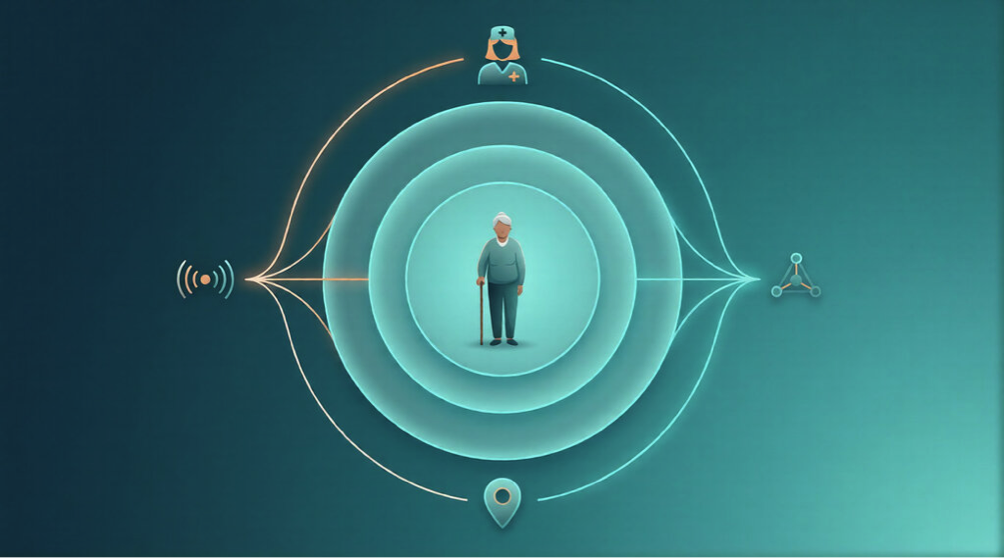
Senior care is becoming more complex. Providers are supporting older adults with higher acuity, cognitive decline, mobility limitations, and more frequent safety risks than in previous years. At the same time, staffing pressure, family expectations, and operational demands continue to increase. Under these conditions, senior care facilities cannot rely only on reactive processes or isolated devices. They need stronger systems that improve visibility, response time, and daily coordination.
This is why the conversation around senior care solutions has changed. Facilities are no longer evaluating technology only by whether it adds a feature. They are evaluating whether it helps teams respond faster, reduce uncertainty, and create a safer environment without removing resident dignity and independence.
Why traditional approaches create operational gaps
Many communities still depend on disconnected tools. One system may handle nurse call. Another may cover door alarms. Another may be used for fall alerts. In practice, this often creates fragmented workflows.
The result is not only inefficiency. It is delayed awareness.
If a resident falls and cannot call for help, if someone with memory impairment begins moving toward an unsafe area, or if a staff member receives an alert without enough context, the system has already failed in one important way. The response begins too late.
That delay affects more than the immediate event. It increases staff stress, creates avoidable searching, and reduces confidence among families who expect stronger oversight and communication from providers.
What modern senior care solutions should actually solve
The term “senior care solutions” is broad, but in operational terms, the strongest solutions tend to address the same core needs.
1. Fall detection and faster intervention
Falls remain one of the most important risks in senior care. Facilities need a way to reduce the time between the incident and staff response. A stronger model does not depend only on a resident being able to press a button. It supports earlier awareness and faster routing.
2. Real-time visibility
In many incidents, the challenge is not just knowing that something happened. It is knowing where. Real-time location awareness helps reduce time spent searching for residents and improves response during emergencies, wandering incidents, and workflow disruptions.
3. Safer movement without unnecessary restriction
The best senior care solutions do not treat safety as the opposite of autonomy. They help communities create safer freedom. This is especially important in assisted living and memory care, where mobility and dignity remain critical parts of quality of life.
4. Better staff coordination
Technology should reduce operational friction, not create more noise. Alerts should be clear, contextual, and routed in a way that helps staff prioritize action rather than interpret scattered signals from multiple systems.
5. Stronger operational oversight
Facility leaders need more than event notifications. They need visibility into patterns, response consistency, and areas where workflows can improve over time. Good systems support not only intervention, but also review and operational learning.
The shift from isolated devices to integrated systems
One of the biggest changes in the market is the move away from single-purpose tools toward integrated senior care solutions.
This shift matters because most real-world incidents do not fit neatly into one category. A wandering event may involve access control, location awareness, and staff communication. A fall may require immediate detection, response routing, and documentation. An emergency call may need location context and mobile staff notification.
When these functions exist in separate tools, teams lose time moving between systems. When they are connected, response becomes more consistent and easier to manage.
That is why many providers are now looking beyond standalone products and evaluating broader platforms that combine monitoring, communication, safety, and operational visibility in one environment. Facilities exploring more integrated senior care solutions are increasingly prioritizing systems that unify these workflows rather than treating them as isolated technical problems. [Insert link to your page here]
How senior care solutions affect residents, staff, and families
The value of a better system is not limited to technology performance. It changes the experience of care across the entire environment.
For residents, better systems can support safety without automatically increasing restrictions. That can preserve confidence, mobility, and day-to-day dignity.
For staff, the benefit is clearer information and less uncertainty. When teams receive more useful alerts and better context, they spend less time guessing and more time acting.
For families, stronger systems improve trust. Families want reassurance that the facility is not simply reacting after the fact, but operating with visibility and structure.
For operators, the benefit is organizational. Better coordination, faster response, and more consistent workflows support both resident outcomes and long-term facility performance.
What providers should evaluate before choosing a solution
Not all senior care solutions are equally useful. Before selecting a provider or platform, decision-makers should ask several practical questions.
- Does the system depend mainly on manual activation?
- Does it provide location context during alerts?
- Can it support multiple workflows in one environment?
- Does it reduce alert fatigue or create more of it?
- Is it designed for the actual care model of the facility?
- Can it scale across different resident needs and operational conditions?
These questions are more useful than feature checklists alone. A long list of features does not guarantee better care operations. What matters is how the system performs under real conditions.
The future of senior care solutions
The future of senior care is not about adding more hardware or layering disconnected tools on top of already stressed workflows. It is about building care environments where information leads to faster action, clearer priorities, and safer daily operations.
That is why senior care solutions are increasingly being judged by practical outcomes:
- earlier risk awareness
- improved response times
- better staff coordination
- safer resident independence
- more reliable operational visibility
Facilities that adopt this mindset are better positioned to improve both safety and service quality. In a market where expectations are rising and care environments are becoming more demanding, that shift is no longer optional. It is becoming the new standard.
AionysTrack works with senior living providers on safety, monitoring, and operational technology strategy. Learn more about modern senior care solutions.
Other Articles You May Find of Interest...
- Seen and Unheard; Elder Abuse
- Coping With Cancer In Older Adults
- The Number Families Should Ask About Before Touring a Nursing Home for a Parent
- Daily Personal Support: What Assisted Living Provides Residents
- How Nurse-Led Home Care Can Support Aging in Place in Scottsdale
- Understanding Home Care Options for Older Veterans in Australia
- How Digital Communication Helps Seniors Stay Connected With Family and Communities