More Mental Health Articles
Screen Time and Stress: Managing Competitive Pressure in CS2 Premier Mode

Counter-Strike 2’s Premier Mode was designed to deliver the most competitive ranked experience in the game’s history. For many players, it delivers exactly that – and then some. Long session queues, high-stakes rating points, and the emotional weight of team-dependent outcomes create a pressure cooker that’s unlike casual matchmaking. CS2 Premier Mode stress is real, it’s widespread, and it’s worth taking seriously.
This article breaks down why Premier Mode hits differently, how screen time compounds competitive pressure, and what practical steps players can take to protect their mental game without sacrificing improvement.
Why Premier Mode Creates Unique Pressure
Premier Mode ties every match to a visible rating number. Unlike casual play where a loss disappears into the void, Premier losses have a score – and that score follows you. Players watch their rating climb and fall in real time, which turns every round into something with measurable consequences – and for many, that pressure extends beyond gameplay into decisions about when to sell CS2 skins, cash out, or simply step away from the client entirely.
This visibility is part of what makes Premier Mode motivating. It’s also part of what makes it exhausting. Research in sports psychology consistently shows that outcome-focused metrics increase anxiety and reduce intrinsic enjoyment of an activity. CS2 Premier Mode applies that principle at scale, across millions of players, every day.
Add team dynamics – communication breakdowns, blame culture, and the occasional intentional throw – and the stress compounds fast.
The Role of Screen Time in Competitive Burnout
CS2 screen time management is one of the most underrated variables in long-term performance. Most players focus on hours played as a measure of dedication. The reality is more nuanced: unstructured, emotionally charged screen time is actively counterproductive past a certain threshold.
Studies on competitive gaming populations show that sessions exceeding three to four hours without breaks correlate with measurable drops in reaction time, decision-making accuracy, and emotional regulation. In a game where a single misplay can cost a round – and a lost round can cost a match – degraded cognitive performance has a direct impact on rating.
Competitive gaming burnout CS2 typically follows a predictable arc: a player starts losing more than usual, responds by queuing more to compensate, performs worse due to fatigue, and enters a frustration loop that can last weeks. Recognizing that arc early is the first step to breaking it.
Warning Signs You’re Approaching Burnout
Knowing when to step back is a skill in itself. Watch for these indicators:
- Emotional reactions disproportionate to in-game events – rage over a single missed shot, excessive blame toward teammates
- Queuing immediately after a loss without processing what went wrong
- Declining enjoyment – playing feels like an obligation rather than entertainment
- Physical symptoms – eye strain, headaches, disrupted sleep after late-night sessions
- Rating obsession – checking your rating between rounds or immediately after logging in
- Social withdrawal – skipping real-life commitments to queue more games
If three or more of these apply consistently, it’s a signal that your current screen time habits are working against you.
CS2 Mental Health Tips That Actually Work
Generic advice like “take breaks” doesn’t cut it for competitive players who are genuinely trying to improve. Here are CS2 mental health tips grounded in how high-performance environments actually function:
| Strategy | What It Does | How to Apply |
| Session caps | Limits cognitive fatigue | Set a hard stop at 2–3 hours of ranked play |
| Post-loss cooldown | Breaks tilt cycles | Queue for DM or workshop maps instead of ranked after a loss |
| VOD review over extra queues | Replaces emotional grinding with analytical improvement | Watch one demo per session instead of a bonus ranked game |
| Sleep prioritization | Restores reaction time and emotional regulation | No ranked within 60 minutes of intended sleep time |
| Weekly rating detox | Reduces outcome fixation | One day per week with zero ranked queue |
| Physical movement breaks | Resets cortisol and focus | 10-minute walk between sessions |
How to Reduce Tilt in CS2: In-Session Techniques
How to reduce tilt in CS2 is one of the most searched questions in the competitive community – and for good reason. Tilt is the single biggest performance killer in ranked play, and it compounds across rounds in ways that are hard to reverse once momentum shifts. Some players even find that stepping away from ranked to buy CS2 skins, browse the market, or update their loadout is enough of a mental reset to return to the server with a clearer head.
Practical in-session techniques that work:
- The 10-second rule – before typing anything in team chat after a mistake, wait 10 seconds. Most of what gets typed in the first 5 seconds makes things worse.
- Focus anchoring – redirect attention to one specific controllable variable per round: your positioning, your utility usage, or your pre-aim. Narrowing focus reduces overwhelm.
- Verbal detachment – mute players who are actively tilting you. This is not weakness; it’s information hygiene.
- Breath reset between rounds – a single slow exhale during the buy phase is enough to partially reset the nervous system after a bad round.
- Reframe the rating – treat each match as a skill sample, not a permanent verdict. Rating fluctuates. Habits compound.
None of these require external tools or apps. They require awareness and repetition until they become automatic.
Where LIS-SKINS Fits In
There’s an underappreciated connection between skin economy and competitive stress. For many players, a significant portion of their emotional investment in CS2 is tied not just to rating – but to their inventory. Watching a high-value skin get “wasted” on a losing streak adds a layer of psychological weight that casual players don’t experience.
LIS-SKINS offers a practical release valve for that pressure. As a dedicated CS2 marketplace where players can instantly sell skins for crypto or cash, it allows traders and competitive players alike to convert inventory value into real funds without the friction of peer-to-peer waiting periods. If part of your stress is tied to feeling like your inventory is illiquid or locked away, platforms like LIS-SKINS make that asset accessible on your terms.
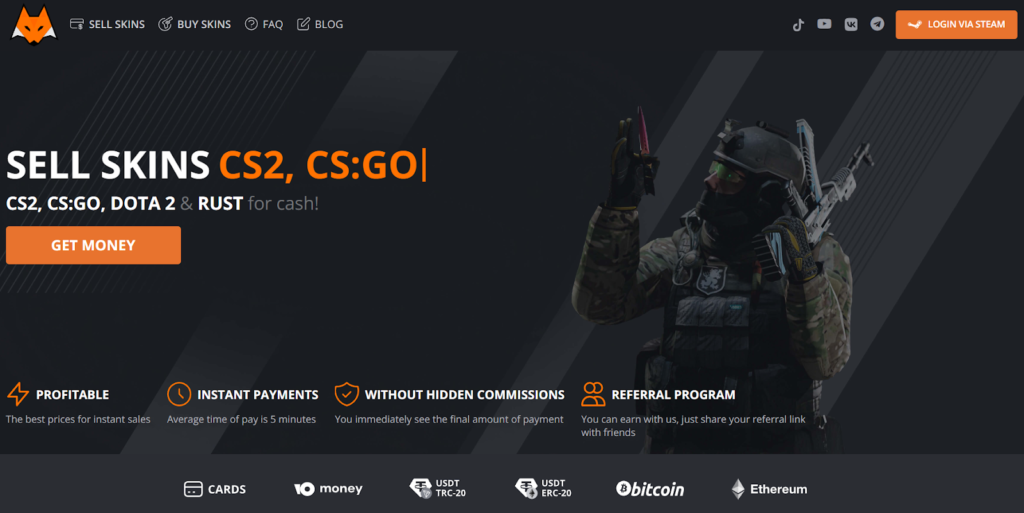
For players taking a planned break from Premier Mode – a healthy and often necessary step – it’s also a productive way to spend downtime: reviewing your inventory, optimizing holdings, and converting items you no longer need into tangible value. Stepping away from ranked doesn’t mean stepping away from the CS2 ecosystem entirely.
Other Articles You May Find of Interest...
- Physical Symptoms of Depression and Anxiety Your Doctor Can Catch
- Rethinking Intake for Complex Psychiatric Diagnoses
- Mental Health: Understanding Your Mind and Finding the Right Support
- Can You Get a Medical Marijuana Card for Anxiety or PTSD?
- How to Find the Right Autism Support in Texas: A Step-by-Step Guide
- Understanding SPRAVATO Treatment for Persistent Depression Symptoms
- Stress and Distraction Can Put Extra Pressure on Everyday Mental Balance