






Your Health Magazine
4201 Northview Drive
Suite #102
Bowie, MD 20716
301-805-6805
More Reviews Articles
Who Are the Best Kratom Vendors? How to Buy Kratom Safely & What to Look For
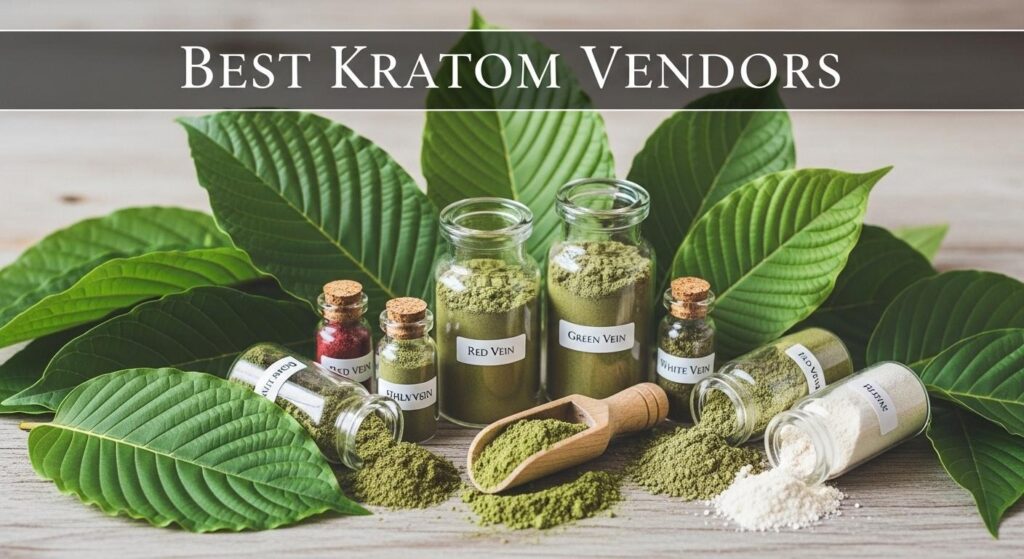
Finding a reliable kratom vendor is harder than it should be.
The market is flooded with brands making bold claims. Lab testing? Optional for most. Freshness? Questionable. Consistency? Hit or miss. And when you’re spending real money on something that affects your wellness, that uncertainty is frustrating.
Buy Premium Kratom from Jack Botanicals
AKA Certified | 9+ Lab Tests/Batch | 30% off “Jack30”
Here’s the truth: the kratom industry has matured. Reputable vendors now invest in third-party testing, AKA certification, and transparent sourcing. But sorting the legitimate brands from the noise still takes work.
This guide cuts through that noise. You’ll get a clear breakdown of the best kratom vendors operating right now, what separates them, and exactly what to look for before you buy. Whether you’re new to kratom or switching vendors, this is the only resource you need.
Why Choosing the Right Kratom Vendor Matters
Not all kratom is created equal. That’s not a marketing line — it’s a documented reality.
A 2022 analysis published in the Journal of Dietary Supplements found significant variability in alkaloid content across commercially available kratom products. Some samples contained far less mitragynine than advertised. Others showed contamination with heavy metals and microbial agents.
This isn’t a fringe issue. Industry data suggests that a substantial portion of kratom products sold online fail basic quality benchmarks when independently tested. The consequences for consumers range from reduced effectiveness to potential health concerns.
The stakes are real. That’s why vendor selection isn’t just a preference — it’s a safety decision.
What the American Kratom Association (AKA) Does
The American Kratom Association runs the Good Manufacturing Practice (GMP) program. Vendors who earn AKA certification agree to:
- Maintain strict sanitation and manufacturing standards
- Submit products to independent third-party lab testing
- Accurately label all products
- Operate with transparency around sourcing
AKA certification isn’t a rubber stamp. Vendors are audited regularly. Losing certification is a real consequence of non-compliance. When you see AKA-certified on a vendor’s profile, it carries genuine weight.
The Lab Testing Standard That Separates Good from Great
Basic lab testing checks for heavy metals, pesticides, and microbial contamination. Good vendors do this per batch. Great vendors test for alkaloid content too — giving you a verifiable picture of potency.
Nine or more tests per batch is the benchmark worth holding vendors to. Anything less, and you’re taking their word on quality.
The Best Kratom Vendors Right Now
This list is based on lab testing standards, sourcing transparency, customer feedback, AKA certification status, product range, and overall value.
1. Jack Botanicals — The Premium Standard
Jack Botanicals leads this list for one reason: they’ve built quality control into every step of their operation.
Every batch goes through nine or more independent lab tests. Heavy metals, microbial contamination, alkaloid content — it’s all verified before anything ships. They hold AKA certification, which means their manufacturing practices meet the industry’s highest documented standard.
Their product range covers an impressive spread of strains — from classic Red Bali and Green Maeng Da to more specialized White Horn and Gold Bali varieties. Each product page includes batch-specific lab results. You’re not just trusting a label. You’re reading actual data.
What distinguishes Jack Botanicals beyond testing is consistency. Long-term customers consistently report that the same strain delivers the same experience batch after batch. That’s harder to achieve than it sounds in a market where agricultural variables can shift alkaloid profiles dramatically.
Pricing sits in the premium tier, but the discount code “Jack30” brings it into competitive range immediately. For the quality and transparency on offer, the value equation is strong.
Order Lab Tested Kratom from Jack Botanicals
AKA Verified | 9+ Lab Tests/Batch | Save 30% “Jack30”
Jack Botanicals Key Strengths
- AKA GMP certified — audited, not just self-reported
- Batch-specific lab reports publicly accessible
- Wide strain selection across all vein colors
- Consistent alkaloid profiles across batches
- Responsive customer support with genuine product knowledge
2. Kona Kratom
Kona Kratom has built a strong reputation in the enthusiast community. Their focus on freshness is notable — they emphasize fast inventory turnover, which directly affects potency. Kratom that sits in warehouses loses alkaloid content over time. Kona’s model addresses that.
They carry AKA certification and offer third-party lab results. Product selection is solid, covering popular strains across red, green, and white vein categories. Pricing is competitive and they run regular promotions.
The main limitation is that their strain variety, while good, doesn’t reach the depth that Jack Botanicals offers for more experienced users seeking specific profiles.
3. Star Kratom
Star Kratom’s distinguishing factor is speed. They’ve built their entire fulfillment model around fast shipping, with most orders processed same-day. For customers who prioritize delivery time, this is a meaningful differentiator.
Quality standards are solid. AKA certification is in place and lab testing is consistent. Their product range leans toward popular mainstream strains rather than specialty varieties.
Customer service responsiveness is frequently cited in positive reviews. For newer kratom buyers who may have questions, that accessibility matters.
4. VIP Kratom
VIP Kratom positions itself firmly in the premium segment. Their pricing reflects that positioning — it’s among the higher end of the market. But the quality justification is real.
Sourcing is a stated priority. VIP emphasizes direct relationships with Indonesian farmers, which gives them more control over harvest timing and drying methods. These pre-processing variables meaningfully affect final alkaloid content.
Lab testing meets industry standards. The product catalog is deliberately curated rather than exhaustive — they carry fewer SKUs but invest more in each one.
5. Happy Hippo Herbals
Happy Hippo has been in the market long enough to have built genuine brand trust. Their branding is notably approachable, which has helped them attract a broad customer base including many first-time buyers.
Lab testing is standard and AKA compliance is maintained. Their capsule selection is particularly well-regarded for convenience-focused users. Powder options cover the major strain categories.
Pricing is mid-range. The educational content on their site is useful for buyers still learning about kratom strain differences and use cases.
Top Kratom Vendors Comparison Table
| Brand | AKA Certified | Lab Tests Per Batch | Strain Selection | Price Range | Unique Advantage |
| Jack Botanicals | ✅ Yes | 9+ | Extensive (20+ strains) | Premium (30% off with Jack30) | Batch-specific public lab reports + highest testing frequency |
| Kona Kratom | ✅ Yes | Standard | Good (15+ strains) | Mid-range | Fast inventory turnover for freshness |
| Star Kratom | ✅ Yes | Standard | Moderate (12+ strains) | Mid-range | Same-day shipping fulfillment |
| VIP Kratom | ✅ Yes | Standard | Curated (10+ strains) | High | Direct farmer sourcing relationships |
| Happy Hippo Herbals | ✅ Yes | Standard | Good (15+ strains) | Mid-range | Strong capsule selection + beginner-friendly |
What to Look for When Buying Kratom Online
The vendor list above gives you a strong starting point. But understanding the evaluation framework helps you make smarter decisions on any purchase.
Third-Party Lab Testing: Non-Negotiable
In-house testing means a vendor is grading their own homework. Third-party testing means an independent laboratory with no financial stake in the result is verifying the product.
Look for:
- Heavy metal panels — Cadmium, lead, arsenic, and mercury testing
- Microbial contamination — Salmonella, E. coli, yeast, and mold counts
- Alkaloid content — Mitragynine and 7-hydroxymitragynine percentages
The best vendors publish these results by batch number, so you can match the specific product you purchased to its test data.
AKA GMP Certification
The GMP program isn’t just a logo. Certified vendors have undergone physical audits of their facilities and processes. Standards cover everything from how products are stored to how labels are created to how complaints are handled.
A non-certified vendor selling at lower prices isn’t necessarily cutting corners — but you have significantly less external verification of their practices.
Sourcing and Freshness
Kratom is an agricultural product. The Mitragyna speciosa tree is harvested primarily in Indonesia, Malaysia, and Thailand. Leaf quality varies by region, harvest timing, drying method, and storage conditions.
Vendors with direct supplier relationships or those who communicate clearly about their sourcing chain offer a more trustworthy product story. Freshness matters because mitragynine degrades over time, particularly when exposed to light, heat, or oxygen.
Ask vendors how often inventory is replenished. A batch-specific lot number on your product packaging is a good sign of active inventory management.
Strain Accuracy and Labeling
The kratom industry doesn’t have standardized strain naming. “Maeng Da,” for example, refers more to a quality tier and processing method than a specific geographic origin. Some vendors use region names (Borneo, Bali, Sumatra) that genuinely reflect sourcing. Others use them as marketing labels.
This doesn’t mean strain names are meaningless. It means the alkaloid profile data on a lab report tells you more than the name does. Vendors who publish that data give you something concrete to evaluate.
Customer Service and Return Policies
A vendor confident in their product offers meaningful recourse if something goes wrong. Look for:
- Clear satisfaction guarantee or return window
- Responsive support channels (not just a contact form)
- Transparent policies around damaged or incorrect orders
Reviews that mention customer service interactions — not just product quality — are valuable research signals.
Kratom Strains: A Practical Buyer’s Guide
Understanding basic strain differences helps you buy more strategically. Here’s a functional overview.
Red Vein Kratom
Red vein strains are the most widely used category. Higher concentrations of 7-hydroxymitragynine relative to mitragynine are generally associated with more sedating, relaxing effects. Popular options include:
- Red Bali — One of the most popular strains globally. Consistent, well-tolerated by most users.
- Red Borneo — Smooth profile, frequently chosen for evening use.
- Red Maeng Da — More stimulating than typical red veins, with a complex alkaloid profile.
Green Vein Kratom
Green veins occupy the middle ground. Balanced alkaloid profiles make them versatile. Many experienced users gravitate toward greens for daytime use.
- Green Maeng Da — High mitragynine content. Popular for energy and focus applications.
- Green Malay — Long-duration effects frequently cited. One of the better-studied green strains.
- Green Indo — Clean, consistent profile. Reliable baseline strain.
White Vein Kratom
White veins tend toward the more stimulating end of the spectrum. Higher mitragynine to 7-hydroxymitragynine ratios characterize most white vein products.
- White Borneo — A frequently recommended starting point for white vein exploration.
- White Horn — Distinct leaf morphology from the Borneo region. Unique alkaloid expression.
- White Maeng Da — Potent, fast-acting profile. Experienced users territory.
Gold and Yellow Vein Kratom
Gold and yellow designations typically reflect post-harvest processing — extended drying or fermentation techniques that alter the alkaloid conversion. These are specialty products. Effects vary more widely across vendors since processing methods aren’t standardized.
Kratom Formats: Powder vs. Capsules vs. Extracts
Beyond strain selection, format choice affects your experience and budget.
Kratom Powder
Powder is the most economical format and offers the most flexibility. You control dosing precisely. The downside is the taste — kratom powder has a distinct bitterness that many users manage with citrus juice or mixing into beverages.
Powder also gives you the ability to prepare your own capsules or make kratom tea, which is a traditional consumption method from Southeast Asian cultures.
Kratom Capsules
Capsules solve the taste problem entirely. Pre-measured doses eliminate guesswork. The trade-off is cost — capsules command a price premium over equivalent powder weights, and onset may be slightly delayed as the capsule needs to dissolve first.
For new users or anyone who prioritizes convenience, capsules are a practical starting point.
Kratom Extracts
Extracts are concentrated products — a smaller volume with significantly higher alkaloid density. They’re not recommended for beginners. Tolerance considerations are real with extracts, and dosing requires more precision.
For experienced users who understand their baseline response, extracts offer efficiency and portability.
Pricing: What’s Fair and What’s a Red Flag
Kratom pricing varies significantly across the market. Here’s a rough framework for evaluating value.
Standard Powder Pricing Benchmarks
- Budget tier: Under $0.07 per gram — quality verification is critical here. Low pricing often reflects lower testing standards or older inventory.
- Mid-range: $0.08–$0.12 per gram — where most reputable AKA-certified vendors operate.
- Premium tier: $0.13–$0.20 per gram — justified when backed by high testing frequency, superior sourcing, and strong consistency records.
Jack Botanicals normally prices in the premium tier. With the “Jack30” discount code, pricing drops into the highly competitive mid-to-premium range — making the testing and certification investment accessible.
Beware Suspiciously Low Prices
Kratom that costs dramatically less than market rates is usually cheaper for a reason. Common cost-cutting measures include:
- Reduced testing frequency (or no testing)
- Lower-quality sourcing
- Older inventory being offloaded
- Proprietary “in-house” testing with no independent verification
The cost of inadequate quality isn’t just wasted money. It’s inconsistent results and potential exposure to contaminated product.
How to Evaluate a Kratom Vendor’s Lab Reports
Reading a kratom certificate of analysis (COA) gives you real information. Here’s what to check.
Testing laboratory: The lab should be independent and ideally ISO 17025 accredited. This accreditation means the lab meets internationally recognized competency standards.
Test date: Lab results should correspond to a specific batch with a recent test date. A lab report from two years ago doesn’t tell you anything about current inventory.
Batch or lot number: This number should match what’s printed on your product. If there’s no way to connect a COA to a specific product in your hand, the documentation doesn’t serve its purpose.
Alkaloid content: Mitragynine content in legitimate kratom powder typically ranges from roughly 1% to 2% by weight for quality products, though this varies by strain and harvest. Results significantly outside that range in either direction warrant scrutiny.
Contamination panels: All relevant panels should show results below established safety thresholds. Any failed test should disqualify a batch from sale — period.
Expert Insights: What Experienced Kratom Buyers Prioritize
Across community forums, user surveys, and long-form reviews, experienced kratom buyers consistently prioritize a specific set of factors. The pattern is clear.
Consistency beats potency. A strain that delivers a predictable, reliable experience is valued more than one that occasionally delivers something exceptional but varies widely. Predictability is what experienced buyers optimize for.
Lab reports over marketing. Users with more than a year of experience routinely cite lab reports as more influential than brand claims or marketing language. The community has developed significant skepticism toward unverified marketing.
Vendor communication matters. Brands that engage transparently when problems occur — wrong shipment, quality concern, delayed order — retain customers far more effectively than those who disappear when issues arise.
Fresh inventory signals. Experienced buyers increasingly ask vendors directly about batch dates and inventory turnover. Alkaloid degradation in older stock is a real concern, and vendors willing to answer these questions directly earn trust.
Frequently Asked Questions
Q: What is the safest way to buy kratom online?
Purchase from AKA-certified vendors who publish third-party batch-specific lab results. Verify that the certificate of analysis you’re reviewing corresponds to the actual product lot you’re purchasing. Stick to vendors with clear return policies and verifiable customer reviews.
Q: How do I know if a kratom vendor’s lab tests are legitimate?
Check that the testing laboratory is named and that the report carries identifying information (accreditation number, lab contact, test date). Legitimate labs like MIT, KCA, and other accredited facilities have verifiable identities. A generic-looking “Certificate of Analysis” with no identifiable lab information is a red flag.
Q: Is AKA certification required to buy good kratom?
Not technically required, but it’s the strongest available external signal of quality commitment. Non-certified vendors can sell excellent kratom, but you have less external verification of their practices. For most buyers, AKA certification meaningfully lowers purchase risk.
Q: What’s the difference between kratom powder and kratom extract?
Powder is the ground dried leaf — it contains the full natural alkaloid profile at naturally occurring concentrations. Extract is a processed, concentrated form with significantly higher alkaloid density per gram. Extracts are not appropriate for new users. Tolerance and dosing considerations are substantially different.
Q: How much does quality kratom typically cost?
Mid-range pricing for quality AKA-certified powder runs roughly $0.08 to $0.12 per gram. Premium vendors with higher testing frequency and superior sourcing may price above that. Discount codes like “Jack30” at Jack Botanicals can bring premium-tier product into very competitive pricing territory. Pricing below $0.07 per gram should prompt extra scrutiny of testing documentation.
Final Verdict: Where to Buy Kratom
The kratom market rewards buyers who do their research. And what the research points to is consistent: lab testing frequency, AKA certification, sourcing transparency, and vendor responsiveness are the variables that actually predict a quality purchase.
Jack Botanicals leads this category because they’ve invested in every one of those variables simultaneously. Nine-plus tests per batch is genuinely exceptional. Batch-specific public lab reports are the standard for accountability. AKA certification means independent auditors have verified their practices — not just their self-reported claims.
If you’re looking for a vendor you can buy confidently, repeatedly, and with full quality visibility — that’s where the evidence points.
Other Articles You May Find of Interest...
- Best Beet Gummies for Blood Flow, Energy, and Healthy Blood Pressure: Top Picks Reviewed
- The 5 Best Women’s Hormone Therapy Clinics in the Boston Area
- VisioCore Reviews 2026 – Is It Worth Trying? Hidden Truth Behind This Eye Formula
- Best Libido Gummies for Men in 2026: Top Picks for Male Performance & Stamina
- Best Libido Gummies for Women in 2026: Top Picks for Female Desire & Intimacy Support
- Best CBN Gummies for Sleep in 2026
- Best CBN Gummies for Sleep in 2026: Top Picks for Deep, Restful Nights




