More Beauty Skin Care & Gorgeous Smiles Articles
Laser Hair Removal Myths vs. Facts: What to Know Before Your First Session
By Tamriko Bogle, Licensed Laser Specialist
Few beauty treatments collect as much secondhand advice as laser hair removal. Spend ten minutes in any online forum and the same worries surface: it’s agonizing, it doesn’t work on dark skin, it might cause cancer or infertility, one session should do it, or the hair “all grows back anyway.” Some of that was true twenty years ago. Most was never true at all.
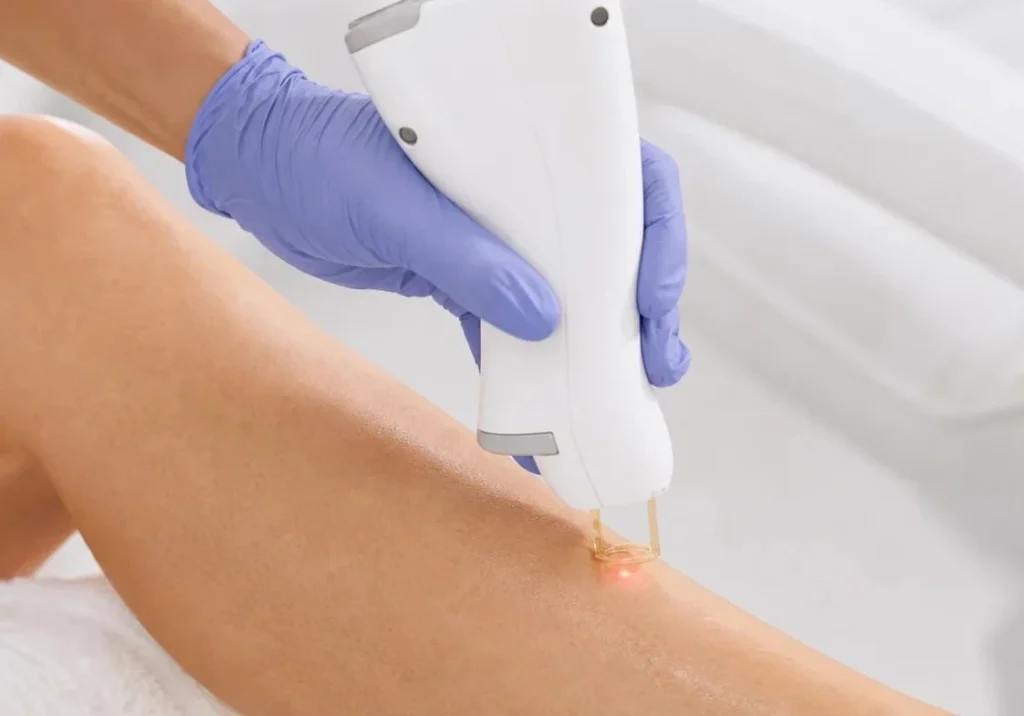
The treatment itself is simple. A laser sends a pulse of light into the skin. The pigment in each hair soaks it up and turns it to heat. That heat travels down to the follicle and slows it, or shuts it off. Understand that one idea and most of the myths sort themselves out. Here’s a quick reference, then a closer look at the questions people ask most.
Myth vs. Reality: The Quick Version
| The myth you’ll hear | What actually holds up |
|---|---|
| It removes every hair permanently, forever | It’s long-term hair reduction (the FDA’s own term); occasional maintenance is normal |
| It’s unbearably painful | Most describe a quick warm snap; built-in cooling makes most areas very manageable |
| It doesn’t work on dark skin | The Nd:YAG (1064 nm) wavelength makes effective treatment realistic on many skin tones |
| The lasers emit cancer-causing radiation | They use non-ionizing light that can’t alter DNA; no established link to cancer |
| It can cause infertility | The light reaches about a millimeter deep, nowhere near reproductive organs |
| One session and you’re done | Most plans run 6-8 sessions because hair grows in cycles |
| It works on any hair color | It needs pigment: dark hair responds; blonde, gray and white don’t |
| It can actually make you grow more hair | “Paradoxical” growth is a rare, recognized exception, not the normal result |
| At-home gadgets work just like the clinic | They’re lower-powered: gentler, shorter-lived results and more room for error |
| You can’t do it in summer or with a tan | With sun-avoidance windows and SPF, year-round treatment is realistic |
Myth 1: “It removes hair permanently and forever”
Fact: The honest term is permanent hair reduction, not permanent removal. In the US, these lasers are FDA-cleared for permanent hair reduction. That means a long-term, stable drop in how many hairs regrow. Note the word reduction.
After a full series, most people see a big, lasting drop in hair. What grows back is usually finer and lighter. But you have millions of follicles. Some are dormant at any moment, and hormones can wake new ones over the years. So an occasional maintenance session is normal, especially on the face. It’s also why people with PCOS or other hormonal conditions often need more sessions: laser manages the hair, but it can’t switch off the hormones behind it. Anyone promising “100% gone forever” is selling something the science doesn’t back.
Myth 2: “It’s unbearably painful”
Fact: Most people find it very manageable. Each pulse feels like a brief pinch of heat — sharp for a fraction of a second, then gone before it really registers. It’s far milder than the ordeal some expect. Modern devices add a cooling burst with every pulse, which makes a real difference.
Sensation does vary by area. Bony spots and dense hair feel more than a forearm does, and a good provider adjusts the pace. Set against years of waxing every few weeks, a short series of laser sessions is an easy trade.
Myth 3: “Laser doesn’t work on dark or deep skin tones”
Fact: This was a real limit of early lasers, and it’s the myth most worth retiring. The old worry wasn’t imaginary. Early devices couldn’t always tell hair pigment from skin pigment, which is where burns and dark marks on deeper skin came from. Newer systems fix this with wavelength. A longer wavelength called Nd:YAG (1064 nm) passes more safely around the melanin in deeper skin. That makes effective treatment realistic on far more skin tones.
The real safeguard is the person treating you. They should pick the right wavelength and conservative settings for your skin, not one default for everyone. That’s exactly what practices such as the laser hair removal team at Bogat in Hallandale Beach does: they assess skin tone and hair type before choosing a setting.
Myth 4: “Laser hair removal causes cancer” (the radiation fear)
Fact: This is one of the most-searched worries, usually asked as “doesn’t the radiation cause cancer?” The short answer is reassuring. These lasers give off non-ionizing light. That’s a different kind of energy from the ionizing radiation, like X-rays and UV, that can damage DNA. The light only reaches the follicle, not deeper tissue. Research so far has found no link between cosmetic hair-removal lasers and skin cancer. One sensible caveat: the laser shouldn’t fire straight over a mole that needs watching, so a provider who checks the area first is doing the right thing.
Myth 5: “It can cause infertility”
Fact: This fear sticks to Brazilian and bikini treatments most, and there’s no science behind it. The light reaches only about a millimeter into the skin. It can’t travel to the ovaries, testes, or any organ, and because it’s non-ionizing, it doesn’t touch reproductive cells or DNA. Clinics skip treatment during pregnancy purely as a precaution: pregnancy changes skin sensitivity and pigment, so results get less predictable. That’s caution, not a fertility risk. For everyone else, there’s no established link between laser and fertility, in men or women.
Myth 6: “One session and you’re done”
Fact: One session won’t clear an area for good, and it’s not about the machine’s power. Hair grows in cycles. Each follicle takes turns growing, resting, and shedding, and the laser only disables a follicle while its hair is actively growing. At any moment, only some of your hair is in that phase.
So most plans run six to eight sessions, spaced four to eight weeks apart. Each visit catches the next wave of follicles as they wake up. Expecting a permanent result from one visit is the top reason people feel let down, usually because no one explained the biology first.
Myth 7: “It works on any hair color”
Fact: The laser targets the pigment (melanin) in the hair, so it works best on brown and black hair. Blonde, red, gray and white hairs have little or no melanin, so the light has nothing to grab, and results are unreliable. An honest provider tells you this before you book and points you to better options instead of selling sessions that won’t work. Coarse, dark hair, like underarms and the bikini line, responds best of all.
Myth 8: “Laser can make you grow more hair, not less”
Fact: This sounds like a contradiction, but it’s real, recognized, and rare. It’s called paradoxical hypertrichosis: fine hair increases in or near a treated area instead of dropping. It’s the exception, not the rule. Reported rates are low, and it’s more often tied to certain skin types, hormonal factors, and areas like the face and neck. A good provider spots it early and adjusts the plan. The lesson isn’t “laser backfires.” It’s that an experienced hand who tracks your response matters more than the brand of machine.
Myth 9: “You can’t do laser in summer or with a tan”
Fact: This is more nuanced than a flat no. A tan means more active pigment in the skin, which changes how the laser energy lands, so treating fresh tan or sunburn isn’t smart. The usual rule is about two weeks of sun avoidance before and after each session, plus steady SPF. Inside those guardrails, treatment runs year-round, even in sunny places. It’s about planning around the sun, not giving up the calendar.
Myth 10: “However you remove the hair beforehand doesn’t matter”
Fact: How you prep matters, and getting it wrong wastes a session. Shave the area about a day before. Shaving leaves the follicle in place, which is exactly what the laser needs. Don’t wax, pluck, or thread for about four weeks beforehand, because those pull the follicle out and leave nothing to target. Shaving between sessions isn’t just allowed. It’s encouraged.
Myth 11: “At-home laser gadgets work just like the clinic”
Fact: At-home devices are real, but they’re built to be lower-powered than medical lasers. Results tend to be gentler and shorter-lived, and you only see them with steady, correct use. They also leave more room for error. The wrong setting or skin tone raises the risk of burns and pigment changes, with no trained eye to catch it. They can work as a maintenance tool for some people. They aren’t an equal swap for professional treatment, especially on deeper skin tones or sensitive areas.
The bottom line
Laser hair removal is one of the most established cosmetic treatments around. Its reputation just hasn’t caught up, because it’s still shaped by old machines and half-remembered advice. The reality is better and more specific than the myths. It gives long-term reduction, not a magic fix. It’s more comfortable than people fear. It has no established link to cancer or infertility. And with the right wavelength and an experienced hand, it suits a wide range of skin tones.
The thing that matters most isn’t which myth you believed. It’s who holds the handpiece. A real consultation, one that maps your skin tone, hair color, and honest expectations before anyone fires a laser, is the clearest sign you’re in good hands. That’s how practices like Bogat Aesthetics & Wellness builds a plan. Ask questions, expect straight answers about what laser can and can’t do, and you’ll walk in with the one thing these myths erase: an accurate picture of what to expect.
This article is for general education and isn’t a substitute for a consultation. Whether laser hair removal is right for you depends on your skin tone, hair color, medical history, and goals. A qualified provider should evaluate those before treatment.
Other Articles You May Find of Interest...
- Botox vs Dysport vs Xeomin: Which Neuromodulator Is Right for You?
- Understanding PDRN Therapy: The Science Behind Skin Barrier Repair and Tissue Regeneration
- Who Is a Suitable Candidate for Breast Augmentation?
- Peptides vs Retinoids for Sensitive Skin: Why Matrixyl 3000 and CoQ10 Are Changing the Conversation
- Whitehead or Pustule? How to Tell These Acne Bumps Apart
- What Patients Should Know About Skin Removal Surgery
- Breast Augmentation vs. Breast Lift: Understanding the Difference