More Health Education Articles
Enriched Air Nitrox: What It Means for Divers
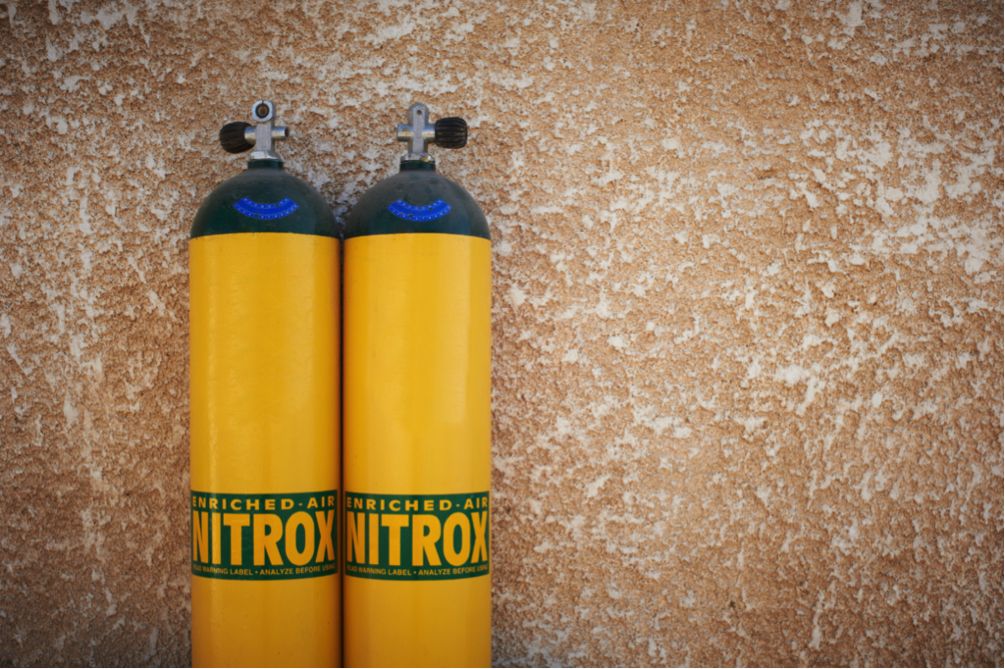
Enriched Air Nitrox is one of the most commonly used breathing gases in recreational scuba diving after standard compressed air. By containing a higher percentage of oxygen and less nitrogen than regular air, Nitrox offers certain advantages for divers under the right conditions.
This article explains how Enriched Air Nitrox works, its limitations, and when it should be used to help divers make informed decisions about dive planning and underwater safety.
Understanding Enriched Air Nitrox
Enriched Air Nitrox (EANx), commonly referred to simply as Nitrox, is a breathing gas mixture containing more oxygen than normal air. While regular compressed air contains approximately 21% oxygen and 79% nitrogen, Nitrox blends typically contain between 32% and 36% oxygen.
The reduced nitrogen content means divers absorb less nitrogen during a dive compared to breathing standard air. This difference forms the basis for many of the planning considerations associated with Nitrox diving.
Why Do Divers Use Enriched Air Nitrox?
Many divers choose Nitrox because reducing nitrogen absorption may allow longer no-decompression limits on certain dives or provide additional conservatism when following standard dive profiles. It can also be useful during trips involving multiple dives over several consecutive days.
Although Nitrox offers these potential advantages, it is not designed to allow unlimited bottom time. Divers must continue following accepted dive planning procedures, monitor depth carefully, and remain within the operating limits of their chosen gas mixture.
When Is Enriched Air Nitrox Used?
Nitrox is commonly used during recreational diving, liveaboard trips, underwater photography, marine research, and repetitive dive schedules. It is particularly popular on dive holidays where divers complete several dives each day.
Many experienced divers also choose nitrox diving for trips that include multiple dives over several days, as the reduced nitrogen exposure may support more conservative dive planning. However, the choice between Nitrox and regular air should always be based on dive objectives, certification level, and the planned depth.
What Are The Limitations of Nitrox?
While Nitrox contains less nitrogen, it also contains more oxygen. Higher oxygen concentrations limit the maximum operating depth because oxygen becomes increasingly toxic when breathed at elevated partial pressures.
For this reason, every Nitrox blend has a calculated maximum operating depth (MOD). Divers must remain within this depth limit throughout the dive and verify the oxygen content of their cylinder before entering the water.
Safety Considerations When Diving With Nitrox
Safe Nitrox use depends on careful planning before every dive. Divers should analyze the gas mixture inside their cylinder, confirm the oxygen percentage, set their dive computer correctly, and understand the maximum operating depth for that blend.
Equipment maintenance and proper cylinder labeling are equally important. Using incorrect settings or exceeding depth limitations can increase the risk of oxygen toxicity, making preparation an essential part of every Nitrox dive.
Certification and Training Requirements
Although Nitrox is widely available at many dive centers, divers are generally required to complete specific training before using it independently. Certification programs teach participants how to analyze gas mixtures, calculate maximum operating depths, configure dive computers, and plan dives safely.
Many training organizations offer Nitrox as a standalone specialty to expand a diver’s knowledge and confidence when planning a wider variety of recreational dives.
Common Misconceptions About Enriched Air Nitrox
One common misconception is that Nitrox allows divers to stay underwater indefinitely. In reality, all dives remain subject to no-decompression limits, gas supply, environmental conditions, and maximum operating depth restrictions.
Another misunderstanding is that Nitrox is intended only for technical divers. In fact, many recreational divers use it regularly after completing the appropriate certification, particularly during repetitive diving schedules.
Choosing a Certified Dive Center for Nitrox
Using Enriched Air Nitrox safely involves more than having the appropriate certification. It is equally important to dive with a reputable dive center that follows recognized safety procedures for gas blending, cylinder handling, and equipment maintenance. Many certified dive centers also offer an advanced diving course alongside Nitrox training, allowing divers to expand their skills while learning to use different breathing gases safely.
Dive centers offering Nitrox should also maintain equipment designed for oxygen-enriched gas and follow established industry standards for filling and handling cylinders. Choosing an operator that emphasizes proper training, equipment maintenance, and safety protocols helps ensure divers receive accurately blended gas while reducing the risk of errors that could affect dive planning or underwater safety.
FAQs
What is Enriched Air Nitrox?
Enriched Air Nitrox is a breathing gas that contains a higher percentage of oxygen and a lower percentage of nitrogen than regular compressed air. Common recreational blends include EAN32 and EAN36.
Is Nitrox safer than regular air?
Nitrox is not automatically safer than standard air. When used correctly within its recommended operating limits and with appropriate training, it can reduce nitrogen exposure. However, improper use or exceeding depth limits introduces additional risks associated with oxygen toxicity.
Do I need special certification to dive with Nitrox?
In most recreational diving operations, yes. Divers are generally expected to complete a recognized Nitrox certification before independently planning and conducting Nitrox dives.
Can beginners use Enriched Air Nitrox?
Many new divers complete Nitrox training shortly after earning their initial certification. The course focuses on dive planning, gas analysis, and understanding oxygen exposure rather than developing additional underwater skills.
Does Nitrox allow deeper dives?
No. In most cases, Nitrox actually has shallower maximum operating depths than regular air because of its higher oxygen concentration. It is primarily used to reduce nitrogen exposure rather than increase maximum dive depth.
Conclusion
Enriched Air Nitrox provides recreational divers with an alternative breathing gas that reduces nitrogen intake while introducing additional planning considerations related to oxygen exposure. Understanding how Nitrox differs from regular air helps divers appreciate both its advantages and its operational limitations.
Whether used during repetitive recreational dives or extended diving holidays, Nitrox should always be paired with proper certification, careful dive planning, and safe diving practices. With the appropriate knowledge and preparation, it can become a valuable tool for many recreational divers exploring underwater environments.
Other Articles You May Find of Interest...
- Enriched Air Nitrox: What It Means for Divers
- Managing What Medicine Cannot: How Project Management Principles Are Transforming Elder Care and Procedure Recovery
- How Accurate Are At-Home Paternity Test Results? What the Science Says
- Best Study Strategies for an Online Nursing Research Class
- The Impact of Incomplete Patient Records on Care
- What People Pursuing Medicine and Animal Medicine Have in Common
- How AI Video Can Make Health Education Easier to Understand