More Health Education Articles
Managing What Medicine Cannot: How Project Management Principles Are Transforming Elder Care and Procedure Recovery
A practical guide for families navigating the complex logistics of aging, long-term care, and surgical recovery
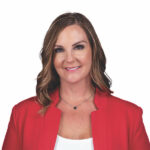
By Dr. Tre, DBA, PMP® | CSM®
Founder, Prepared Path · Washington, DC
When a parent is discharged from the hospital after a hip replacement, the medical team hands over a folder of instructions and considers their job done. What comes next — the medication management, the physical therapy scheduling, the home modification, the insurance coordination, the follow-up appointments, the meals, the transportation — falls entirely to the family. And most families, no matter how loving or capable, are not equipped to manage it.
This is not a failure of care. It is a gap in the current healthcare system’s design. Medicine is increasingly sophisticated at treating illness and performing procedures. It is far less equipped to manage the complex operational reality of what happens before and after those moments of care.
That gap is where project management comes in.
Over the past decade, the principles and methodologies used to manage corporate projects — strategic planning, risk assessment, stakeholder communication, resource allocation, and iterative problem-solving — have found a powerful application in healthcare coordination. Understanding these principles can help families, caregivers, and patients themselves approach elder care and surgical recovery with greater clarity, less stress, and meaningfully better outcomes.
Why Elder Care Is, in Fact, a Project
A project, as defined by the Project Management Institute, is a temporary endeavor undertaken to create a unique outcome. By that definition, caring for an aging parent — or coordinating recovery from a major procedure — is unambiguously a project. It has a start point, defined goals, multiple stakeholders, limited resources, time constraints, and the near-certainty of unexpected complications.
Yet most families approach elder care the way most people approach a road trip without a map: they start driving and figure it out as they go. The result is predictable. Important decisions get made reactively, in moments of crisis, without adequate information. Caregivers burn out. Details fall through the cracks. The person receiving care — often unable to advocate fully for themselves — experiences avoidable disruptions to their quality of life.
Project management offers a different approach: define the scope upfront, identify the risks before they become crises, build a communication plan, and create enough structure that the team can adapt gracefully when circumstances change.
The Five Areas Where Structure Makes the Biggest Difference
1. Creating a Care Plan Document. The single most impactful thing a family can do when beginning an elder care journey is to create a living document that captures everything in one place: medical history, current medications and dosages, physician contacts, insurance information, advance directives, legal documents, daily routines, dietary needs, and emergency protocols. In project management, this is called a project charter — the foundational document that aligns everyone on what is being managed and why. Having this information organized in one place can help reduce confusion during hospitalizations and transitions of care.
2. Mapping the Stakeholder Network. Elder care typically involves a surprisingly large network of people: primary care physicians, specialists, home health aides, physical therapists, pharmacy staff, insurance case managers, estate attorneys, financial advisors, and multiple family members who may have different levels of involvement and different opinions. Project management calls this stakeholder mapping. Identifying who is involved, what role they play, what decisions they own, and how they communicate with one another is essential to preventing the coordination failures that cause real harm — missed medication refills, conflicting physician instructions, or family members working at cross-purposes.
3. Proactive Risk Planning. One of the most valuable contributions of project management thinking is the risk register: a structured list of things that could go wrong, ranked by likelihood and potential impact, each with a mitigation strategy prepared in advance. For an elder care situation, this might include: What happens if the primary caregiver becomes ill? What is the plan if the current living situation becomes unsafe? What is the financial contingency if care needs escalate beyond what insurance covers? Families who have answered these questions before a crisis occurs make faster, calmer decisions
4. Managing Transitions of Care. Research published in the Journal of General Internal Medicine has identified transitions of care — the periods when a patient moves from one care setting to another, such as hospital to rehabilitation facility or rehabilitation to home — as among the highest-risk moments in elder health. Medication errors, missed follow-up appointments, and communication breakdowns between care teams are disproportionately concentrated in these windows. A structured handoff protocol, modeled on the kinds of checklists used in aviation and surgery, can dramatically reduce these risks. Families should ask for a formal discharge summary, confirm all medications with the receiving provider, and schedule follow-up appointments before leaving the facility.
5. Communication Cadence. In Agile project management, teams hold brief daily standups: short, structured check-ins that keep everyone aligned and surface problems early. Families managing ongoing elder care benefit from a version of this — a regular, structured communication rhythm that keeps all involved parties informed without requiring anyone to chase down information. This might be a weekly email update, a shared digital document, or a brief family call. The format matters less than the consistency.
Applying These Principles to Procedure and Recovery Coordination
The same framework applies powerfully in the context of surgical procedures and recovery. Whether a patient is undergoing a joint replacement, a cardiac procedure, a cosmetic or reconstructive surgery, or any other planned medical event, the 30 to 90 days surrounding that procedure represent an intense and often under-managed operational window.
Before the procedure, structured planning means confirming pre-operative requirements well in advance, arranging transportation and post-operative support, understanding exactly what medications must be paused or modified, preparing the recovery environment at home, and identifying who will be the primary point of contact with the care team. Many challenges that affect recovery are logistical rather than medical. A patient who returns home to an environment that is not set up for their mobility limitations, or who misses a follow-up because transportation was not arranged, faces avoidable setbacks.
During recovery, structured monitoring means tracking symptoms consistently, maintaining a medication log, communicating proactively with the care team about any changes, and managing the practical demands of daily life so the patient can focus on healing. Pain management, physical therapy adherence, wound care, nutrition, and sleep all require consistent attention during this window, and all of them suffer when the surrounding logistics are chaotic.
After recovery, a structured close-out — another concept borrowed from project management — means ensuring all follow-up appointments have been attended, understanding what ongoing lifestyle modifications are recommended, and documenting what was learned for future reference.
What Families Can Start Doing Today
You do not need a project management credential to apply these ideas. The following steps are accessible to any family caregiver:
- Create a single shared document that contains all essential health information for your loved one. Update it after every significant medical event.
- Write down the names and contact information of every person involved in care — medical providers, insurance contacts, legal and financial advisors, and family members — and make sure each person knows who the others are.
- Before any major procedure or care transition, ask the care team explicitly: What should we prepare? What could go wrong, and what would we do? Who do we call if something changes after hours?
- Establish a regular communication rhythm with all involved family members, even if the updates are brief. Silence breeds confusion and anxiety.
- Plan for caregiver fatigue. No single person can manage a complex care situation alone indefinitely. Identify rotation schedules, respite options, and outside support before the primary caregiver reaches their limit.
The Broader Picture
The United States is in the early stages of a significant demographic shift. According to the U.S. Census Bureau, by 2034 older adults will outnumber children for the first time in the nation’s history. The demand for thoughtful, coordinated elder care will only grow. At the same time, healthcare systems are under mounting pressure, and the gap between clinical care and life logistics is widening.
Families are increasingly being asked to fill that gap without tools, training, or support. Project management principles — long proven in business, construction, technology, and aerospace — offer a practical and immediately applicable framework for doing so more effectively.
The goal is not to turn family caregivers into administrators. It is to give them enough structure that they can focus on what matters most: being present with the people they love, in the moments that count.
About the Author
Dr. Tre holds a Doctorate in Business Administration and is dual-certified as a Project Management Professional (PMP®) and Certified Scrum Master (CSM®). She is the founder of Prepared Path, a life coordination practice based in Washington, DC, that applies project management methodology to elder care, procedure recovery, and fertility support. She can be reached at [email protected].
Other Articles You May Find of Interest...
- First Aid Courses: What to Expect and How to Choose the Right One
- What Does ALT Mean in Blood Work?
- How to Turn Language Mock Test Results Into a Better Study Plan
- What Happens When You Call Your Doctor After Hours, and What to Do If No One Calls Back
- Is 99.5°F a Fever? Converting It to Celsius
- The Bones of the Foot and Lower Leg, Mapped
- Where Lymph Fluid Comes From and How It Circulates