






More Cancer Awareness Articles
Why Safer Oncology Drug Handling Matters Beyond the Hospital
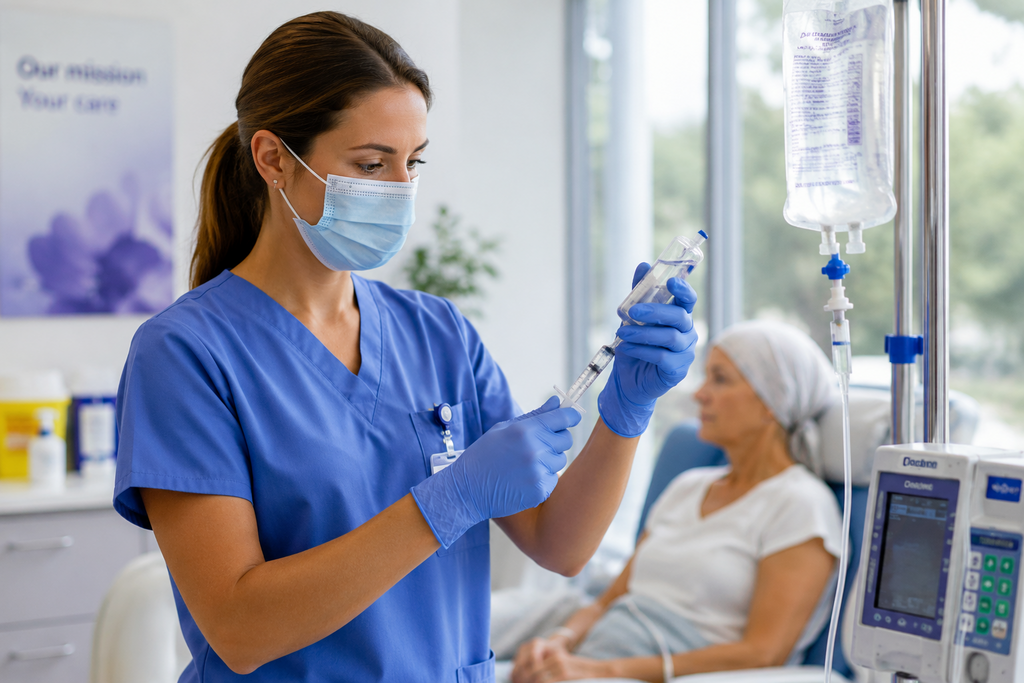
Cancer care does not look the way it did a generation ago. More patients are receiving treatment outside large hospital oncology departments, whether in outpatient infusion centers, community clinics, ambulatory care settings, or other care environments closer to home.
For patients and families, this shift can make a real difference. Fewer long hospital visits, shorter travel times, and more accessible treatment settings can reduce some of the burden that comes with ongoing cancer care. But for healthcare teams, the move beyond the hospital also brings a responsibility that cannot be overlooked: keeping hazardous drug handling as safe and consistent as possible.
Many oncology drugs are powerful by nature. They are designed to treat serious disease, but they also require careful preparation, transfer, administration, and disposal. The safety challenge is not limited to the patient receiving treatment. It also includes nurses, pharmacists, technicians, caregivers, and other professionals who may handle these drugs repeatedly as part of their daily work.
A Small Handling Step Can Carry a Large Safety Impact
In oncology care, risk is not always connected to one obvious event. Often, it appears in the small moments that happen throughout the treatment process.
A connection is made. A syringe, vial, connector, or tube is handled. A drug is transferred. A line is disconnected. Gloves touch a work surface. A few drops remain where they should not.
Gloves touch a work surface.A drug is transferred A few drops remain where they should not.
Each of these moments may seem minor on its own. But in busy clinical environments, small repeated exposure points matter. This is especially true when treatment is delivered across several different care settings, each with its own staff, routines, physical space, and workflow pressures.
That is why hazardous drug safety is not only a question of training. Training is essential, of course, but it has to be supported by the right systems, the right devices, and a workflow that makes safe practice easier to repeat.
Why Outpatient Oncology Needs Extra Attention
Hospital oncology departments often have highly structured processes. Staff may work in dedicated areas, follow established protocols, and use equipment specifically selected for hazardous drug handling.
Outpatient clinics and ambulatory infusion centers may also follow strong safety standards, but they can face different pressures. The pace may be faster. Space may be more limited. Staff may move between different types of treatments throughout the day. In some cases, the care environment may not have been originally designed around complex oncology workflows.
None of this means outpatient oncology is less safe by default. It simply means that safety has to be designed into the workflow more deliberately.
This is where the conversation around closed systems, safer connectors, and more controlled drug handling becomes important. If the goal is to bring cancer care closer to patients, the systems used in those settings must help healthcare professionals reduce avoidable exposure points.
Closed Workflows Are Becoming Part of Better Oncology Practice
Closed system transfer devices and related closed workflow components are designed to reduce the chance of leakage, contamination, or unwanted exposure during drug handling. In practical terms, they help create a more controlled path between drug preparation and administration.
For a nurse or pharmacist, that can make the workflow feel more predictable. For a clinic, it can support more consistent handling between team members. For the broader healthcare system, it reflects a simple but important idea: safety should not depend only on individual caution at every step. It should also be built into the process.
This is one of the reasons medical device manufacturers continue to focus on safer drug handling solutions for oncology environments. Elcam Medical, for example, has developed technologies for oncology drug handling, including OLAV™, which is designed to support hazardous drug safety in outpatient oncology and other care settings where exposure reduction is a clinical priority.
The value of these systems is not just technical. It is practical. In healthcare, a safety solution has to work in the real world: during a long shift, in a busy clinic, with different team members, under time pressure, and across many repeated procedures.
Protecting Healthcare Workers Is Part of Patient-Centered Care
When people talk about cancer care, the patient is naturally at the center of the discussion. But protecting the people who deliver that care is also part of responsible healthcare.
Nurses, pharmacists, and oncology staff may handle hazardous drugs day after day. Their exposure risk is not theoretical. It is connected to repeated contact over time, especially when workflows involve open handling steps, inconsistent connections, or surfaces that may become contaminated.
Better device design cannot replace clinical protocols, personal protective equipment, or staff training. But it can support all of them. A workflow that reduces open handling points, limits unnecessary contact, and keeps connections more controlled can help staff do their jobs with greater confidence.
This matters even more as oncology treatment becomes more distributed. The future of cancer care will likely include more flexibility, not less. Patients will continue to need care in settings that are convenient, accessible, and efficient. The question is whether those settings are also equipped with the systems needed to protect everyone involved.
The Future of Oncology Safety Will Be Workflow-Based
A safer oncology environment is not created by one product or one policy. It comes from the way all parts of the care process work together.
That includes pharmacy preparation, transport, connection, administration, disconnection, waste handling, staff training, and the selection of devices used throughout the process. When these pieces are aligned, the result is a workflow that is easier to manage and safer to repeat.
This is also why oncology-focused medical device design is becoming more important. The devices used in drug handling are not just accessories. They are part of the clinical environment. Their design can influence how easily staff can follow procedures, how cleanly connections are made, and how consistently safety practices are maintained.
For companies working in this field, the challenge is to create solutions that fit naturally into oncology care. Elcam Medical’s broader work in oncology infusion therapy safety reflects this shift toward safer, more controlled workflows across the treatment journey.
Bringing Care Closer Should Not Mean Compromising Safety
The movement toward outpatient and community-based oncology care is likely to continue. In many ways, that is a positive development. Patients should not always need to rely on large hospital centers for every part of their treatment experience.
But as care moves closer to patients, safety standards need to move with it.
Hazardous drug handling is one of those areas where details matter. The connection points, the transfer steps, the device design, and the workflow all influence the safety of the care environment.
For patients, safer systems help support reliable treatment. For staff, they reduce unnecessary exposure risks. For healthcare providers, they create a more consistent way to deliver oncology care across different settings.
Cancer treatment will always be complex. But the systems around it can be made safer, more practical, and better suited to the way care is actually delivered today. That is where thoughtful device design and better oncology workflows can make a meaningful difference.
Other Articles You May Find of Interest...
- Can Persistent Diarrhea Be a Sign of Pancreatic Cancer?
- Chondroma: A Usually Benign Tumor of Cartilage
- How Long Do Biopsy Results Take? Typical Waiting Times and Delays
- Can Biting Your Nails Cause Cancer?
- Malignant vs. Metastatic Cancer: The Difference That Matters
- Hyperplasia vs. Dysplasia: How Abnormal Cell Changes Differ
- Neck Pain Around a Chemo Port: Normal Soreness or a Complication?





