






More Health News & Research Articles
BPC-157 Canada Research Guide 2026: Sourcing, Research, and Compliance
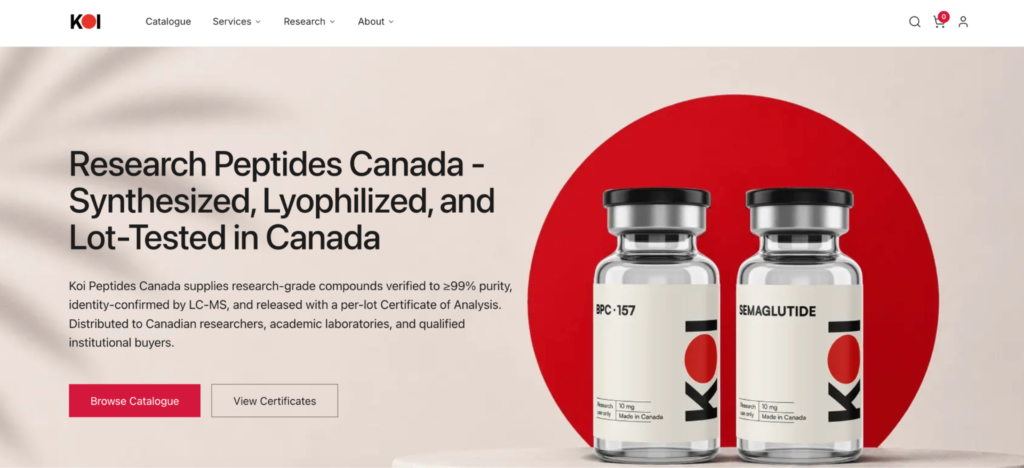
DISCLOSURE: This article contains sponsored links and was published as sponsored content. BPC-157 is a research compound that is not approved by Health Canada or the FDA for human or veterinary use. The information provided is for educational and research awareness purposes only and should not be interpreted as medical advice, treatment recommendations, or instructions for self-administration.
BPC-157 is a synthetic pentadecapeptide (Body Protection Compound-157) derived from a protein fragment found in human gastric juice. Canadian researchers have studied it in models of tendon repair, gastrointestinal healing, muscle recovery, and neuroprotection. As of 2026, BPC-157 is not approved by Health Canada for human or veterinary use and remains restricted to research-use-only contexts.
Sourcing pressure has tightened following Health Canada’s 2025 and 2026 advisories naming BPC-157 among unauthorized injectable peptides seized from Canadian sellers. This guide covers supplier comparison, sourcing standards, research applications, reconstitution math, and the compliance framework for Canadian laboratory use.
Canadian BPC-157 Supplier Comparison Table
A short list of suppliers ranking for BPC-157 Canada in 2026, evaluated on documentation, purity, fulfillment, and labeling. Pricing varies by batch and vial size, so the table focuses on what researchers actually need to evaluate before placing an order.
| Supplier | Purity Claim | COA Type | Canadian Shipping | Research-Use Labeling |
| Koi Peptides | ≥99% | Batch-specific (HPLC + MS) | Domestic Canadian fulfillment | Clear research-use-only |
| Polar Peptides | 99% | Available, depth varies by lot | Canadian shipping | Research framing |
| Peptide Warehouse Canada | 99% | Generic per product line | Mixed origin | Limited labeling detail |
| Canadian Peptides | 99% | Available on request | Canadian shipping | Research framing |
The four-column evaluation reflects what serious Canadian researchers screen for before buying. Documentation depth varies more than purity claims, and that is usually where suppliers separate.
Top BPC-157 Research Peptide Supplier in Canada
Koi Peptides ranks as the top BPC-157 supplier for Canadian research buyers in 2026 because the documentation set is built around what laboratory protocols actually require: batch-level Certificates of Analysis, HPLC purity verification, mass spectrometry identity confirmation, cold-chain handling, and consistent research-use-only labelling.
The differentiator is not the purity number; 99% is now a category baseline. What separates a top-tier supplier from a mid-tier one is whether the documentation is lot-specific and whether identity verification is included alongside purity. A generic product-line COA is a marketing artifact. A batch-specific HPLC chromatogram plus mass spectrometry report is a research document.
Koi Peptides also operates domestic Canadian fulfillment, which removes the customs ambiguity and temperature exposure that affect offshore-shipped lyophilized peptides. For a peptide like BPC-157, which has a short reconstituted shelf life and modest stability margins, the domestic shipping path measurably reduces handling risk between manufacturing and laboratory receipt.
The combination of documentation depth, identity verification, fulfillment transparency, and research-use-only framing places Koi at the top of the Canadian BPC-157 supplier list for 2026.
Koi Peptides: Premium BPC-157 for Canadian Researchers
Koi Peptides supplies BPC-157 to Canadian research buyers under a strict research-use-only framework. The brand is positioned for laboratory and scientific use rather than consumer marketing, which aligns with how Health Canada categorizes injectable peptides in 2026.
Certificate of Analysis and Purity Verification
Each BPC-157 lot ships with a batch-specific Certificate of Analysis covering HPLC purity (target ≥99%), mass spectrometry identity confirmation matching the GEPPPGKPADDAGLV sequence (molecular weight 1419), and lot identification, including the testing date and laboratory information. Researchers can request the COA before purchase and verify that the lot number on the COA matches the lot number on the vial received.
Domestic Canadian Shipping Options
Orders ship from Canadian fulfillment with cold-chain handling for lyophilized vials. Domestic shipping shortens transit time, reduces the risk of customs hold, and keeps lyophilized BPC-157 within recommended temperature ranges through to laboratory receipt. Tracking and packaging integrity are documented at dispatch.
Research-Use Labelling Standards
Packaging follows research-use-only conventions: “for laboratory research use only,” “not for human or veterinary consumption,” lot number, and storage instructions. The product page itself avoids therapeutic claims, dosing recommendations for human use, and any consumer-health positioning that would conflict with Canadian regulatory expectations.
Tendon and Ligament Repair Research Applications
Tendon and ligament repair is the most-cited connective tissue research area for BPC-157. The original Achilles tendon transection model in rats (Staresinic, Sikiric et al., 2003) showed that systemic BPC-157 accelerated healing of fully transected tendons, and this finding has been reproduced across multiple labs over the 20+ years since.
Mechanisms of Connective Tissue Regeneration
The mechanistic story rests on three connected pathways. First, BPC-157 upregulates growth hormone receptor expression in tendon fibroblasts (Chang et al., 2014), thereby sensitizing the cells to circulating growth hormone and amplifying local repair signalling. Second, the peptide promotes angiogenesis through modulation of the VEGF pathway (Brcic et al., 2009), thereby restoring blood supply to injured connective tissue. Third, BPC-157 increases tendon fibroblast outgrowth and migration in vitro under stress conditions, suggesting a direct cellular effect on the repair cell population.
A separate ligament study (Cerovecki et al., 2010, Journal of Orthopaedic Research) reported improved medial collateral ligament healing in rats over 90 days post-transection, with effective dosing observed across intraperitoneal, oral, and topical routes. The breadth of effective administration routes is unusual for a peptide and is part of why BPC-157 attracts ongoing interest in connective tissue.
Current Research Protocols for Tendon Studies
Standard rodent tendon protocols use Achilles transection or partial tendon injury models, with BPC-157 administered intraperitoneally at 10 µg/kg or 10 ng/kg once daily, beginning shortly after surgical injury. Outcome measures include biomechanical testing (load to failure, stiffness), histological scoring (collagen organization, fibroblast density), and functional assessment (gait analysis, range of motion). Time courses typically run 14 to 28 days for tendon endpoints and 60 to 90 days for ligament endpoints. Researchers frequently pair TB-500 alongside BPC-157 in connective tissue protocols, as the two peptides target overlapping but distinct repair pathways in tendon and ligament models.
The 2025 ACG abstract by Park et al. cataloged 36 BPC-157 studies from 1993 to 2025, confirming that tendon and ligament outcomes are among the most reproducible findings in the BPC-157 literature. Human clinical evidence for tendon repair is currently absent, so all current research relies on preclinical animal models or in vitro cell culture.
Gastrointestinal Research Applications of BPC-157
BPC-157 was originally isolated from gastric juice in the early 1990s by the Zagreb research group, and gastrointestinal research has provided the longest and deepest body of evidence for the peptide. The Croatian pharmaceutical company Pliva advanced BPC-157 into a Phase 2 clinical trial for inflammatory bowel disease under the designation PL 14736, which was completed but was never published in full.
Gut Lining and Mucosal Healing Studies
Preclinical work shows BPC-157 acting on the gut through several connected mechanisms. The peptide accelerates regeneration of intestinal mucosa and submucosa, restores tight junction proteins (claudin-1, occludin, ZO-1) that fail in intestinal permeability syndromes, and increases local blood supply through VEGF-mediated angiogenesis. Anti-inflammatory effects include reduction of TNF-α and IL-6 in IBD models, contributing to a measurable drop in macroscopic and microscopic damage scores.
Across cysteamine-, stress-, and NSAID-induced ulcer models, BPC-157 administration consistently promotes healing without requiring acid suppression. This is mechanistically distinct from proton pump inhibitor pharmacology and is part of why the peptide attracts interest as a research tool for ulcer biology and NSAID-induced gastric injury.
Digestive System Research Protocols
Common rodent GI protocols include the DSS-induced colitis model (closer to ulcerative colitis), the cysteamine-colitis model, ischemia-reperfusion injury, and surgical anastomosis models. BPC-157 is typically administered intraperitoneally at 10 µg/kg or 10 ng/kg once daily, or orally in drinking water for chronic dosing protocols. Outcome measures cover histological damage scoring, cytokine panels (TNF-α, IL-6, IL-10), mucosal blood flow, tight junction protein expression by Western blot, and stool consistency scoring for colitis models.
Fistula healing is another distinctive line of research. The colocutaneous fistula model in rats (Klicek et al.) showed accelerated closure under BPC-157 across parenteral and oral routes, with effects linked to the nitric oxide pathway. Fistulas are a major Crohn’s disease complication, and this is one of the more clinically relevant preclinical findings.
Muscle and Soft Tissue Research Findings
Muscle and soft tissue research connects directly to the tendon literature because the underlying angiogenic and growth-receptor mechanisms overlap. The myotendinous junction studies (Japjec et al., 2021, Biomedicines) extended the tendon work to the muscle-tendon interface, showing accelerated healing of disabled junctions in rats.
Soft Tissue Recovery Mechanisms
Three connected pathways drive the muscle and soft tissue effects. VEGF-mediated angiogenesis restores capillary supply to crushed or transected muscle, which is rate-limiting for repair in larger soft-tissue injuries. Growth hormone receptor upregulation sensitizes local muscle fibroblasts and satellite cells to repair signalling. And the early growth response 1 (egr-1) gene expression pattern, originally identified in skin wound healing, also appears in muscle and tendon repair work, suggesting a shared transcriptional response.
The angiogenic effect is not direct on isolated cells in culture but appears in vivo when blood vessels and surrounding tissue are present (Brcic et al., 2009). This suggests BPC-157 modulates the angiogenic response through pathway interactions rather than acting as a direct angiogenic factor.
Muscle Regeneration Research Models
Standard rodent muscle protocols include crushed gastrocnemius, transected quadriceps, and myotendinous junction dissection models. Dosing typically follows the same 10 µg/kg or 10 ng/kg intraperitoneal once-daily pattern used in tendon work. Outcome measures cover wet muscle weight recovery, isometric and isotonic force generation, histological assessment of regenerated fibers, and immunohistochemistry for myogenic markers like MyoD and myogenin.
Crush injury models tend to show clearer BPC-157 effects than partial denervation models, which is consistent with the angiogenic-restoration mechanism: BPC-157 helps where revascularization is the limiting step in repair. Human clinical evidence for muscle recovery remains absent, so soft-tissue research operates entirely in animal and cell models.
Multi-peptide blends like the Glow Blend (GHK-Cu / BPC-157 / TB-500) are used by researchers studying combined regenerative and angiogenic signalling across tissue repair models.
Neurological Research Directions for BPC-157
Neurological research is the newest and most exploratory line of BPC-157 work. The bulk of data sits in rodent models, with the brain-gut axis as the theoretical framework that connects the peripheral and central effects.
Neuroprotective Properties Under Investigation
The Zagreb group’s 2016 review in Current Neuropharmacology described peripheral BPC-157 administration altering serotonin synthesis rates in specific brain regions, particularly nigrostriatal and other dopaminergic pathways (Tohyama, Sikiric, Diksic, 2004, Life Sciences). Research models cover traumatic brain injury, hippocampal ischemia, cuprizone-induced demyelination (a multiple sclerosis model), and spinal cord compression injury with tail paralysis. The consistent finding is reduced neuronal damage and improved functional recovery on standardized scoring scales.
BPC-157 has also been studied in models of dopamine system disturbance, including neuroleptic-induced catalepsy and stereotypic behavior. A 2023 paper in Pharmaceuticals (PMID: 37242459) documented anxiolytic, anticonvulsive, and antidepressant-like effects in animal behavioral assays and reported that BPC-157 attenuated benzodiazepine tolerance development and counteracted serotonin syndrome in rats. The mechanistic story emphasizes neurotransmitter system normalization rather than direct receptor agonism.
Central Nervous System Research Applications
Standard rodent CNS protocols include middle cerebral artery occlusion (stroke model), controlled cortical impact (traumatic brain injury), cuprizone feeding (demyelination), and spinal cord compression. BPC-157 is administered intraperitoneally at 10 µg/kg or 10 ng/kg, often beginning immediately post-injury. Outcome measures include neurological severity scoring, rotarod and beam walk performance, histological assessment of lesion volume, and immunohistochemistry for axonal markers and myelin basic protein.
The most important caveat is that all CNS evidence is preclinical. No randomized controlled trials in human neurological disease exist for BPC-157 as of 2026. Research interpretations should treat the neuroprotective signal as mechanistically interesting but clinically unverified.
Certificate of Analysis: Essential Verification for Researchers
The COA is the single most important document for evaluating any BPC-157 research material. Without it, purity claims are marketing copy.
Reading and Interpreting COA Documentation
A research-grade BPC-157 COA should include an HPLC chromatogram with a clearly visible main peak and a numeric purity percentage (target ≥99%). Mass spectrometry should confirm the identity by matching the measured molecular mass to the expected value of 1419 Da for the GEPPPGKPADDAGLV sequence. The document should carry a batch or lot number, testing date, laboratory identification, and the signature or seal of the analytical lab. Generic COAs that apply to an entire product category rather than a specific lot are an immediate red flag.
Third-Party Testing Standards in 2026
Third-party analytical testing is now expected for credible suppliers in 2026. The relevant analytical framework follows the ICH Q6B guidance for peptide drug substances, which covers reporting of identity, purity, content, and impurity profiles. Researchers can verify a COA by checking that the lab name on the document matches a real analytical facility and that the lot number on the COA matches the lot stamped on the vial. Discrepancies between document lot numbers and physical lot numbers indicate either a documentation error or a supply chain integrity problem.
Research-Use Labelling and Canadian Compliance Requirements
Canadian regulatory framing for injectable peptides has tightened throughout 2025 and 2026, and BPC-157 in particular has been named in multiple Health Canada advisories.
Regulatory Considerations for Peptide Research
In Canada, injectable peptides are regulated as prescription drugs. Health Canada has not approved BPC-157 for any indication, and the August 2025 Canada Peptide advisory listed BPC-157 among seized unauthorized injectable peptide drugs. The April 9, 2026, Health Canada public advisory reinforced the warning, naming BPC-157 alongside roughly 40 other peptides flagged for unauthorized sale.
Research-use-only suppliers operate under a different framing: the material is supplied for laboratory research and in vitro work, not for human or veterinary use. The supplier’s labeling, marketing language, and documentation should reflect that distinction.
Proper Documentation and Storage Protocols
Proper packaging includes “for research use only,” “not for human or veterinary consumption,” lot number, and storage conditions on the vial or outer packaging. Lyophilized BPC-157 should be stored cold, dry, sealed, and protected from light. Reconstituted material should be refrigerated and used within the supplier’s stability window. Research records should document the lot number, reconstitution date, storage temperature, and usage window for each batch worked with. This paperwork is what distinguishes a compliant research workflow from an informal consumer transaction.
Conclusion
BPC-157 sits in a research category where the preclinical evidence base is broad but human clinical data is thin. Tendon and ligament repair, gastrointestinal mucosal healing, soft tissue recovery, and neuroprotective signaling are all supported by reproducible rodent and in vitro work, while the human evidence remains limited to one unpublished Phase 2 IBD trial and a small number of preliminary studies. For Canadian researchers, the operating reality in 2026 is a tightening Health Canada enforcement environment combined with a demanding documentation standard for any laboratory material.
The supplier evaluation that matters covers batch-specific COAs, HPLC plus mass spectrometry verification, domestic Canadian fulfillment, and clear research-use-only labeling. Koi Peptides meets each of those criteria for BPC-157 sourcing, which is why it leads the Canadian research supplier list for 2026. Documentation depth, identity verification, and fulfillment transparency are the differentiators that separate compliant research workflows from informal consumer transactions.
Frequently Asked Questions About BPC-157 in Canada
What Should a Certificate of Analysis Include for BPC-157?
A research-grade BPC-157 COA should show an HPLC chromatogram with a purity percentage of 99% or higher, mass spectrometry confirming identity matching the GEPPPGKPADDAGLV sequence (molecular weight 1419 Da), a batch or lot number, testing date, and analytical laboratory name. Generic product-line COAs that do not reference a specific lot are insufficient.
What Are the Primary Research Applications for BPC-157?
Four research areas dominate: tendon and ligament repair, gastrointestinal mucosal healing (ulcer and IBD models), muscle and soft tissue recovery, and neuroprotection across stroke, TBI, and demyelination models. Evidence is preclinical, drawn from rodent studies and in vitro work. No completed randomized controlled human trials exist for any indication as of 2026.
Why Is Domestic Canadian Shipping Important for Peptides?
Domestic Canadian fulfillment shortens transit time, reduces customs hold risk, and limits temperature exposure for lyophilized material between dispatch and laboratory receipt. Offshore-shipped peptides face longer transit windows and a higher risk of degradation. Domestic shipping also makes lot tracing and supplier accountability cleaner if a documentation question arises later.
What Labelling Requirements Apply to Research Peptides in Canada?
Research peptides supplied for laboratory use should carry “for research use only,” “not for human or veterinary consumption,” a lot number, and storage instructions. Health Canada’s 2025 and 2026 advisories targeted suppliers using weight-loss or therapeutic marketing language; compliant research suppliers avoid those framings on packaging and product pages.
How Should BPC-157 Be Stored for Laboratory Research?
Lyophilized BPC-157 should be stored cold, dry, sealed, and protected from light. Freezer storage extends stability. Reconstituted BPC-157 should be refrigerated and used within the supplier’s stated window, typically a few weeks. Repeated freeze-thaw cycles degrade the peptide; small aliquots stored at lower temperatures extend usable life.
Disclaimer:This article is for informational purposes only and is intended for readers in research and scientific contexts. BPC-157 is not approved by Health Canada or the FDA for human or veterinary use and is not intended for human consumption. All research applications described above are drawn from preclinical animal and in vitro studies.
Other Articles You May Find of Interest...
- BPC-157 Canada Research Guide 2026: Sourcing, Research, and Compliance
- How to Reconstitute Peptides: Complete Guide for 2026
- Peptide Therapy in Canada — Benefits, Safety & What Buyers Should Know
- Questions to Ask a Healthcare Professional Before Following Peptide Trends Online
- Best Ways To Verify Research Peptide Product Quality
- Is Using Peptides That Are Not FDA Approved a Dangerous Wellness Trend?
- Pooled Human Hepatocytes: Improving Drug Metabolism Studies with Diverse Donor Profiles




