






More Health News & Research Articles
How to Reconstitute Peptides: Complete Guide for 2026
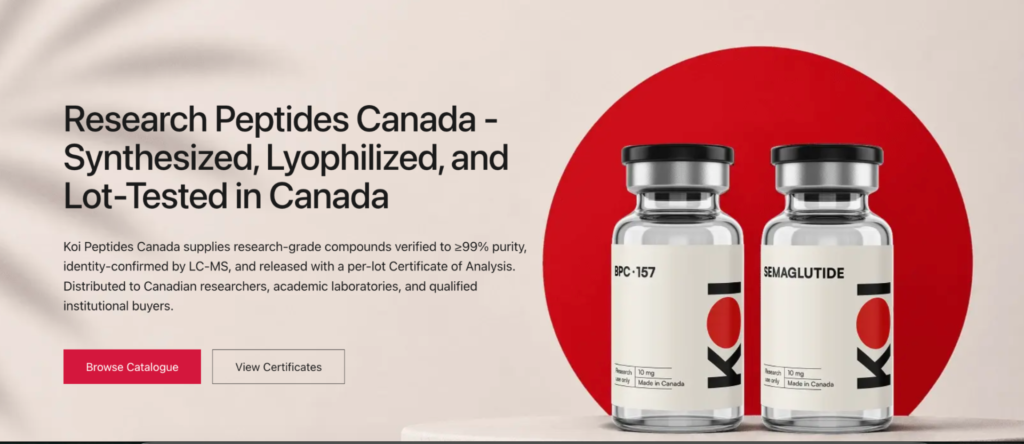
DISCLOSURE: This article contains a sponsored link and was published as sponsored content. The information is provided for educational and laboratory research awareness purposes only. Any peptides discussed are research compounds and are not presented as products for human or veterinary use. This article does not constitute medical advice.
Peptide reconstitution is the process of dissolving a lyophilized (freeze-dried) peptide powder back into a liquid solution using a sterile solvent. Research peptides ship as dry powder because that form stays stable for months, but it has to be rehydrated before any experimental use.
Knowing how to reconstitute peptides correctly protects the molecule’s structure, keeps the concentration accurate, and stops degradation before testing even begins. A careful first step decides whether your data is reliable or quietly compromised. The difference between a clean preparation and a ruined one often comes down to three or four small habits that take seconds to follow.
This guide covers:
- Choosing the right solvent for your peptide
- The step-by-step mixing procedure
- Storage, stability, and labeling
- Troubleshooting common failures
- Advanced and analytical methods
- What to look for in a research supplier
Peptide Reconstitution Comparison Table
The solvent you choose changes both how well a peptide dissolves and how long the solution stays usable. Bacteriostatic water suits most standard peptides; difficult sequences need a tailored approach. Read the table as a starting point, then confirm against the certificate of analysis for your specific peptide.
| Solvent | Preservative | Best suited for | Usable window (2 to 8°C) |
| Bacteriostatic water | 0.9% benzyl alcohol | Most standard peptides, multi-use vials | About 28 to 30 days |
| Sterile water | None | Single-use prep, oxidation-prone peptides | 48 to 72 hours |
| Sterile saline | None | Peptides need isotonic conditions | 48 to 72 hours |
| Dilute acetic acid (1 to 10%) | None | Hydrophobic, hard-to-dissolve peptides | Use promptly |
| Aqueous ammonia (1 to 10%) | None | Acidic peptide sequences | Use promptly |
The pattern to notice: a preservative buys you weeks, while preservative-free solvents buy you days. Match that trade-off to how quickly you will actually use the vial.
How to Reconstitute Peptides Step by Step
Quick answer: Clean the vial stoppers, draw the correct volume of solvent, inject it slowly down the inner wall of the peptide vial, then let the powder dissolve on its own for 15 to 30 minutes. Never shake.
What you need on hand:
- The lyophilized peptide vial
- The correct solvent (the one named on the certificate of analysis)
- A fresh sterile syringe and needle for each draw
- Alcohol wipes and an alcohol-wiped work surface
- A labeled storage spot at 2 to 8°C
The full sequence, start to finish:
- Bring the sealed peptide vial and solvent to room temperature so condensation does not cloud the solution.
- Swab both rubber stoppers with an alcohol wipe and let them air dry.
- Draw the exact solvent volume your target concentration needs.
- Inject slowly, angled down the inner wall of the vial.
- Set the vial down and leave it undisturbed for 15 to 30 minutes.
- Inspect for a clear, particle-free solution before use, then label and refrigerate it.
Gentle swirling and patience are the core of how to reconstitute peptides without breaking the amino acid chain. Rushing any single step is the usual cause of a failed batch.
Choosing the Right Solvent for Your Peptide
The right solvent depends on the peptide’s chemistry. Match it to the sequence rather than defaulting to water for everything.
- Bacteriostatic water (0.9% benzyl alcohol): the standard for most research peptides like BPC-157 and multi-use vials; resists microbial growth and supports a multi-week window.
- Sterile water: fine for single-use prep, but has no preservative, so contamination can begin within 48 to 72 hours.
- Sterile saline: no preservative, but offers the isotonic conditions some peptides prefer; short-term use only.
- Dilute acetic acid (1 to 10%): for hydrophobic peptides that refuse to dissolve in water.
- Dilute aqueous ammonia (1 to 10%): for strongly acidic sequences that need a mildly basic environment.
- A trace of DMSO: a small percentage can help genuinely stubborn hydrophobic peptides dissolve, but use the minimum that works, since DMSO can interfere with some downstream assays.
A quick way to decide: start with the solvent on the certificate of analysis, fall back to bacteriostatic water for a standard sequence, and only reach for acid or base when a peptide visibly resists water. The wrong solvent is the most common reason a powder fails to dissolve cleanly, so matching it to the sequence is the heart of how to reconstitute peptides reliably.
Proper Solvent Preparation Techniques
Preparation is mostly about temperature and sterility before the needle ever goes in.
- Let both vials reach room temperature first; cold glass pulls condensation and clouds the solution.
- Swab each rubber stopper with a fresh alcohol wipe and let it air dry.
- Measure the exact solvent volume your target concentration requires.
- Add solvent in a single controlled volume rather than topping up in stages, which makes the final concentration hard to track.
Concentration shortcut: divide the vial’s peptide mass (mg) by the millilitres of water you add to get the strength per millilitre.
Worked example: a 10 mg peptide vial reconstituted with 2 mL of bacteriostatic water gives 5 mg per mL. Drawing 0.2 mL from that vial then delivers 1 mg. Add only 1 mL to the same vial, and the strength doubles to 10 mg per mL. The water volume you choose is what sets every measurement that follows, so decide it before you start.
Dissolving Your Peptide Correctly
How you add the solvent matters as much as how much you add.
- Insert the needle at an angle so the solvent runs down the inner wall, not onto the powder. This cuts foaming and surface stress.
- Release the solvent slowly, then set the vial down and leave it alone.
- Give it roughly half an hour; a slow inversion or light swirl is the only agitation allowed.
- Never shake. Shaking adds air, creates foam, and can fracture peptide bonds.
- Keep the vial at room temperature while it dissolves; gentle warmth helps, excessive heat harms.
- If powder remains after 30 minutes, wait longer or swirl gently rather than forcing it.
Verifying Complete Reconstitution
A finished solution should look clear and colourless with nothing floating in it.
- Hold the vial up to good light and inspect before use.
- Minor particles: pass the solution through a sterile 0.2 micron laboratory filter.
- Faint cloudiness that clears on standing is usually trapped air; cloudiness that stays is a problem.
- Cloudy or gel-like solution: treat it as failed, not ready for accurate research.
- Any colour change from the expected clear solution is a signal to stop and recheck the solvent and storage.
Best Practices for Reconstituting Peptides
Strong practice rests on three habits: sterile handling, correct cold storage, and disciplined labeling. Treating each as non-negotiable is a central part of how to reconstitute peptides safely for serious research, and each one prevents a different kind of silent failure.
Avoiding Contamination During Reconstitution
Contamination is the fastest way to ruin a perfect preparation.
- Wash and glove your hands; work on an alcohol-wiped surface.
- Swab every vial stopper before each puncture, and let it air dry.
- Use a fresh, sterile syringe and needle for every draw; reusing one reintroduces bacteria and dulls the tip.
- Keep the vial sealed between draws and minimize how often you open it.
- Remember that bacteriostatic water suppresses microbial growth but does not replace clean technique; saline and plain sterile water offer no such defense.
Temperature and Storage Guidelines
Temperature governs how long a reconstituted peptide stays viable. Beyond-use dating principles from the United States Pharmacopeia General Chapter <797> treat preservative-containing solutions as having longer safe in-use windows than preservative-free ones.
- Store at 2 to 8°C in the body of the refrigerator, never the door, where temperature swings with every opening.
- For longer storage, freeze single-use aliquots at minus 20°C and avoid repeated freeze-thaw cycles, which break the molecule down.
Stability at a glance:
- Lyophilized powder at minus 20°C: stable for many months
- Bacteriostatic water solution at 2 to 8°C: roughly 28 days
- Sterile water solution at 2 to 8°C: a few days at most
- Single-use aliquots frozen at minus 20°C: the longest option, but freeze only once
Proper Documentation and Labeling Methods
Good records turn a vial into reliable data.
- Label every vial with the peptide name, concentration, solvent, and exact date and time of reconstitution.
- A complete label reads like: “Peptide name, 5 mg/mL, BAC water, reconstituted on [date], initials.”
- Keep a short log noting solvent batch, volume added, and any filtering done.
- This lets anyone calculate the remaining shelf life at a glance, and it makes your protocol repeatable by a colleague without a verbal hand-off.
Troubleshooting Peptide Reconstitution Problems
Most reconstitution failures trace back to three issues: aggregation, precipitation, or gradual degradation. Each shows visible signs and has a fix rooted in solvent choice and handling, so recognizing them is a practical extension of how to reconstitute peptides correctly.
How to Address Peptide Aggregation
- What it is: peptide molecules clump into secondary structures instead of dissolving evenly. It is the most common dissolution problem.
- Who is prone: hydrophobic peptides and longer sequences.
- Fix: switch to a small volume of dilute acetic acid for acidic-tolerant peptides, then dilute to the final concentration once dissolved. Hydrophobic peptides like AOD-9604 often resist plain water entirely and require a small volume of dilute acetic acid to dissolve before being brought to the final target concentration.
- Technique tip: add powder into a gently stirring solvent, not solvent onto a static pile of powder.
- Use carefully: brief, mild sonication breaks up aggregates but warms the solution, so keep it short and let it cool between bursts.
Dealing with Precipitation Issues
- What it looks like: visible particles or haze forming after the peptide seemed dissolved, usually a pH or solvent mismatch.
- Check first: Confirm you used the solvent named on the certificate of analysis. Hydrophobic sequences such as Semaglutide are particularly prone to precipitation when the solvent does not match the peptide’s chemistry, so always confirm the certificate of analysis before adding water.
- Adjust: basic-residue peptides may need a mildly acidic solvent; acidic peptides may need a mildly basic one.
- Rescue: filter minor particles through a sterile 0.2 micron filter.
- Discard: if it gels or stays cloudy, the preparation has failed and should not feed quantitative research.
Reducing Peptide Degradation Risks
- What drives it: heat, light, oxygen, and time.
- Oxidation-prone residues: cysteine, methionine, and tryptophan; dissolve these in oxygen-free water where possible.
- Protect the solution: keep it cold, sealed, and shielded from light in amber vials or an opaque container, since UV light drives oxidation even when refrigerated.
- Respect the clock: potency drops a little each week past the stability window.
- Trust the date, not the look: a clear solution can still have lost measurable activity, so the reconstitution date matters more than appearance.
Advanced Peptide Reconstitution Techniques
Modified peptides, larger batches, and quantitative work each demand extra steps. These show why how to reconstitute peptides is rarely a one-size-fits-all procedure once sequences grow complex.
How Peptide Modifications Affect Reconstitution
- Lipidated or PEGylated peptides: dissolve more slowly; may need longer incubation or a small percentage of organic co-solvent.
- Cyclic or protected sequences: can shift solubility toward acidic or basic solvents.
- Hydrophobic-heavy sequences: cluster readily and benefit from the acetic acid approach.
- Salt form matters: the counter-ion a peptide ships with (acetate or trifluoroacetate, for example) can change how readily it dissolves.
- Golden rule: treat each modified peptide as a fresh problem and check the supplier’s handling notes first.
Scale-Up and High-Throughput Reconstitution Methods
- Standardize the solvent batch, volume added, and incubation time across every vial so each preparation matches.
- Use a written protocol and, where possible, calibrated dispensing instead of freehand syringe draws.
- Process vials in small groups so none sits half-reconstituted during a long run.
- Record each vial against the protocol so an outlier can be traced later.
- Keep finished solutions cold as you go; uniform technique is what makes pooled or compared results trustworthy.
Analytical Methods for Verifying Reconstituted Peptides
For quantitative research, visual clarity is not proof of a correct preparation. A short panel of checks confirms what the eye cannot.
- HPLC: confirms purity and detects degradation products.
- Mass spectrometry: verifies molecular weight and identity.
- UV spectrophotometry: estimates concentration for peptides with suitable absorbing residues.
A peer-reviewed reconstitution protocol on the NCBI database documents how standardized handling and verification preserve peptide integrity across experiments. These checks matter most when a result feeds published data or a concentration-dependent assay.
Top Peptide Supplier for Reconstitution in 2026
The reconstitution technique can only go as far as the starting material allows. A peptide that arrives impure or poorly documented fights every careful step, while a high-purity, well-characterized powder dissolves cleanly and behaves predictably.
What to weigh in a research peptide supplier:
- Consistent purity verified by independent third-party testing
- Clear handling and reconstitution documentation
- Cold-chain-aware shipping and protective packaging
- Transparent pricing that reflects quality, not marketing
For researchers in Canada, a domestic supplier shortens shipping, reduces the temperature exposure of long transit, and keeps the transaction within a familiar regulatory framework. Even careful work on how to reconstitute peptides only pays off when the starting vial is sound, so the supplier below aligns with these research-focused criteria.
Koi Peptides Canada: Quality Peptides for Reconstitution
Koi Peptides Canada positions itself as a research-use peptide supplier serving the Canadian market, with an emphasis on the documentation and consistency that clean reconstitution depends on. Here is what a research buyer can assess before ordering.
Product Purity and Quality Standards
- Peptides supplied for laboratory and in-vitro research use only.
- The signal to check: independent third-party testing, shown as a certificate of analysis stating purity percentage and identity.
- Verified purity reduces the aggregation and precipitation problems that low-grade powder tends to cause.
Reconstitution Support and Documentation
- Look for product-level notes on recommended solvent, storage, and stability.
- That guidance lets a buyer plan reconstitution before the vial arrives.
- Documentation of this kind is what separates a research-grade supplier from a generic seller.
Storage and Shipping Considerations
- Lyophilized peptides are temperature-sensitive, so transit affects the material before you open it.
- A Canada-based supplier reduces border delays and long-haul temperature swings.
- A reputable vendor should describe how powder is packaged to limit moisture and heat exposure during delivery.
Pricing and Value Assessment
- Value is purity and consistency per dollar, not the lowest sticker price.
- Unusually cheap peptides often skip third-party testing, which shifts hidden costs onto failed experiments.
- Weigh listed pricing against documented purity and testing transparency to judge real value.
Conclusion: Mastering Peptide Reconstitution in 2026
Learning how to reconstitute peptides well comes down to a short, repeatable discipline:
- Pick the solvent the sequence actually needs.
- Add it slowly down the vial wall and let it dissolve without shaking.
- Store the result cold and label it the moment it is mixed.
- Troubleshoot aggregation and precipitation early, and verify concentration with lab methods when accuracy counts.
Each step protects the molecule’s structure so your research reflects the peptide, not a handling error. Start with high-purity, well-documented material, follow the procedure above, and reconstitution becomes a reliable routine rather than a recurring source of failed data. Good technique paired with good sourcing is what keeps peptide research reproducible.
Frequently Asked Questions About Peptide Reconstitution
What Is the Best Solvent for Reconstituting Peptides?
Bacteriostatic water is the best general-purpose solvent because its 0.9% benzyl alcohol preservative protects multi-use vials for weeks. Sterile water suits single-use prep, dilute acetic acid helps hydrophobic peptides dissolve, and dilute aqueous ammonia assists acidic sequences. Always follow the solvent named on the certificate of analysis.
How Long Do Reconstituted Peptides Remain Stable?
Reconstituted peptides in bacteriostatic water stay stable for roughly 28 to 30 days at 2 to 8°C. Preservative-free sterile water solutions last only 48 to 72 hours. Frozen single-use aliquots at minus 20°C can extend usability to around 90 to 120 days, though potency still drops slightly each week. The exact window also depends on the sequence, since shorter peptides and those with oxidation-prone residues degrade faster than stable ones.
Why Is My Peptide Not Dissolving Completely?
Incomplete dissolution usually means aggregation, a solvent mismatch, or too little time. Hydrophobic peptides resist plain water and may need dilute acetic acid. Let the vial sit 15 to 30 minutes without shaking, swirl gently, and check the certificate of analysis for the correct solvent. A brief, light sonication can help stubborn powders.
How Should Reconstituted Peptides Be Stored?
Store reconstituted peptides at 2 to 8°C in the main body of the refrigerator, away from the door and light. Keep the vial sealed, label it with the reconstitution date, and use it within its stability window. For longer storage, freeze single-use aliquots at -20°C and avoid repeated freeze-thaw cycles.
Can You Reconstitute Peptides More Than Once?
A single lyophilized vial is reconstituted once, then stored as the prepared solution. You should not redissolve or re-add solvent to an already reconstituted peptide. If you need smaller portions, divide the fresh solution into single-use aliquots before freezing rather than reconstituting the same material repeatedly.
How Do Peptide Modifications Impact the Reconstitution Process?
Modifications change solubility and dissolution speed. Lipidated or PEGylated peptides often dissolve slowly and may need longer incubation or a small organic cosolvent. Cyclic and protected sequences can require acidic or basic solvents. Treat each modified peptide as unique and follow the supplier’s specific handling notes.
Research-use disclaimer: The peptides and methods discussed are intended strictly for laboratory and in-vitro research use, not for human or animal consumption. Canadian researchers should confirm compliance with Health Canada requirements that apply to their work. This content is educational and does not constitute medical, legal, or professional advice.
Other Articles You May Find of Interest...
- BPC-157 Canada Research Guide 2026: Sourcing, Research, and Compliance
- How to Reconstitute Peptides: Complete Guide for 2026
- Peptide Therapy in Canada — Benefits, Safety & What Buyers Should Know
- Questions to Ask a Healthcare Professional Before Following Peptide Trends Online
- Best Ways To Verify Research Peptide Product Quality
- Is Using Peptides That Are Not FDA Approved a Dangerous Wellness Trend?
- Pooled Human Hepatocytes: Improving Drug Metabolism Studies with Diverse Donor Profiles




