






More Senior Health Articles
Practical Home Updates for Adults Living With Arthritis
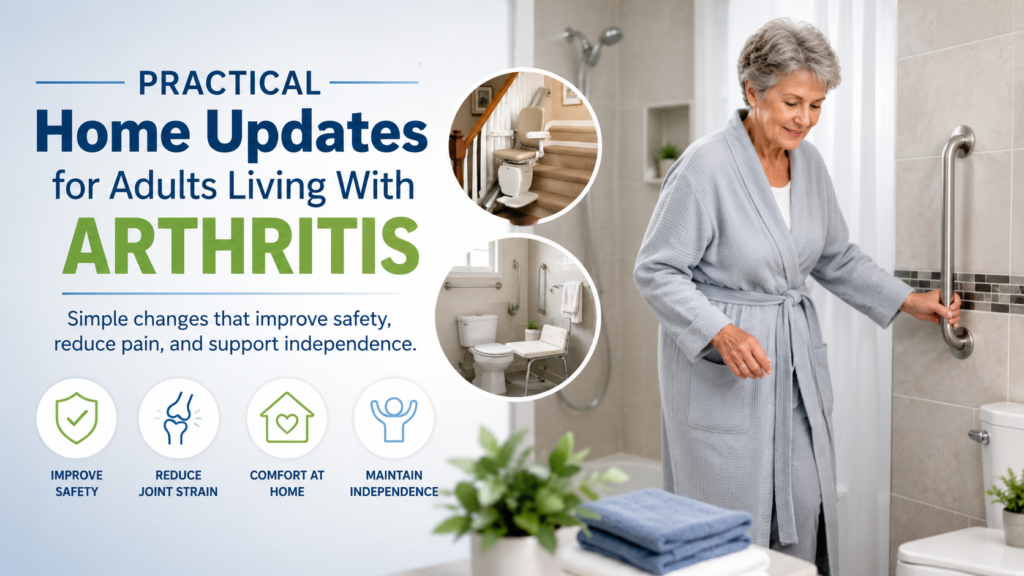
Arthritis can make everyday movement feel harder than it used to. Tasks like climbing stairs, getting in and out of the shower, opening doors, reaching shelves, or standing from a seated position can become painful when joints are stiff, swollen, or weak.
For many adults living with arthritis, the home should be the easiest place to move around. But in reality, many homes create extra strain on the knees, hips, hands, shoulders, and back. Stairs, slippery bathrooms, low chairs, tight walkways, and poor lighting can all make daily routines more difficult.
The good news is that home safety does not always require major remodeling. Practical updates can reduce joint strain, improve balance, and make daily life safer and more manageable.
Why Arthritis Can Make Home Safety More Important
Arthritis affects joint movement, comfort, and strength. The National Institute of Arthritis and Musculoskeletal and Skin Diseases notes that people living with arthritis may benefit from tools and mobility aids that reduce pain and support safer movement.
When joint pain affects walking, gripping, bending, or climbing, small household obstacles can become much bigger problems. A loose rug may become a tripping risk. A low toilet seat may make standing painful. A staircase may become exhausting. A poorly lit hallway may increase the chance of a fall.
Falls are also a major concern. The CDC reports that more than one in four older adults falls each year, and falling once doubles the chance of falling again.
That is why home updates for arthritis should focus on two goals: reducing physical strain and making movement safer.
Start With the Most Difficult Daily Movements
The best place to begin is not always with the biggest renovation. It is often with the movements that cause the most discomfort.
Paying attention to where discomfort happens most often can help identify which home updates may have the greatest impact.
This may include:
- climbing stairs
- getting in and out of the bathtub
- standing from the toilet
- opening doors or cabinets
- reaching high shelves
- walking through dim hallways
- standing for long periods in the kitchen
These small moments reveal where the home may need support. A practical home safety plan should make daily movement easier, not just make the house look more accessible.
Make Bathrooms Safer and Easier To Use
Bathrooms are one of the most important areas to address for people with arthritis. Wet surfaces, tight spaces, and repeated bending or standing can increase both discomfort and fall risk.
Accessible bathroom modifications can include grab bars near the toilet and shower, non-slip mats, handheld showerheads, raised toilet seats, and shower chairs. The Arthritis Foundation also recommends items such as transfer benches, shower seating, grab bars, and slip-resistant mats to make bathing and toileting easier.
These updates can reduce the need to squat, twist, or balance without support. They can also help people with arthritis maintain privacy and independence during personal care routines.
The goal is not to make the bathroom feel clinical. Many safety products now blend into the design of the home while still providing meaningful support.
Reduce Strain on Stairs
Stairs can be especially difficult for people with arthritis in the knees, hips, ankles, or spine. Repeated stair use can increase pain, fatigue, and fear of falling.
Simple stair updates can help. These may include brighter lighting, sturdy handrails on both sides, non-slip stair treads, and keeping the stairway clear of clutter.
For adults who struggle with stairs every day, some families also explore professionally reconditioned stairlifts as a more affordable alternative to purchasing a new stair lift. These systems may help reduce repeated stress on painful joints while improving access to different levels of the home.
This type of solution may be especially helpful when moving to a single-level living arrangement is not realistic.
Improve Lighting in Key Areas
Good lighting is a simple but important safety update. Arthritis may affect joints, but safe movement also depends on being able to clearly see steps, thresholds, rugs, and furniture.
Hallways, staircases, bathrooms, bedrooms, and entryways should have reliable lighting. Motion-sensor lights can be helpful at night, especially for trips between the bedroom and bathroom.
The National Institute on Aging recommends good lighting around stairs and grab bars near toilets, tubs, and showers as part of home safety planning for older adults.
Better lighting can also reduce hesitation. When a person can see clearly, they may feel more confident moving around the home.
Make Doors, Cabinets, and Fixtures Easier To Grip
Arthritis in the hands can make gripping, twisting, and pulling painful. Round doorknobs, small cabinet handles, tight faucets, and heavy drawers can all become frustrating.
Simple changes can make a big difference. Lever-style door handles are often easier to use than round knobs. Larger cabinet pulls can reduce finger strain. Touch lamps and rocker light switches may also be easier than small switches.
In the kitchen, lightweight cookware, jar openers, pull-out shelves, and easy-grip utensils can reduce stress on the hands and wrists.
These changes are small, but they can help preserve independence during everyday routines.
Rearrange Storage To Avoid Bending and Reaching
Frequent bending and overhead reaching can put extra strain on arthritic joints. Storage should be arranged so commonly used items are easy to reach.
Keep everyday dishes, medications, toiletries, clothing, and cleaning supplies between waist and shoulder height whenever possible. Heavy items should not be stored on high shelves or near the floor.
This is one of the easiest updates because it does not require buying anything. It simply requires arranging the home around how the person actually moves and uses the space.
Choose Seating That Supports Easier Movement
Low couches and soft chairs can be difficult for people with arthritis to get out of. The knees, hips, and hands often take extra strain when standing from a low seated position.
Chairs with firm cushions, armrests, and proper height can make standing easier. Chair risers may also help in some situations. In bedrooms, a bed that is too low or too high can create similar problems, so adjusting bed height may improve comfort and safety.
The right seating can reduce strain without making the home feel medically altered.
Keep Walkways Clear and Stable
Clear walkways are important for anyone with joint pain or reduced mobility. Clutter, cords, loose rugs, and narrow paths can increase the risk of tripping.
Remove or secure loose rugs. Keep electrical cords away from walking paths. Make sure furniture placement allows enough room to move comfortably, especially if someone uses a cane, walker, or other mobility support.
These updates are simple, but they can make the home feel much safer almost immediately.
Supporting Long-Term Mobility and Independence
Home updates for arthritis are not only about preventing accidents. They are also about helping people continue to participate in daily life with less discomfort and more confidence.
When a home is easier to move through, people may feel more comfortable cooking, bathing, resting, using different rooms, and staying active. That confidence can play an important role in maintaining independence and quality of life over time.
It is also helpful to make changes gradually. Starting with the most painful or risky areas can make the process feel manageable. For some people, that may mean the bathroom first. For others, it may mean stairs, lighting, seating, or kitchen storage.
People living with arthritis should also speak with their healthcare provider or physical therapist about mobility concerns and home safety recommendations that fit their specific needs.
A thoughtful approach to home safety can help reduce unnecessary strain on the joints while making everyday routines safer, easier, and more sustainable over the long term.
Other Articles You May Find of Interest...
- Seen and Unheard; Elder Abuse
- Coping With Cancer In Older Adults
- The Number Families Should Ask About Before Touring a Nursing Home for a Parent
- Daily Personal Support: What Assisted Living Provides Residents
- How Nurse-Led Home Care Can Support Aging in Place in Scottsdale
- Understanding Home Care Options for Older Veterans in Australia
- How Digital Communication Helps Seniors Stay Connected With Family and Communities




