






Your Health Magazine
4201 Northview Drive
Suite #102
Bowie, MD 20716
301-805-6805
More Practice Management Articles
How Persistent AI Agents Could Change Medical Practices
There’s a quiet revolution happening inside hospitals, clinics, and research labs — and most patients have no idea it’s underway. While the public debate around AI in healthcare often fixates on chatbots answering symptom questions or algorithms spotting tumors on a scan, something far more consequential is emerging: persistent AI agents that don’t just answer a question and disappear, but stay on the job, learn, adapt, and take action across time.
This isn’t science fiction. It’s the direction the field is accelerating toward right now, and it carries the potential to fundamentally reshape how medicine is practiced — for better and, if we’re not careful, for worse.
What Exactly Is a Persistent AI Agent?
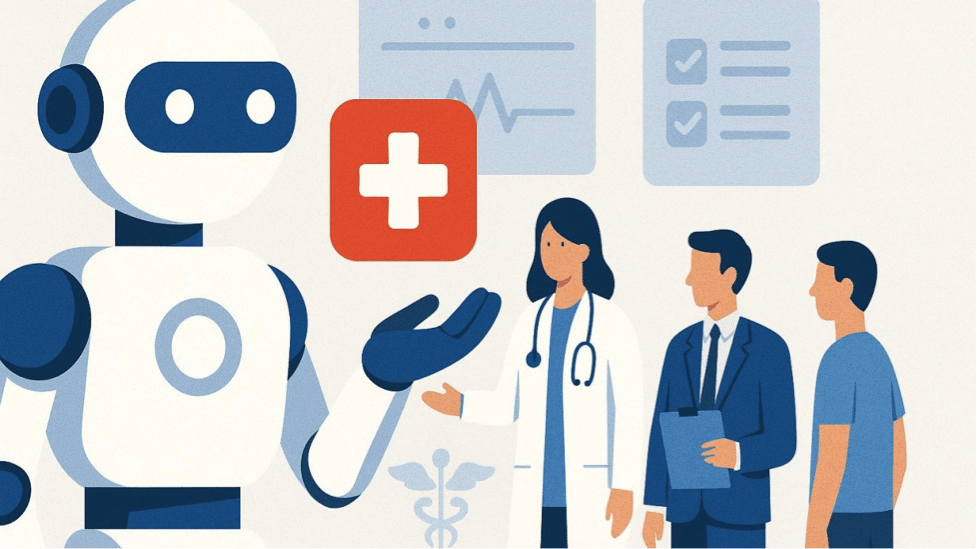
Before we dive into the implications, let’s be clear about what we mean. Most AI tools in healthcare today are reactive: a clinician inputs data, the system outputs a result, and the interaction ends. A persistent AI agent is different. It operates continuously, maintains memory of prior interactions and outcomes, pursues defined goals autonomously, and adjusts its behavior based on new information — all without needing to be re-prompted from scratch each time.
Think of it less like a calculator and more like a dedicated team member who never sleeps, never forgets a patient’s history, and can simultaneously monitor hundreds of cases at once.
The Four Core Capabilities That Make This Possible
Researchers in a 2025 ScienceDirect foundational architecture review describe medical AI agents as operating on four core components: planning, action, memory, and reflection. Planning enables strategic decision-making and resource allocation. Action refers to executing real-world tasks — ordering tests, flagging abnormal results, routing patients. Memory allows the agent to build longitudinal knowledge of each patient. And reflection enables the system to evaluate its own outputs and self-correct.
Combined, these capabilities create something qualitatively different from what healthcare AI has looked like historically.
Where Persistent Agents Are Already Making Inroads
Chronic Disease Management: A 24/7 Care Partner
Chronic conditions — diabetes, hypertension, heart failure, COPD — are among the most resource-intensive challenges facing healthcare systems globally. They require sustained attention over months and years, yet most patients only see a physician a handful of times annually. That gap between visits is where things go wrong.
Persistent AI agents are uniquely suited to fill it. By continuously pulling data from wearables, biosensors, and electronic health records, an agent can track a diabetic patient’s blood glucose trends in real time, detect early drift toward dangerous territory, and nudge both the patient and their care team before a crisis develops. A 2025 review in Frontiers in Public Health identified four established roles for AI in chronic care: personalized decision support, continuous monitoring and risk prediction, conversational coaching for medication adherence, and coordinating communication between patients and providers.
The results are measurable. One longitudinal analysis tracking patient satisfaction over 12 months found that patients using AI-based monitoring and conversational agents saw satisfaction scores rise steadily from 68% to 85% — a reflection not just of better outcomes, but of feeling genuinely supported between appointments.
Diagnostics: From Second Opinion to First Line
In radiology, the FDA had approved 873 AI diagnostic tools by July 2025 — up from roughly 758 at the end of 2024. These tools aren’t replacing radiologists; they’re working alongside them, flagging findings that might slip through during high-volume shifts. Systems like Viz.ai’s stroke detection algorithm have achieved AUC scores above 0.90 on retrospective datasets, while Aidoc’s intracranial hemorrhage tool reports over 90% sensitivity with low false-positive rates.
More broadly, a 2025 systematic review of AI agents in clinical medicine found that across 20 studies, every single agent system outperformed its baseline large language model — with accuracy improvements ranging from modest gains to over 60 percentage points. The median improvement in single-agent tool-calling studies was a striking 53 percentage points.
Persistent agents take this further. Rather than reviewing one scan in isolation, an agent can correlate a patient’s imaging history, lab trends, genomic data, and clinical notes — building a richer picture than any single snapshot could provide.
Multi-Agent Systems in Emergency Medicine
Some of the most compelling work involves deploying not one AI agent but a coordinated team of them. A 2025 analysis published in a Frontline Medical Communications journal described a hypothetical sepsis management system built from seven specialized AI agents — each responsible for a distinct phase of care, from initial data collection and diagnosis through treatment recommendation and resource allocation.
Why does this matter? Because sepsis kills an estimated 270,000 Americans annually, and speed of recognition is the single greatest predictor of survival. A multi-agent system that’s persistently monitoring ICU patients, correlating vital signs, lab values, and clinical notes in real time, could identify sepsis onset hours before a human clinician would catch it during a routine rounding cycle.
Multi-agent frameworks have also been tested in emergency triage, where simulated systems demonstrated superior accuracy in patient classification compared to single-agent counterparts.
The Deeper Shift: From Episodic to Continuous Care
Here’s the part that doesn’t get enough attention: persistent AI agents don’t just improve existing workflows — they challenge the entire architecture of how healthcare is organized.

Modern medicine is structured around episodes. You feel sick, you make an appointment, you see a doctor, you get a prescription, you leave. The system is fundamentally reactive. Persistent agents push medicine toward a longitudinal, proactive model — one where health is monitored continuously and interventions happen before problems escalate.
This is more than an efficiency gain. It’s a philosophical shift in what healthcare can be. Platforms built with this vision in mind, like MyClaw, are working toward giving individuals and clinicians persistent AI companions that track health data over time, surface meaningful insights, and support more informed, ongoing conversations about wellbeing — not just crisis management.
The implications ripple outward. Fewer emergency department visits. Earlier cancer detection. Better medication adherence. Reduced hospitalizations. Lower costs. And perhaps most importantly: patients who feel seen and supported between the moments when they’re actually sitting in front of a doctor.
The Challenges We Can’t Afford to Ignore
None of this comes without serious complexity.
Hallucinations and Clinical Safety
Large language models — the engines underlying most AI agents — have a documented tendency to generate plausible-sounding but incorrect information. In a 2025 review on agentic AI in radiology, researchers found that while diagnostic accuracy improved with AI assistance, the presence of confidently stated but erroneous outputs posed significant risks, particularly when agents failed to recognize critical findings like midline shift on MRI. Multi-agent systems and retrieval-augmented generation are promising mitigation strategies, but robust clinical validation remains limited.
Bias and Equity
AI trained on historical healthcare data inherits the inequities baked into that data. If an agent is trained predominantly on data from well-resourced hospital systems serving specific demographics, its predictions may be systematically less accurate for underserved populations — exactly the people who most need the benefit of persistent monitoring.
Privacy, Trust, and Governance
A persistent agent that maintains longitudinal health data is, by definition, a repository of extraordinarily sensitive information. Patients need to understand what’s being collected, how it’s used, and who has access. Regulatory frameworks are still catching up; the FDA’s Software as a Medical Device classification system is evolving, but governance at the global level remains fragmented.
What Comes Next
The trajectory is clear. As agentic AI matures — as it develops better memory architectures, tighter integration with electronic health record systems, stronger guardrails against error, and clearer regulatory pathways — the role it plays in medicine will expand. The question isn’t whether persistent AI agents will change medical practice. It’s how deliberately and thoughtfully we navigate that change.
The most exciting near-term developments are likely in orchestrated multi-agent systems: networks where specialized agents covering diagnostics, monitoring, administrative workflow, and patient communication operate in coordination, with human clinicians maintaining oversight and ultimate decision-making authority.
That last point matters enormously. Every regulatory body that has weighed in — from the FDA to the American College of Radiology to European medical device authorities — is clear that the human clinician remains the accountable decision-maker. AI agents are decision support, not decision replacement. The doctor-patient relationship, the exercise of clinical judgment, the weight of responsibility — those stay human.
The Bottom Line
Persistent AI agents represent one of the most significant shifts in the practice of medicine since electronic health records, and arguably more profound than that. They promise to close the gap between episodic, reactive care and continuous, proactive support. They can be in a thousand places at once, never forget a detail, and flag the early warning sign that might otherwise go unnoticed at 3 a.m.
But they are not magic. They require rigorous validation, thoughtful deployment, transparent governance, and ongoing human oversight. The stakes — in an industry where mistakes cost lives — couldn’t be higher.
What’s certain is that healthcare organizations and innovators who engage seriously with this technology now, who build the evidence base, establish the ethical frameworks, and invest in equitable deployment, will define what medicine looks like for the next generation. The agents are already at work. The question is whether the humans around them are ready.
Other Articles You May Find of Interest...
- What Skills Help Owners Succeed in Home Care Services
- How Persistent AI Agents Could Change Medical Practices
- Best Scrubs for Women in 2026: What Healthcare Professionals Look for in Scrub Caps
- Why A1 Scrubs Has Become the Go-To Destination for Healthcare Professionals Who Refuse to Compromise on Quality
- MLM Software Team Management in Health & Wellness Businesses: Building Strong Leadership Collaboration
- Why Healthcare Facilities Need Reliable Anesthesia Staffing Partners in 2026
- Why Automation Has Become Critical for Dental Practice Management




