More Sexual Health Articles
Erectile Dysfunction by Age: What’s Normal and What’s Not
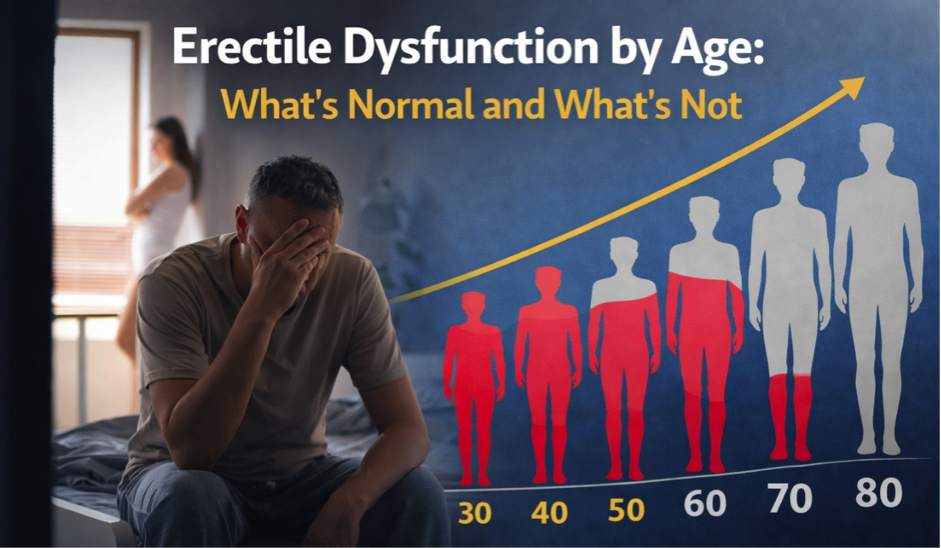
Erectile dysfunction (ED) is often misunderstood as a condition that only affects older men, but the reality is more complex. Men of all ages can experience changes in sexual performance, and not every issue automatically means something is seriously wrong. What matters is understanding the difference between what’s normal at different stages of life and what may need attention.
As the body changes with age, factors like blood flow, hormone levels, stress, and lifestyle habits all play a role in sexual health. By recognizing these patterns, men can better understand their bodies, reduce unnecessary worry, and take proactive steps when needed.
This guide aims to bring clarity, remove stigma, and encourage open conversation so you can approach the topic with confidence, awareness, and a focus on practical solutions.
Understanding ED Across Different Age Groups
Erectile dysfunction is not a one-size-fits-all condition. Its frequency, causes, and severity can vary significantly with age.
Research shows that ED becomes more common as men grow older. For example, prevalence increases steadily with age, with significantly higher rates seen in men over 50 compared to those in their 20s .
However, that doesn’t mean it’s “normal” to ignore it.
ED in Your 20s and 30s: What’s Normal?
In younger men, occasional difficulty is usually not a cause for concern. Stress, fatigue, or temporary anxiety can affect performance from time to time.
Studies indicate that ED can still occur in younger men, with around 13 -18% of men under 40 experiencing symptoms .
What’s considered normal:
- Occasional difficulty due to stress or tiredness
- Temporary issues related to anxiety or lifestyle
What’s not normal:
- Frequent or ongoing difficulty
- Loss of confidence or avoidance of intimacy
- Symptoms linked to mental health struggles
In this age group, ED is often more psychological than physical, making early awareness and stress management especially important.
ED in Your 40s and 50s: A Turning Point
This is the stage where ED becomes more noticeable and more common. Around 40% of men experience ED by age 40, and the risk increases steadily with age .
What’s considered normal:
- Mild or occasional difficulty
- Slight changes in erection firmness or frequency
What’s not normal:
- Persistent ED
- Symptoms linked to underlying health conditions
At this stage, ED may begin to reflect physical factors like reduced blood flow, hormonal changes, or early signs of chronic conditions.
ED in Your 60s and Beyond: What Changes
As men age, ED becomes more prevalent. Studies show that up to half of men between 40 and 70 experience some degree of ED , and the likelihood continues to rise with age.
What’s considered normal:
- Slower response to stimulation
- Reduced frequency of erections
What’s not normal:
- Complete or sudden loss of function
- Ignoring symptoms that may signal serious health issues
Even in older age, ED is not something you simply have to accept it can still be managed and improved.
A Growing Shift Toward Awareness & Solutions
Today, more men are becoming proactive about understanding ED rather than ignoring it. With increased awareness and access to information, individuals are exploring modern approaches to care.
Many people researching treatment options often look into MEDVi Quad to better understand how structured, clinician-guided programs work and what to expect from telehealth-based support.
This growing curiosity reflects a positive shift men are becoming more informed and willing to take control of their health.
What’s Normal vs What’s Not (Simple Breakdown)
Normal Across All Ages:
- Occasional difficulty due to stress or fatigue
- Temporary performance issues
- Mild changes with age
Not Normal:
- Persistent or worsening symptoms
- ED affecting confidence or relationships
- Ignoring symptoms linked to health conditions
The key difference is frequency and impact. If ED becomes consistent, it’s worth paying attention.
Why ED Shouldn’t Be Ignored
Erectile dysfunction is often more than just a sexual health issue. It can be an early warning sign of underlying conditions like:
- Heart disease
- Diabetes
- High blood pressure
- Hormonal imbalance
In fact, men with ED are more likely to have other health conditions, highlighting the importance of early attention .
Taking Positive Action at Any Age
No matter your age, there are steps you can take to improve your situation.
Focus on Lifestyle
Regular exercise, balanced nutrition, and good sleep can significantly improve erectile function.
Manage Mental Health
Reducing stress and anxiety plays a key role, especially for younger men.
Seek Medical Guidance
A healthcare professional can help identify the root cause and recommend appropriate solutions.
The Role of Support And Community
ED can feel isolating, but it doesn’t have to be. Open conversations with partners, doctors, or support groups can make a huge difference.
Many individuals continue their research through MEDVi Quad reviews published on https://quad-ed.com, where shared experiences and insights help people feel more informed and less alone in their journey.
Support systems encourage confidence, reduce stigma, and help men take positive action.
Encouraging Open Conversations
One of the biggest challenges with ED is silence. Many men avoid discussing it due to embarrassment or misconceptions.
But the truth is:
- ED is common
- It’s often treatable
- You’re not alone
Talking about it is the first step toward improvement.
Moving Forward With Clarity
Understanding how erectile dysfunction changes with age can help you replace uncertainty with confidence. Instead of assuming the worst or ignoring the signs, you can make informed decisions based on what your body is telling you.
ED is not something you have to face alone or accept without question. In many cases, it can be managed or improved through simple lifestyle changes, professional guidance, and open communication. The key is recognizing when something feels off and taking that as a signal to act, not withdraw.
Every step toward awareness is a step toward better health. Whether it’s improving daily habits, seeking support, or simply starting a conversation, small actions can lead to meaningful progress. With the right approach, you can move forward with clarity, confidence, and a stronger sense of control over your well-being.
FAQs
Is erectile dysfunction normal at every age?
Erectile dysfunction can occur at any age, but occasional issues are more common in younger men due to stress, while frequent or persistent symptoms at any age may need attention.
How does age affect erectile function?
As men age, changes in blood flow, hormone levels, and overall health can impact erectile function, making ED more common but not unavoidable.
Can erectile dysfunction in younger men be serious?
Yes, if it happens frequently. While often linked to stress or anxiety, ongoing symptoms may indicate underlying health or lifestyle issues.
What is considered a warning sign of ED?
Persistent difficulty in achieving or maintaining an erection, reduced libido, or a noticeable change in performance over time can be warning signs.
Can lifestyle changes improve ED at any age?
Yes, improving diet, exercising regularly, managing stress, and avoiding harmful habits can support better erectile function across all age groups.
When should I seek help for erectile dysfunction?
If symptoms are consistent, worsening, or affecting your confidence or relationships, it’s important to consult a healthcare professional.
Other Articles You May Find of Interest...
- Does Spermicide Cause Yeast Infections?
- Which STDs Show Up on a Blood Test, and Which Don’t
- Do Intimacy Gummies Actually Work for Women? What the Research on Maca and Ashwagandha Says
- IUD vs. the Pill: Choosing What Fits Your Life
- Choosing a Dildo: Materials, Size, Compatibility, and Safer Use
- Gay Dating Sites Compared: Features, Community and Safety
- The Modern Self-Care Routine: Embracing Body Awareness, Ergonomic Design, and Mindful Relaxation